

SpaceX's $135 share price sets up record-breaking IPO
Elon Musk's rocket maker is poised to top Saudi Aramco's 2019 debut in valuation and money raised, a reminder that pricing alone can rewrite market history.
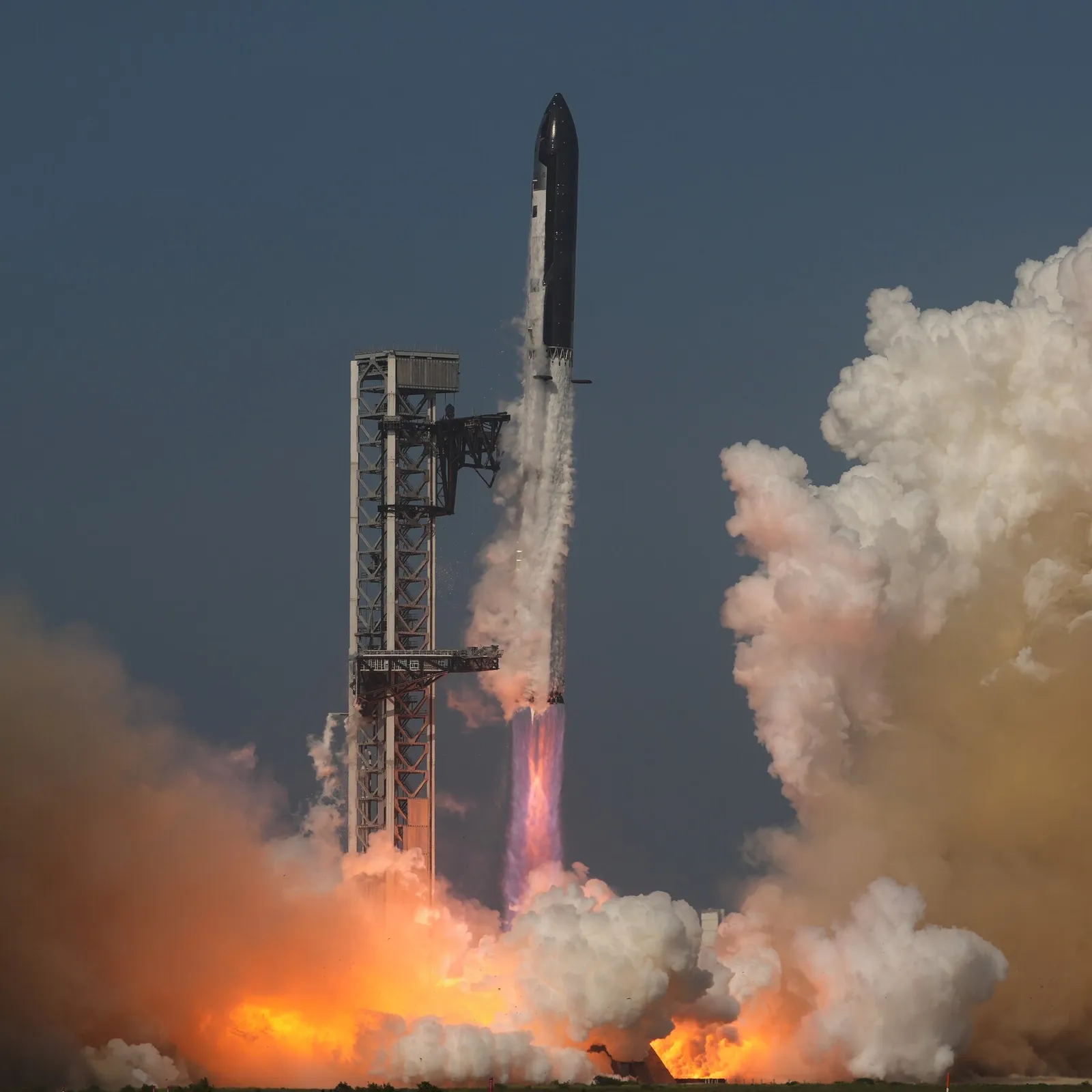
SpaceX, led by Elon Musk, is set at a $135 share price for its initial public offering, putting the rocket maker on track to eclipse Saudi Aramco's 2019 IPO in both valuation and capital raised. For executives and boards, the signal is clear: when a company with category-defining scale reaches the public markets at that price, it can reset expectations for what investors will fund and how large a listing can be.
SpaceX is headed toward a piece of market history. At a $135 share price, Elon Musk's rocket maker is poised to become the largest initial public offering ever, surpassing Saudi Aramco's 2019 debut in both valuation and the amount of money raised. That is not just a big number. It is a statement about how much public-market appetite can still exist for a company that sits at the intersection of aerospace, defense, satellite infrastructure, and, yes, Elon Musk's gravity-defying brand.
For context, the comparison matters because Saudi Aramco's 2019 listing was the benchmark for scale. If SpaceX clears it on both valuation and cash raised, that would mark a rare case where a private company from a highly technical, capital-intensive industry reaches public markets with a price tag large enough to rewrite the IPO leaderboard. The source does not provide the final proceeds or valuation figure, only that the $135 share price would put SpaceX ahead of Aramco on both measures, but that alone tells you how enormous the deal would be.
That scale has second-order implications beyond the bragging rights. When a company prices at a level that can challenge the largest IPO in history, it becomes a reference point for every board, founder, and banker thinking about timing, valuation discipline, and how much investor demand still exists for hard-tech growth stories. Aerospace is not software. It is slower, heavier, and much more expensive to build. Which is exactly why a public-market vote this large would matter: it suggests investors are still willing to pay for infrastructure-like assets if the company has enough strategic importance and enough momentum.
SpaceX also represents a particularly unusual case because it is not just a rocket company in the traditional sense. In the public imagination, it is linked to launch services, satellite networks, and the broader race to commercialize space. That makes the IPO more than a financing event. It is a test of whether markets will treat space infrastructure the way they often treat transportation, telecom, or defense-adjacent businesses, where the long-term value comes from embedded scale and recurring demand rather than flashy consumer buzz. The source does not spell out the structure of the offering, governance, or use of proceeds, so those details remain outside this story. But even the share price alone signals how seriously investors are expected to take the business.
For decision-makers, the practical takeaway is less about the exact ranking and more about what the ranking says. If SpaceX can command a record-setting IPO price, then the market is effectively saying that category leadership, operational execution, and narrative power can combine into a valuation that would have sounded absurd a few years ago. That matters to CEOs trying to time listings, CFOs trying to defend a price, and boards weighing whether to stay private longer or use public markets as a scaling tool. A big debut can also reset comps across adjacent sectors, because bankers and investors will inevitably use it as a yardstick for everything from satellites to defense tech to industrial hardware.
The reverse risk, of course, is that record-setting expectations can create their own pressure. The bigger the debut, the more every future milestone gets measured against the IPO price and the scale of the raise. Large public offerings tend to draw intense scrutiny from investors who want proof that the valuation is grounded in durable economics, not just momentum or celebrity. Again, the source gives us only the key fact: a $135 share price that would put SpaceX ahead of Saudi Aramco. But that fact alone is enough to show how high the bar is being set.
For other founders and boards, the signal is simple: public markets still reward ambition, but only when the story is matched by scale. SpaceX's position shows what happens when a company grows into a category so strategic that investors are willing to compare it with the biggest IPO in history. If you are leading a company with a long runway, the message is not that every business can or should chase this kind of outcome. It is that when markets are open to a rare giant, the ceiling can move fast, and every competing executive will have to explain why their own numbers, timing, and market position deserve a spot in the conversation.
This story's Key Insights and Take-aways are locked.
Create a free account to unlock Executive Actions for one credit.
Register to UnlockAlways free for Executives Club members. Join the Club
More in Business

Anthropic’s Levant Alpöge cracks the Jacobian conjecture after 87 years
A Harvard valedictorian used Claude to hit a 1939 breakthrough, but the missing “why” is the real problem.

Uber buys Delivery Hero for nearly $15B, vaulting to top food delivery outside China
The deal doubles Uber's dual-services footprint and pushes a ride-and-eats bundling play into 50 more markets.

Epic and Google drop settlement bid, forcing rival Android app stores by July 22
Google told the court it is ready to carry third-party app stores starting Wednesday, July 22.