
SpaceX's Starlink gamble: betting robotics will explode connectivity demand
Musk is scaling Starlink on a wager that machines, not people, will drive the next bandwidth boom - and that bet will reshape how executives plan for automation.

Elon Musk is expanding SpaceX's Starlink network on a wager that robotics will dramatically increase demand for connectivity. For decision-makers, this signals that industrial automation and remote operations could soon become the primary drivers of global infrastructure investment.
Elon Musk is betting that robotics will dramatically increase demand for connectivity - and that wager is the strategic core of SpaceX's Starlink expansion. The satellite internet service, now the largest constellation in orbit, is being scaled up on the assumption that the next wave of bandwidth consumption will come from machines, not just people. For executives across manufacturing, logistics, and energy, the bet is a preview of how a critical infrastructure player sees the coming decade: factories that run themselves, vehicles that move without drivers, and sensors that transmit continuously without a human in the loop.
The logic behind the gamble is straightforward. Industrial robots, autonomous vehicles, drones, and teleoperated equipment produce enormous data streams that demand low-latency, high-reliability connections. Terrestrial fiber and cellular networks cover only the most populated and economically dense areas, leaving vast stretches of the planet - oceans, deserts, mines, farmland - with little or no coverage. Starlink's expanding fleet of low-Earth-orbit satellites is designed to fill those gaps, turning remote and mobile operations into always-connected nodes. If Musk is right, the machines themselves will justify the billions required to build and maintain the network.
That bet carries real risk. Satellite internet has historically been a niche product: expensive, high-latency, and limited in capacity. Starlink's innovation is placing satellites in low Earth orbit, which cuts latency dramatically and opens the door to applications that require real-time response. But the economics are still being proven. Each launch adds capacity but also adds cost, and the service has had to balance consumer subscriptions with the promise of future enterprise and machine-to-machine revenue. Musk's robotics thesis is effectively an argument that the enterprise side will eventually dwarf the consumer side.
For context, the broader satellite industry is also moving. Competing constellations from OneWeb and Amazon's Project Kuiper are being deployed or planned, all aiming at the same low-Earth-orbit opportunity. The difference is that most competitors are focused on serving underserved people and businesses. Musk is explicitly linking Starlink's future to robotics, which suggests he sees the network as the nervous system for a global fleet of automated machines. That is a more ambitious - and more speculative - positioning than simply providing internet to rural homes.
The regulatory dimension cannot be ignored. Satellite constellations require spectrum licenses, orbital slots, and approval from national and international bodies. Expanding Starlink means navigating a complex web of regulators, coordinating with existing satellite operators, and securing clearance for thousands of additional spacecraft. Musk's bet is therefore not only technological and financial - it is also a long-term wager on the willingness of governments to allow a single private company to become a dominant layer of global connectivity infrastructure.
If the robotics thesis plays out, the implications reach far beyond SpaceX. Companies deploying automation in remote or mobile environments will need a connectivity layer that can keep up. That could reshape procurement decisions: instead of building private networks or depending on local telecom providers, enterprises might contract directly with satellite operators for guaranteed machine-grade connectivity. It also means that the pace of Starlink's expansion - and its pricing - could become a strategic factor in where and when companies choose to automate.
For CEOs and boards, the immediate takeaway is to treat connectivity as a strategic input, not a utility. The next wave of automation will be constrained by bandwidth, latency, and coverage as much as by software and hardware. Watching Starlink's trajectory - and the response from its competitors - offers a leading indicator of whether machine-driven demand will truly reshape the market. Those who plan for that scenario now will have a head start when the robots start calling for bandwidth.
This story's Key Insights and Take-aways are locked.
Create a free account to unlock Executive Actions for one credit.
Register to UnlockAlways free for Executives Club members. Join the Club
More in Technology

Cop fired after sharing Flock login with ICE husband: 983 searches
A Savannah officer's shared credential let an ICE agent run hundreds of plate searches on Hispanic drivers, exposing a surveillance backdoor.
Elizabeth Holmes doc 'You Can See Everything' posts second-biggest doc debut ever
The true-crime draw shows fraud narratives still sell - a signal for media execs and a caution for founders.
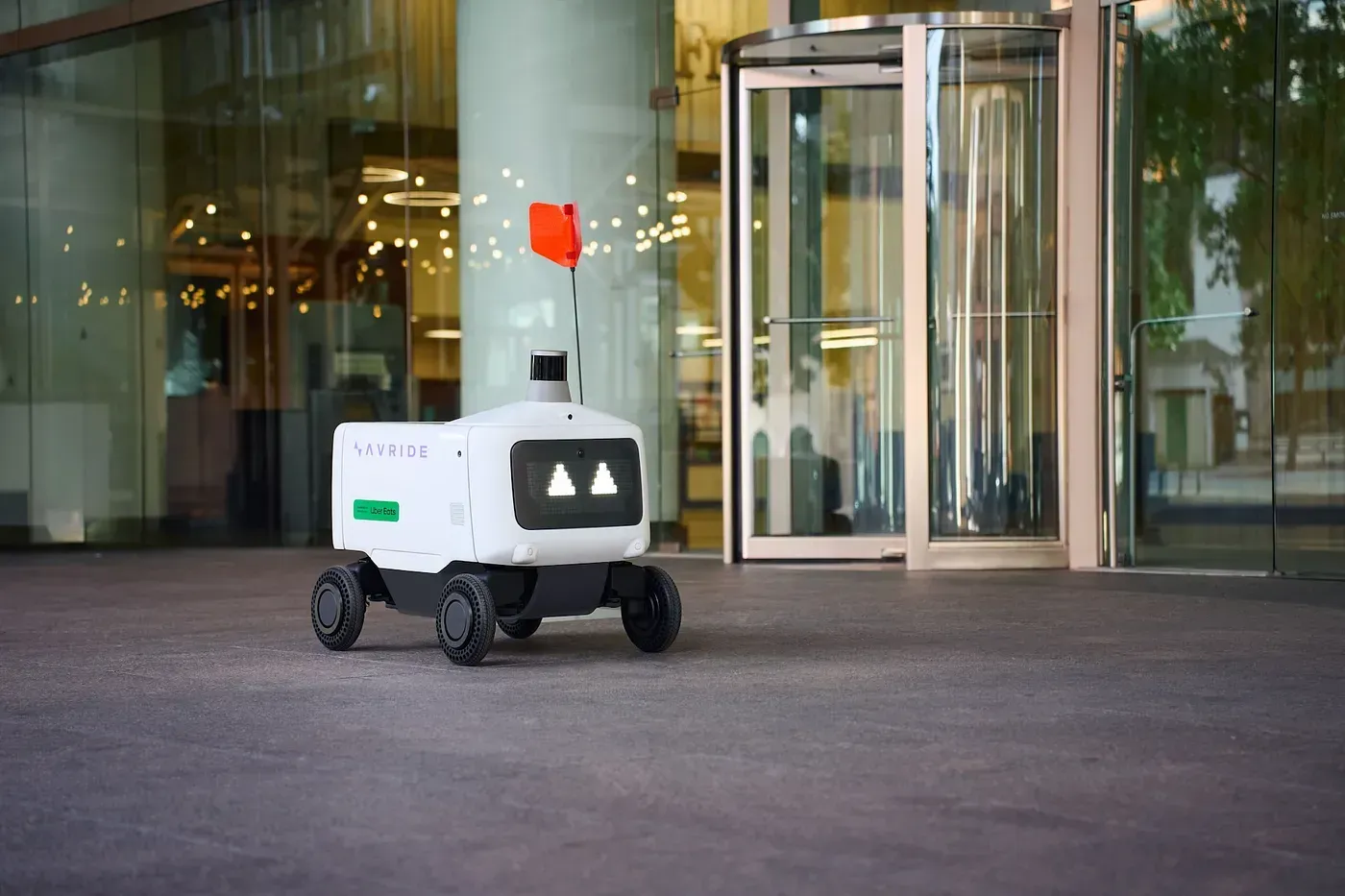
She blocked an Uber delivery robot to save jobs. Police arrested her.
Carolyn Marvin's disorderly conduct arrest turns a sidewalk standoff into a test case for how cities police the automation-versus-workforce debate.