

Spider-Man: Brand New Day hits $355M, second-best North America opening ever
The film’s record debut reshapes studio risk math and refreshes the box office playbook for everyone watching.
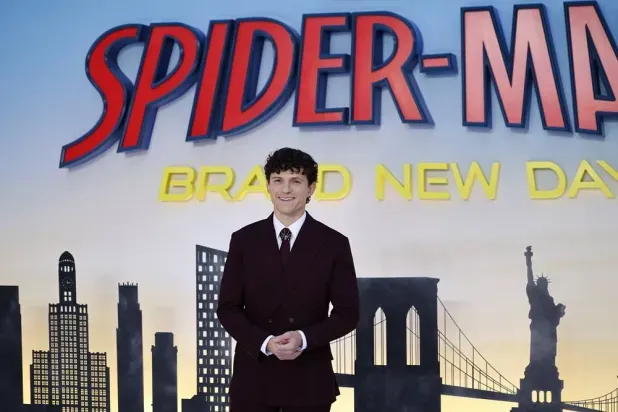
‘Spider-Man: Brand New Day’ posted a $355 million North American opening, landing as the second-best in the region’s history. The immediate implication for decision-makers is that distribution, marketing, and release timing now have a harder benchmark to clear.
‘Spider-Man: Brand New Day’ didn’t just open big. It opened with $355 million in North America, the second-best opening ever in the market, according to Asharq Al-Awsat. That number matters because North America is still the industry’s loudest scoreboard: it is where studios test whether a tentpole’s brand strength converts into repeatable, system-level cash rather than one-off hype.
But the more interesting part for executives is what $355 million signals about the whole pipeline. This is not simply a “good weekend” headline. An opening at that scale sets expectations across marketing calendars, theater commitments, and revenue forecasting models. It also pushes other studios to revise their internal hurdle rates, because the bar for “safe” performance moves when a franchise can generate that kind of opening draw. In other words, the market has just told everyone what level of consumer pull is required to dominate the conversation early.
To put this in context, box office openings have become less about the initial surprise and more about proving the franchise can sustain demand. The first weekend acts like a pressure test for brand durability and marketing efficiency. If a title lands near the top of all-time North American openings, planners will treat it as evidence that their assumptions about audience reach and conversion were conservative rather than overly aggressive. That changes second-order decisions such as whether to pull forward assets for broader release, how to negotiate exhibitor terms, and how much to invest in subsequent weeks where competition can either amplify a winner or dilute it.
The “second-best ever” framing is also a useful governance signal inside studios. Boards and executives often debate risk in public terms, but internally they budget with probabilities. When a film cracks the top tier, it tightens the feedback loop between leadership strategy and outcomes. It also affects how studios evaluate competing projects at the next stage of greenlighting. If Spider-Man can deliver $355 million in North America and still qualify as near the historical ceiling, studios may lean more heavily toward high-clarity brands, recognizable IP, and release windows that minimize uncertainty.
There is also a regulatory and policy layer that sits in the background even when entertainment news does not mention it directly. Film distribution is shaped by industry rules, consumer protection standards, and local rating frameworks. In practice, those constraints impact scheduling and how quickly a title can scale to broad audiences across territories. When a studio achieves a top-tier opening in North America, it suggests that those operational realities did not create meaningful friction at rollout. For decision-makers, that is a reminder that “regulatory compliance” is not just legal hygiene. It can affect the speed and reach of a campaign, which then feeds back into revenue curves.
For peers, the strategic stakes are immediate. If your own studio team is planning a tentpole release, you now have a new benchmark for what audiences will pay to see early. That may not mean you match Spider-Man dollar-for-dollar, but it does mean your justification for spending, staffing, and theater allocations has to be tighter. Investors and operators will ask whether a competing slate has comparable brand gravity and whether the marketing plan is built for sustained visibility, not just opening-week curiosity.
Finally, there is a talent and franchise management implication that executives cannot ignore. A high opening like $355 million strengthens the negotiating position of everyone tied to the brand, from creative partners to distribution stakeholders. It can also influence future sequel math, because studios often treat a performance like this as validation for continuing the franchise flywheel rather than restarting with a new concept. If the market keeps rewarding proven brands with near-historical openings, the industry’s center of gravity stays with IP that can reliably capture attention at scale.
The headline fact is simple. The implications are not. A $355 million North American opening that ranks second in history reframes the industry’s expectations for the next tentpole cycle, changes internal hurdle rates, and tightens the logic studios use to decide what gets greenlit, promoted, and protected against competition.
This story's Key Insights and Take-aways are locked.
Create a free account to unlock Executive Actions for one credit.
Register to UnlockAlways free for Executives Club members. Join the Club
More in Business

Anthropic’s Levant Alpöge cracks the Jacobian conjecture after 87 years
A Harvard valedictorian used Claude to hit a 1939 breakthrough, but the missing “why” is the real problem.

Uber buys Delivery Hero for nearly $15B, vaulting to top food delivery outside China
The deal doubles Uber's dual-services footprint and pushes a ride-and-eats bundling play into 50 more markets.

Epic and Google drop settlement bid, forcing rival Android app stores by July 22
Google told the court it is ready to carry third-party app stores starting Wednesday, July 22.