

Spider-Man: Brand New Day tries a mentor pivot, but the MCU still fears real change
A.V. Club’s Crosstalk says Tom Holland’s Spider-Man shifts roles, yet the franchise keeps cycling the same knots.

In the A.V. Club’s Crosstalk, Jacob Oller and Monica Castillo debate Spider-Man: Brand New Day and whether it revives interest in Marvel’s film pivot. For decision-makers watching audience fatigue, the bigger signal is how a “soft reboot” still risks becoming a narrative assembly line.
Welcome to Crosstalk, where Jacob Oller and Monica Castillo take Spider-Man: Brand New Day back into the Marvel Cinematic Universe spotlight to ask a simple, high-stakes question: does this “soft reboot” actually restart audience interest, or just reshuffle the same machinery?
Oller starts with the core tension. He says the Spider-Man franchise is the only MCU sub-franchise he’s kept up with because he likes the character and still has fondness for teen comedy Homecoming. But he’s also honest about where Marvel has strained his attention: he finds MCU crossovers emotionally mismatched because audiences are trained to care about heroes just enough to watch them team up. In that lens, Brand New Day feels “like a step in the right direction” when Marvel pivots away from endless teaming toward human-scale stakes. Castillo lands on the other half of the equation. She argues the casting of Tom Holland is a big reason the character still works, because he brings “his A-game” to Spider-Man. In Brand New Day, Holland’s Peter Parker is not just doing quips and saving the day. He’s struggling to do what’s right for his girlfriend MJ and his friend Ned, he’s married to his job and lonely because people forget he’s Spider-Man, and he’s wrestling with a genetic rage mutation.
So the movie’s pitch is clear: soften the franchise’s reboot fatigue by upgrading the character’s situation. Castillo is specifically intrigued by the way Spider-Man’s internal conflict can drive curiosity about what’s next. Even when she notes that this story and other characters around him feel “slightly less polished,” she frames Spider-Man as one of the few corners where the MCU still feels like it’s letting a performer and a character sustain momentum rather than immediately flattening them into a larger brand unit.
Oller then challenges whether the movie’s connective tissue actually holds. He says Brand New Day has “many, many threads” that feel only loosely connected. The genetic rage mutation setup is the obvious hook, but he argues the way it manifests for an older Peter is strange. At first it almost plays like the character will literally age into new physical ailments from burning the candle at both ends, leading to jokes about needing to stretch before fights, which makes the implication feel grounded in character logic. But he says the narrative quickly clarifies that the spider DNA issue is “merely something for another movie.” The emotional punch of a mutation becomes a plot mechanism for a big spoiler, where superpeople embrace or suppress their powers. For Oller, this echoes something Marvel already did: the same theme and framing fought a Civil War over. The issue is not that themes repeat. It is that repetition can feel like the MCU is afraid of real change, not in the sense of introducing a new universe, but in making internal story consequences count beyond setup.
The discussion gets more specific about what Marvel appears to be doing structurally. Oller argues the MCU needed a way to set up a classic X-Men problem, where mutants are hated and people can “do something about it.” He references a mechanism: a hormonally afflicted Peter Parker being able to “solder one together” in The Punisher’s derelict hideout after a quick meeting with Bruce Banner. The metaphor he uses is telling for business readers: it is a “Tony Stark, box of scraps situation.” In other words, the story treats complex sci-fi state changes like they are assembled from accessible parts and convenient access points. Castillo adds a different angle, saying she is wary of how often Marvel remixes Spider-Man’s story. She points to Spider-Man: No Way Home as proof that the concept of bringing together Peter Parkers from other multiverses was executed with enough mileage to matter, but she notes Brand New Day does not further pursue that approach. She also calls out the DNA inhibitor subplot as “hilariously simple and clearly complicated,” describing it as a universal inhibitor for all superpowers. For Castillo, that stretch risks pulling her out unless there are redeeming action sequences afterwards, implying that the franchise still leans on set pieces to glue together logic gaps.
Here’s where the strategic pivot matters most, even for people who do not think about films as “capital markets.” Oller says the reason he is at least halfway interested in where Marvel might go next is that Holland’s Spider-Man, even without a major character shift, shifts roles in the ensemble. In his reading, Peter is no longer going to be the kid. The Punisher calls him “the kid,” and that detail signals a changing status quo. Oller says Holland’s Spider-Man becomes a mentor figure and an established presence for a new wave of characters. He compares this to the Robert Downey Jr. era, where Iron Man effectively served as a surrogate son for Spidey. But he argues that connection is “all-too-rare” in the MCU, and that it is meaningful when it works, not just another green-screen collision.
Castillo agrees with the direction but stresses the missing ingredient: rapport. She frames Marvel’s ensemble-building as a “college club” kept alive out of tradition more than camaraderie. Her point is not that ensembles are inherently bad, it is that repeated cycling of superheroes makes the audience feel like they are watching an organizational chart, not a relationship network. If Peter becomes the older veteran, Castillo thinks it makes sense to give him that mentor upgrade, and she says it is teased here along with the next generation of superheroes. But she wants enough runway to build the kind of emotional consistency that made Peter and Tony’s dynamic a highlight. Without that, the “soft reboot” may just become another loop in the stunted growth pattern the MCU sometimes reinforces.
Oller closes the thread with the franchise-level skepticism that executives should care about. He says the MCU can feel like an assembly line, and he connects it to the “Peter Pan problem,” the forever-stunted growth and perpetual cycles that make the MCU a slog. He notes this is a concept from comics where the next issue is always coming, so stasis is built in. But he argues films can still break containment if Marvel can return to the feeling of strong, siloed characters breaching that containment for something worth sharing. Brand New Day wants to have it both ways: change and stagnation. Oller implies that tension is frustrating, especially with endless half measures in narrative planning and generally poor filmmaking “in terms of everything else.” Castillo echoes the broader fatigue, calling the MCU’s assembly line of movies and TV shows a slog and referencing the sense that a Disney formula was copied and applied.
For decision-makers, the second-order implication is simple: even when a franchise attempts a pivot, the pivot has to change more than costume and status. It must produce durable character consequence and relationship payoff, or audience trust decays into “just another entry” behavior. Brand New Day may nudge Spider-Man toward a mentor role, but the Crosstalk takeaway is that the MCU risks undermining that shift if it keeps treating core story change as a setup for the next event rather than a payoff that accumulates.
This story's Key Insights and Take-aways are locked.
Create a free account to unlock Executive Actions for one credit.
Register to UnlockAlways free for Executives Club members. Join the Club
More in Entertainment

'It's a Magic Trick': Ballet Experts Say Rosalía's SNL Pose Is Impossible
Three ballet experts tell Rolling Stone Rosalía's gravity-defying SNL stillness shouldn't be possible - and why the debate is now part of the show.

Activision CMO: GTA 6 Will Boost Call of Duty, Not Bury It
Activision's top marketer says Rockstar's blockbuster will drive players back to consoles and into Modern Warfare 4, even as the company admits its recent strategy failed.
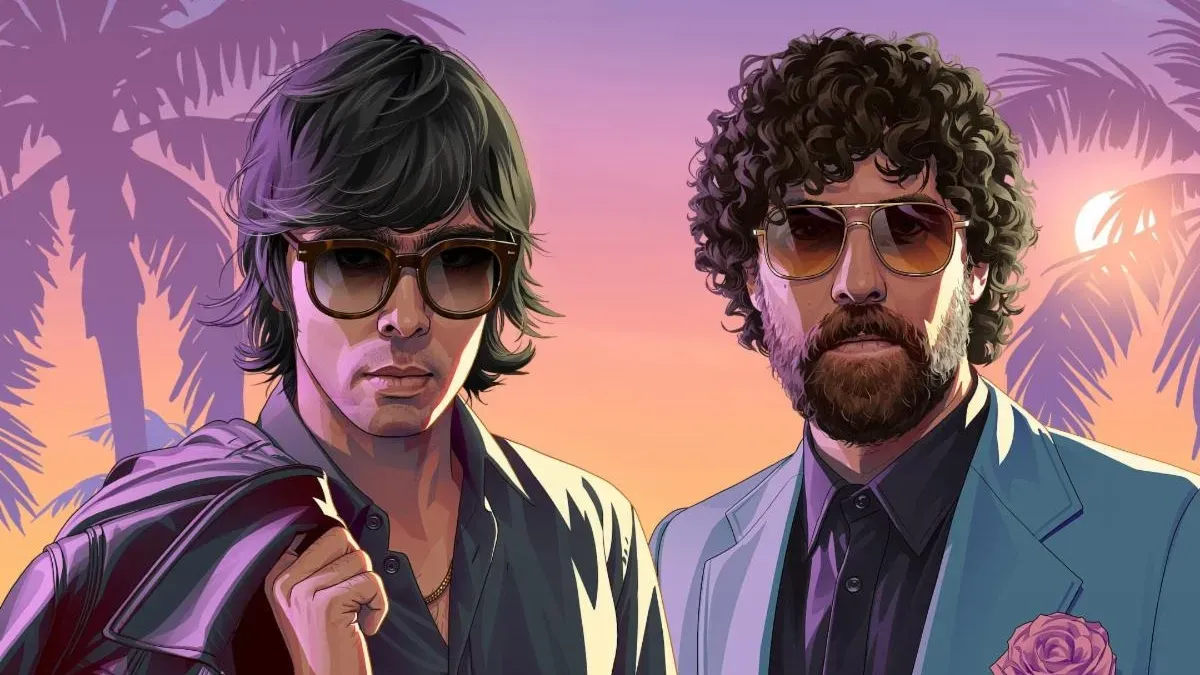
Justice to Score GTA 6, Share New Song with Tame Impala, SZA, King Gizzard
Rockstar taps the French duo for the GTA VI score, and the first taste is a genre-melting collab with Tame Impala, SZA, and King Gizzard & The Lizard Wizard.