
Standard Bots raises $200M to scale US-built AI robotic arms at $1B valuation
A $200 million round led by General Catalyst and RoboStrategy is meant to ramp Standard Bots' industrial deployments and footprint.
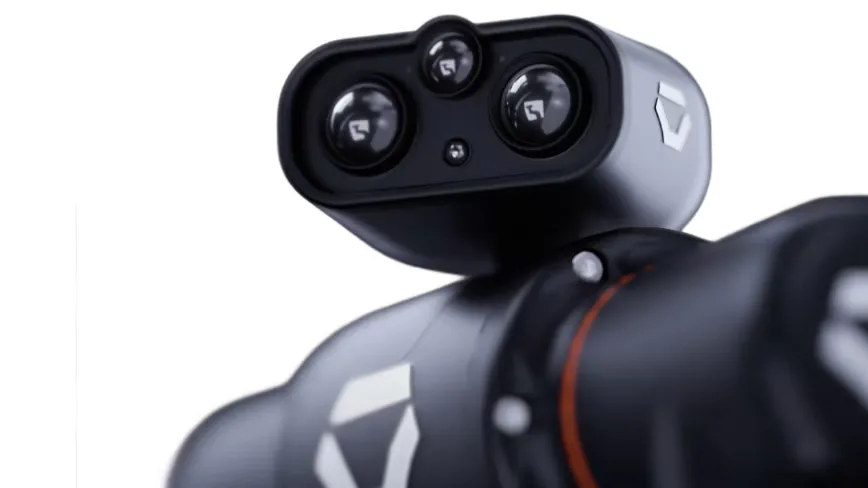
Standard Bots, a New York-based AI robotics company building industrial robotic arms, raised $200 million at a $1 billion valuation. The funding, led by General Catalyst and RoboStrategy, is aimed at expanding US manufacturing as the company seeks a larger share of industrial deployments.
Standard Bots just raised $200 million at a $1 billion valuation to expand US manufacturing of AI-powered robotic arms. That is not a vanity round. It is a signal that the company wants to convert industrial automation demand into capacity, fast, and it wants to do it with US-made hardware instead of treating manufacturing as an afterthought.
The round was led by General Catalyst and RoboStrategy, a robotics-focused fund, and it follows a $63 million raise nearly two years ago at an undisclosed valuation. If you are an operator, investor, or board member watching AI move from demos into factories, this is the kind of capital stack that matters: money earmarked for production scaling, not just prototypes.
So what is Standard Bots actually building? The company makes robotic arms for industrial automation. In plain terms, these are the physical workhorses that take on repetitive or precise tasks in manufacturing environments, where software is only half the story. The other half is deployment reality: you need arms that can be integrated into existing lines, supported over time, and delivered reliably at scale. When a company raises this kind of round with a US expansion thesis, it is betting that industrial operators will pay for “works on the floor” robotics, not just “looks impressive in a lab.”
Why now? Industrial automation has been evolving for years, but the AI layer changes what buyers expect. AI-powered systems typically promise better flexibility and performance, which can translate into higher throughput, reduced downtime, or more adaptable processes when product mixes shift. But those outcomes still depend on manufacturing and deployment throughput, which is where Standard Bots is putting its money. A $200 million round at a $1 billion valuation is effectively a bet that the company can turn industrial interest into repeatable sales, and turn repeatable sales into a manufacturing pipeline that keeps up.
The choice of investors also says something about the moment. General Catalyst brings classic venture muscle, while RoboStrategy is explicitly robotics-focused. That pairing suggests the round is designed to underwrite both the commercialization push and the operational grind that robotics demands. These are not companies that only want to “own the idea.” They want to back the system, from supply chain to execution. For boards, that distinction matters because robotics is where timelines can get expensive: hardware development cycles, integration efforts, quality control, and field support can stretch beyond the period many investors are comfortable with.
There is another layer that often gets underestimated in robotics funding: the regulatory and policy environment around manufacturing and industrial automation. While the source does not cite specific regulations or compliance programs, US manufacturing expansion in 2024 and beyond is typically evaluated under practical expectations like local production capacity, supply chain resilience, and the ability to meet customer deployment requirements. In other words, even when rules are not the headline, the “ability to ship” can be the competitive advantage that determines who wins enterprise adoption.
And adoption, in robotics, is a two-sided marketplace problem. Industrial buyers care about uptime and integration, while robotics providers care about repeatability and service capacity. That is why capital that targets manufacturing expansion can have second-order effects beyond the company itself. If Standard Bots scales US production successfully, it can lower lead times, improve consistency across deployments, and strengthen its ability to support customers over the lifespan of installed equipment. That, in turn, can make it easier for new customers to justify switching or adding robotic arms, because the fear of operational disruption is reduced.
Standard Bots is not arriving in a quiet niche. The industrial automation market has plenty of players competing on performance, integration experience, and total cost of ownership. When a company raises $200 million and sets its valuation at $1 billion, it is also creating a competitive reference point for peers: the fundraising bar for robotics deployments is rising, and the expectation is that serious robotics companies will build real capacity in the US, not just sell from distant supply chains.
For executives and board members, the real question is what this capital means for timelines and strategy. Standard Bots has already raised $63 million nearly two years ago, and now it has followed that up with a much larger round. That pattern suggests the company believes it has crossed a threshold where expansion is the constraint. If Standard Bots can execute, it could accelerate deployments and raise competitive pressure across industrial robotics. If it cannot, the same factors that make scaling powerful can turn expensive. In either case, this round is a clear reminder: in robotics, the financing round is not separate from the deployment plan. It is part of it.
This story's Key Insights and Take-aways are locked.
Create a free account to unlock Executive Actions for one credit.
Register to UnlockAlways free for Executives Club members. Join the Club
More in Business

Anthropic’s Levant Alpöge cracks the Jacobian conjecture after 87 years
A Harvard valedictorian used Claude to hit a 1939 breakthrough, but the missing “why” is the real problem.

Uber buys Delivery Hero for nearly $15B, vaulting to top food delivery outside China
The deal doubles Uber's dual-services footprint and pushes a ride-and-eats bundling play into 50 more markets.

Epic and Google drop settlement bid, forcing rival Android app stores by July 22
Google told the court it is ready to carry third-party app stores starting Wednesday, July 22.