

Stanford and ADP: women 22-25 saw 1.3% job growth vs men 2.7% after late-2022
The Canaries Dashboard shows the gender gap is real, but it does not track AI exposure the way you’d expect.
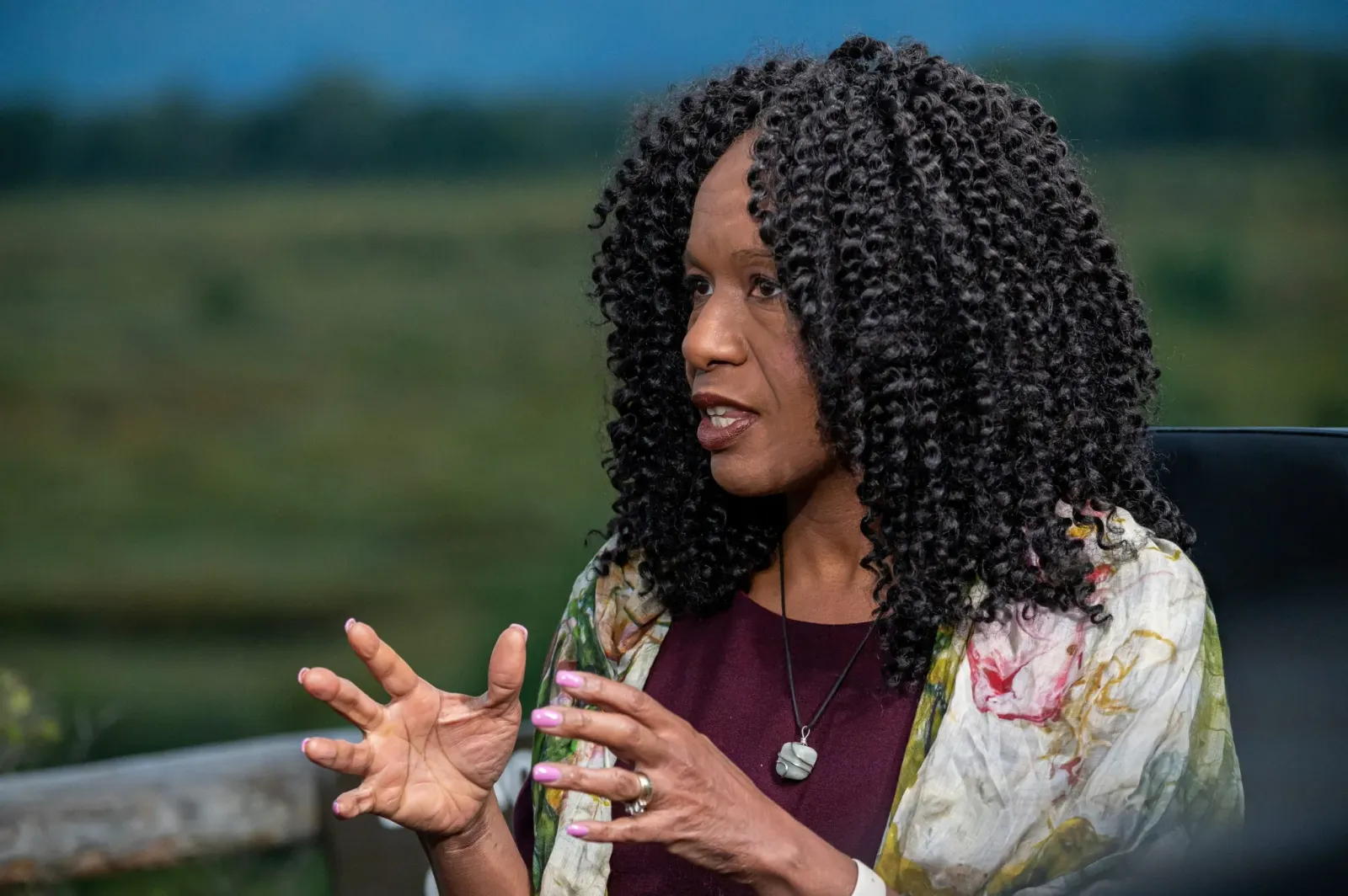
Stanford Digital Economy Lab and ADP Research, led by Erik Brynjolfsson and Nela Richardson, released new Canaries Dashboard payroll data. For ages 22 to 25, women’s employment grew at 1.3% annually after late 2022 versus 2.7% for men, and the gap does not correlate cleanly with AI exposure.
If you’re worried that AI is the reason young women are falling behind young men in hiring, the new payroll data from Stanford and ADP should make you pause. In the 22 to 25 age bracket, employment among women grew just 1.3% a year after late 2022, compared with 2.7% for men. That gap shows up across the board. But here’s the twist that matters for leaders: the researchers find the difference is not noticeably correlated with how exposed a job is to generative AI.
The data comes from an update to the “Canaries Dashboard,” a joint project of the Stanford Digital Economy Lab and ADP Research, shared exclusively with Fortune ahead of its public release tomorrow. The dashboard, led by Erik Brynjolfsson and Nela Richardson, was built to show how generative AI is reshaping entry-level hiring, and since its debut it has tracked a pattern that won’t let HR teams and investors sleep: in the most AI-exposed occupations, workers age 22 to 25 have seen employment decline sharply since ChatGPT’s late-2022 debut, even while overall U.S. employment growth stayed healthy. The new update breaks the numbers down by gender for the first time.
So what exactly is happening to women, and where does AI fit? The researchers’ latest results show women in the Canaries sample have weaker employment growth than men in the same 22 to 25 window. They describe two forces working at once. First, women are more likely to be employed in AI-exposed occupations to begin with. Second, at every level of AI exposure, women see somewhat slower employment growth than men.
Let’s look at the composition numbers, because they’re the obvious headline and they also turn out to be the biggest clue. In the Canaries sample, 43.8% of women work in the most-exposed category of jobs and 21.2% in the second-most-exposed, compared with 32.4% and 18.1% for men. If you stop there, it’s easy to assume AI is the main culprit. But the researchers do not stop there, and that’s the point Fortune highlights: even when they isolate how much of the employment growth gap tracks specifically with AI exposure, the connection isn’t there.
In the materials shared with Fortune, they state: “These gaps are a feature of our broader sample; they are not noticeably correlated with AI exposure.” They add a clearer bottom line: “Gender-based differences in the relationship between AI exposure and employment trends appear to be driven primarily by occupational composition, rather than disparate trends within given sets of occupations.” Put plainly, the jobs women are more likely to hold explain much of the gap. But within a job category, the relationship between AI exposure and the gender gap does not escalate in the way you might predict if AI were treating women differently once they land in a specific role.
That distinction matters because prior research pointed strongly in the direction many people assume: for example, the International Labour Organization has found women’s jobs are nearly twice as likely as men’s to be exposed to generative AI, and separate estimates have put women at three times the automation risk of men. Those studies focus on exposure or risk. The Canaries data goes further by measuring actual, realized employment outcomes month by month across 4.6 million workers and more than 730 occupations. If AI exposure were driving the gender gap, the gap should widen sharply as exposure rises. Instead, the gap is “roughly the same whether a job is barely touched by AI or squarely in its path.”
This means AI isn’t off the hook. It just isn’t acting as the direct lever in the gender disparity question the way headlines might suggest. The researchers’ broader thesis about entry-level hiring remains intact: AI is disrupting tasks before it disrupts jobs, and mechanical or easily automated tasks like summarizing, formatting, and scheduling tend to be the parts that get handed to newer employees on a team. Their automation-versus-augmentation framing is central here. Occupations where AI augments human work show more durable employment growth, while those where it automates tasks outright are contracting, and entry-level roles sit disproportionately in that contracting group.
If women are overrepresented in AI-exposed roles, they are more exposed to that contracting dynamic. But the researchers argue that this is largely a byproduct of occupational sorting that predates generative AI, not because AI treats women differently once they’re in a given job. What’s behind the flatter growth curve across the board is still an open question, and the researchers flag likely suspects they plan to study further over time, including education mix, industry concentration, hours worked, and return-to-office effects. For executives, board members, and investors, the strategic stakes are simple: AI-driven hiring disruption is real for young workers, but the gender gap is likely being shaped by broader labor-market structure, not a single AI bias switch you can “turn off” with policy.
If you run hiring pipelines, staffing platforms, or portfolio companies that depend on entry-level recruiting, you need to watch two tracks at once. One is the task-level disruption that continues to hit AI-exposed occupations hard after late 2022. The other is who gets sorted into which occupations in the first place, because that sorting appears to do most of the work in explaining the gender gap in employment growth. The next phase of the research, and the next wave of industry action, will be defined by whether leaders treat this as an AI problem to model or a labor-market problem to redesign.
This story's Key Insights and Take-aways are locked.
Create a free account to unlock Executive Actions for one credit.
Register to UnlockAlways free for Executives Club members. Join the Club
More in Business

Anthropic’s Levant Alpöge cracks the Jacobian conjecture after 87 years
A Harvard valedictorian used Claude to hit a 1939 breakthrough, but the missing “why” is the real problem.

Uber buys Delivery Hero for nearly $15B, vaulting to top food delivery outside China
The deal doubles Uber's dual-services footprint and pushes a ride-and-eats bundling play into 50 more markets.

Epic and Google drop settlement bid, forcing rival Android app stores by July 22
Google told the court it is ready to carry third-party app stores starting Wednesday, July 22.