
Stanford PhD student asked AI to design viruses. It worked. Life could be next.
Samuel King's generative AI produced genetic blueprints for microscopic viruses in 2025, and the MIT Technology Review Innovators Under 35 honoree says AI-generated life may be the next step.
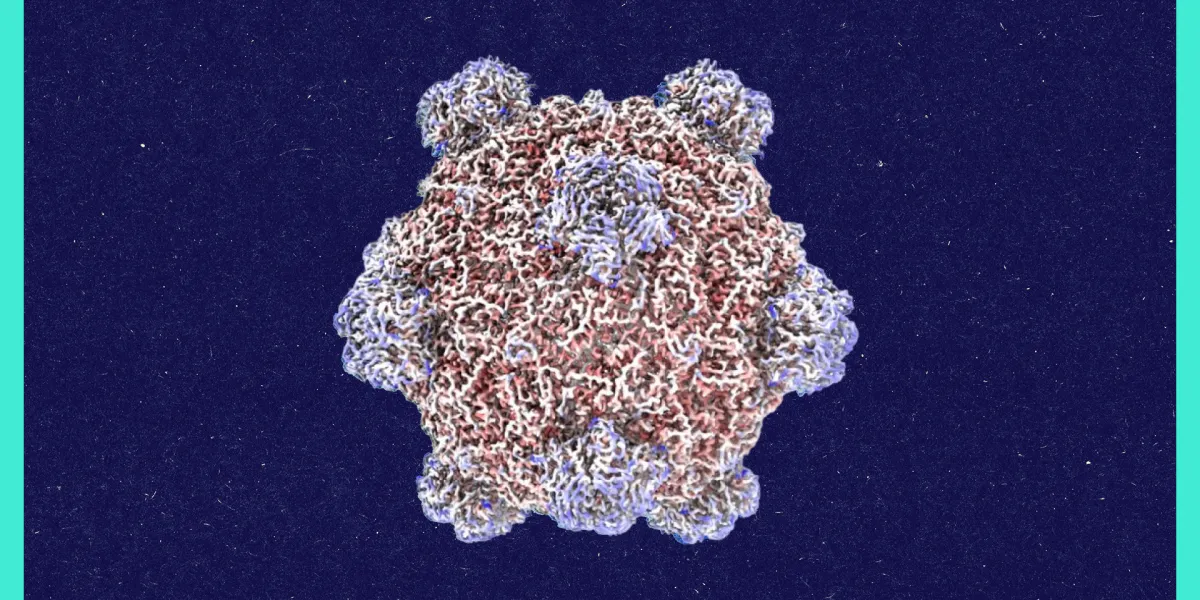
Samuel King, a Stanford University bioengineering PhD candidate and Arc Institute researcher, used a generative AI model in 2025 to propose genetic blueprints for microscopic viruses. The breakthrough, which earned him an Innovators Under 35 recognition, suggests AI-generated life could be the next frontier in synthetic biology.
Samuel King, a Stanford University bioengineering PhD candidate and Arc Institute researcher, asked a generative AI model to design viruses in 2025. It worked. The AI proposed genetic blueprints for microscopic viruses, a preliminary answer to the question of whether AI can design new life forms. But King's work is not yet an example of AI-generated life. That, according to the research, could be next.
The implications are immediate. MIT Technology Review's related coverage notes that AI-designed viruses are already here and killing bacteria. That means King's blueprints are not just digital curiosities; they sit at the intersection of generative AI and synthetic biology, where the gap between a genetic sequence and a living organism is shrinking.
King is being recognized for this work as one of MIT Technology Review's Innovators Under 35. He will join senior AI reporter James O'Donnell for a live roundtable on October 16, 2026, at 18:30 BST / 1:30pm EDT / 10:30am PDT. The conversation will cover his research and new ways of seeing biology.
For decision-makers, the significance goes beyond the lab. Generative AI models that can propose genetic blueprints could compress the design-build-test cycle in biotech, making it faster and cheaper to engineer organisms for medicine, materials, or agriculture. But the same capability raises questions about biosecurity, because the barrier to designing pathogenic sequences may be lower than ever.
Historically, synthetic biology has required deep expertise and physical infrastructure. AI tools are changing that calculus by turning genetic design into a language-model problem. For context, the field is moving from reading DNA to writing it, and now to asking machines to propose sequences that nature has not yet produced.
The regulatory landscape is still catching up. Governments and international bodies have spent years debating how to govern AI and biosecurity, but the pace of research is accelerating. King's work is a concrete example of why those debates matter, because it shows that AI can produce viable-looking biological designs today, not in some distant future.
For founders and investors in the AI and biotech space, the strategic stakes are clear. Startups that can responsibly harness generative models for biological design could unlock new markets in drug discovery, enzyme engineering, and beyond. Incumbents in pharma and agriculture will need to watch whether these tools become a new moat or a new risk.
The roundtable with King and O'Donnell is a chance to see where this is heading. If AI can propose genetic blueprints for viruses today, the next milestone may be AI-generated life itself. That is not a sci-fi hypothetical; it is the stated trajectory of the research. For anyone building or funding the next generation of biology, the time to understand this shift is now.
This story's Key Insights and Take-aways are locked.
Create a free account to unlock Executive Actions for one credit.
Register to UnlockAlways free for Executives Club members. Join the Club
More in Technology

A Chinese rocket deorbited over Minnesota and landed in a farmer's cornfield
Experts tied the fragment to LandSpace's Zhuque-2E, which launched on September 15 and shed debris over the American Midwest after deploying 10 satellites.

JPMorgan Chase deploys first $5B into defense tech and hypersonic missiles
The bank is moving off its balance sheet to back robot factories, hypersonic missiles, and supply chains, signaling a new era of bank-backed military innovation.

Cop fired after sharing Flock login with ICE husband: 983 searches
A Savannah officer's shared credential let an ICE agent run hundreds of plate searches on Hispanic drivers, exposing a surveillance backdoor.