
Star Citizen adds 385 asteroid defense missions, but escort pilots reportedly detonate
Alpha 4.8.1 promises unique blueprints for successful runs, while players report broken hangar doors and failed escort missions.
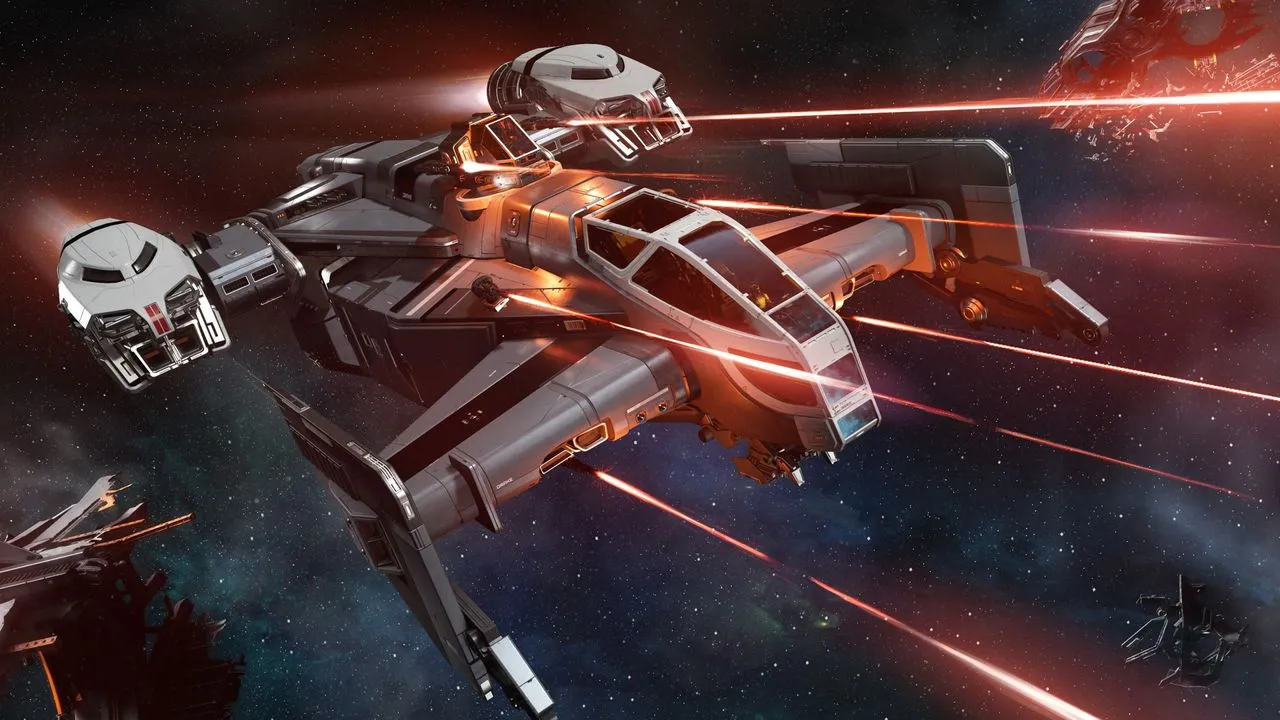
Cloud Imperium Games' Star Citizen launched alpha patch 4.8.1 with 385 asteroid defense missions, tying success to credits, reputation gains, and unique blueprints. Decision-makers should read this as a production and incentives warning: even profitable content drops can undercut player trust if core mission flow breaks.
Star Citizen’s alpha patch 4.8.1 just added 385 asteroid defense missions, and the pitch is straightforward: defend asteroid bases in Stanton and Pyro, stop attackers from destroying key resources, and escort escaping workers to safety as needed. The problem, according to players, is that the “escort” part is breaking in a way that turns mission success into a coin flip, or worse. In multiple reports, the pilot players are supposed to escort ends up flying into the hangar, the doors supposedly never open, and the pilot “just explodes.”
That’s not a vague bug report either. One player on the Star Citizen subreddit, Zealousideal-Ad2695, says they “Failed every one so far,” describing the escort pilot trajectory into the hangar and the hangar doors never opening. Another commenter, Poordutchguy, adds that it is not a brand-new issue: “That happened when these missions were active in the past.” They also cite their own run history, saying they did 13 missions and only 1 succeeded.
Zoom out, and you can see why this matters beyond a handful of frustrated commanders. Patch 4.8.1 is continuing the asteroid theme introduced by patch 4.8, which added a combined space and ground assault involving heavily fortified asteroid locations. In 4.8.1, the lore frames it as raiders besieging mining stations, with Foxwell Enforcement (a security group) and Headhunters (a criminal organization) both enlisting pilots to defend mining operations. On paper, the missions are a clear loop: choose a role, fight the raiders, protect resources, get workers out, and earn rewards.
And the rewards are the real incentive lever. According to the patch notes, successful mission completion earns pilots credits, reputation gains, and “unique blueprints available here for the first time.” That last clause is doing heavy lifting. “Unique blueprints” are exactly the kind of progression item that can pull players back into live service content, especially in an alpha where motivation often depends on what you can unlock now. Yet CIG does not specify what those new blueprints might be, so players are relying on mission reliability to even reach the moment where they can claim the promised payoff.
If you are an executive watching a long-running game’s roadmap, this is the classic second-order risk: content volume does not automatically equal player trust. Star Citizen has been in alpha for a long time, and the source notes it has received $1 billion in funding over 14 years. That context matters because expectations rise when the revenue story is extraordinary, even if launch is still distant. The same article points out that the real market chatter often swallows the operational reality: Star Citizen may not be finished, but it is playable in an alpha that gets updated relatively regularly. That “regularly” is the commitment players are paying attention to, and mission-breaking escort mechanics are the kind of regression that makes “regular” feel unreliable.
There is also an internal resource allocation angle. The source suggests that CIG’s current attention may be on the single-player campaign Squadron 42, a major pillar for the studio. Chris Roberts recently said Squadron 42 is in the “closing stages” of development, and there are rumors it could appear at Summer Games Fest, with possible news that could still include another delay. Whether you buy into the rumors or not, the management implication is clear: when a studio has multiple major deliverables, the “background” work that keeps live systems playable can quietly suffer. Patch 4.8.1 shows CIG still ships mission content, but player reports indicate critical mission flow issues can slip through.
Now connect this to how players behave, and how that behavior hits a business. In games, especially in long-running alphas, mission reliability is not just a quality metric. It influences time-on-task, satisfaction, social sharing, and whether players bother trying again after a failure. When players report that the escort pilot repeatedly detonates due to hangar door behavior, the immediate reaction is frustration. The bigger strategic risk is the longer-term one: if players stop believing that “successful completion” is realistically achievable, then rewards like credits, reputation gains, and unique blueprints become theoretical value. In other words, the incentive system can stall.
For peers making platform bets, this is a reminder that “playable” is not a binary status. It is a collection of mission scripts, state transitions, animations, and triggers that must function end to end. Star Citizen’s patch notes can promise “defend asteroid bases,” but the player experience still depends on one unglamorous detail: hangar doors opening at the right time. In the short term, that’s a bug. In the long term, it determines whether your next batch of content earns trust or spends it.
This story's Key Insights and Take-aways are locked.
Create a free account to unlock Executive Actions for one credit.
Register to UnlockAlways free for Executives Club members. Join the Club
More in Business

Anthropic’s Levant Alpöge cracks the Jacobian conjecture after 87 years
A Harvard valedictorian used Claude to hit a 1939 breakthrough, but the missing “why” is the real problem.

Uber buys Delivery Hero for nearly $15B, vaulting to top food delivery outside China
The deal doubles Uber's dual-services footprint and pushes a ride-and-eats bundling play into 50 more markets.

Epic and Google drop settlement bid, forcing rival Android app stores by July 22
Google told the court it is ready to carry third-party app stores starting Wednesday, July 22.