

Star Wars Zero Company is $50, launching Aug. 27, and it quietly bullies the $80 norm
A $50 price tag from the XCOM veterans signals a deliberate fight for attention, not just another premium release.
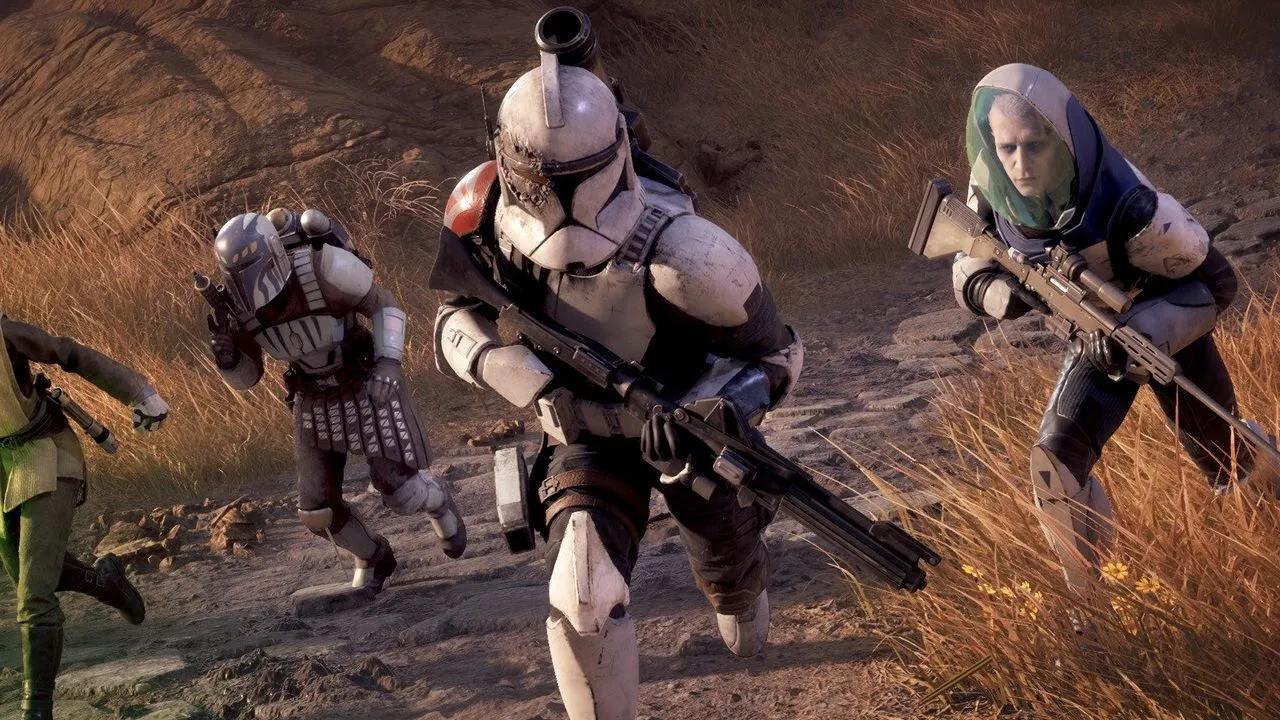
Star Wars Zero Company, revealed at the 2026 Summer Game Fest with gameplay and a release date of August 27, is priced at $50. For decision-makers, the consequence is clear: a major franchise licensee is choosing value positioning against the industry drift to $70 and $80.
Star Wars Zero Company just came out of the 2026 Summer Game Fest reveal with a rare, specific kind of confidence: it has an official $50 price tag, and it launches August 27. That means the game lands far below the $70 baseline many players now mentally budget for, and it also undercuts the emerging headline number games are starting to ask for, like $80, even $100 in some cases. In other words, this is not a “we’ll see what people pay” situation. It is a stated price, publicly visible alongside the gameplay and release date, and it immediately sets expectations for how the game intends to compete.
The kicker is who this is coming from and what they are promising. The game is a squad tactics experience from XCOM veterans, and the hands-on preview earlier this year positioned it as both “crunchy permadeath squad tactics” and surprisingly lavish presentation. The cutscenes are described as feeling in line with CD Projekt, with intricate animations and a large voice cast. Add in one mechanical innovation highlighted in the preview: exploration between fights and back at a home base is zoomed in like a third-person action game, then transitions seamlessly to the overhead god view when fighting starts. So the $50 tag is not paired with “cheap production” expectations. The product narrative is closer to premium experiences at a value price.
If you are an executive or board member trying to read this like a signal, the strategic logic is pretty straightforward, and it is backed by how the industry actually fights for attention. The source makes the competitive set explicit: Zero Company is positioned as effectively competing with $20 and even $10 indies for people's time and attention. That matters because a lot of modern game economics are less about whether a studio can build a beautiful trailer, and more about whether players feel the ask matches the payoff. When big publishers drift upward to $70, $80, or higher without a commensurate, clearly communicated gameplay value proposition, they risk training audiences to wait, backlog, or pick up the next sale. Zero Company’s pricing stance is an attempt to stand out by reducing the “friction cost” of trying it.
This also lands in a market moment where pricing inflation is becoming a public political question inside player communities. The source explicitly contrasts Zero Company’s $50 with two other pricing reference points. It mentions Galactic Racer, another upcoming Star Wars game, going the $60 route. It also contrasts with Rockstar asking for $80, and even $100 for GTA6, with “nary a gameplay trailer in sight.” Whether you think the comparison is fair or not, it reveals how viewers are currently evaluating publishers: not only by how much they charge, but by what evidence they provide before charging it. Zero Company is showing gameplay and tying it to the $50 number at the same time. That sequencing is a quiet but meaningful credibility move.
There is another layer here for decision-makers: brand safety versus brand ambition. A major franchise licensee still has to balance the risk of a flop launch. The source directly calls out that pricing is a “savvy business move” that helps stave off the perpetual threat of a flop launch. If you assume triple-A development costs are high, then the pricing decision becomes part of the risk management toolkit. Charging too much can raise the break-even pressure. Charging too little can create doubts about production quality or scale, unless the product de-risks the concern with visible scope. Zero Company’s pitch tries to solve both sides. It keeps the ask low while signaling polish through its cutscenes, voice cast, and the described exploration-to-combat transition mechanic.
Even the historical comparisons matter, because they make the $50 number feel like a deliberate throwback, not an accident. The source notes that $50 is what Firaxis charged for XCOM: Enemy Unknown in 2012, and it is less than XCOM 2’s $60 launch price. That is not just trivia. It tells you something about how the studio lineage thinks about value. It also frames what players might expect from a tactics audience, which has traditionally been sensitive to whether the game delivers meaningful systems, not just aesthetics.
Finally, the operational context for executives is timing. Zero Company is slated to release August 27, and the player-facing action is immediate: it is available to wishlist on Steam. Pricing plus wishlist visibility can influence early discovery, conversion, and how aggressively competing titles get attention. If peers are pitching $70 and up, a $50 launch date with visible gameplay can siphon “day-one budget” from them. For boards and finance leaders, this is the kind of decision that can shift forecast assumptions: not only expected unit sales, but also marketing efficiency, because clearer value positioning can reduce the burden of convincing players from scratch.
Put simply, Star Wars Zero Company is using a $50 price, grounded in a systems-rich tactics identity and premium presentation cues, to challenge the industry's pricing gravity. If you are underwriting similar projects, the lesson is that price is not just a number. It is a competitive weapon, a risk control mechanism, and a statement about whether your product deserves the audience's scarce time. This is how you stand out without needing to start at the top of the price ladder, and it may force everyone else to justify their asks with even more concrete gameplay evidence.
This story's Key Insights and Take-aways are locked.
Create a free account to unlock Executive Actions for one credit.
Register to UnlockAlways free for Executives Club members. Join the Club
More in Entertainment

Russell Brand's accuser 'bewildered and confused' as he denies 7 sex charges
The criminal case against the comedian is a live test of how media companies manage talent risk when serious allegations go public.

'It's a Magic Trick': Ballet Experts Say Rosalía's SNL Pose Is Impossible
Three ballet experts tell Rolling Stone Rosalía's gravity-defying SNL stillness shouldn't be possible - and why the debate is now part of the show.

Activision CMO: GTA 6 Will Boost Call of Duty, Not Bury It
Activision's top marketer says Rockstar's blockbuster will drive players back to consoles and into Modern Warfare 4, even as the company admits its recent strategy failed.