
Stargate SG-1 quietly built a TV sci-fi universe that outlived its origin story
Brad Wright and Jonathan Glassner turned an unexpected hit into 25 years of spin-offs, movies, and franchise power.
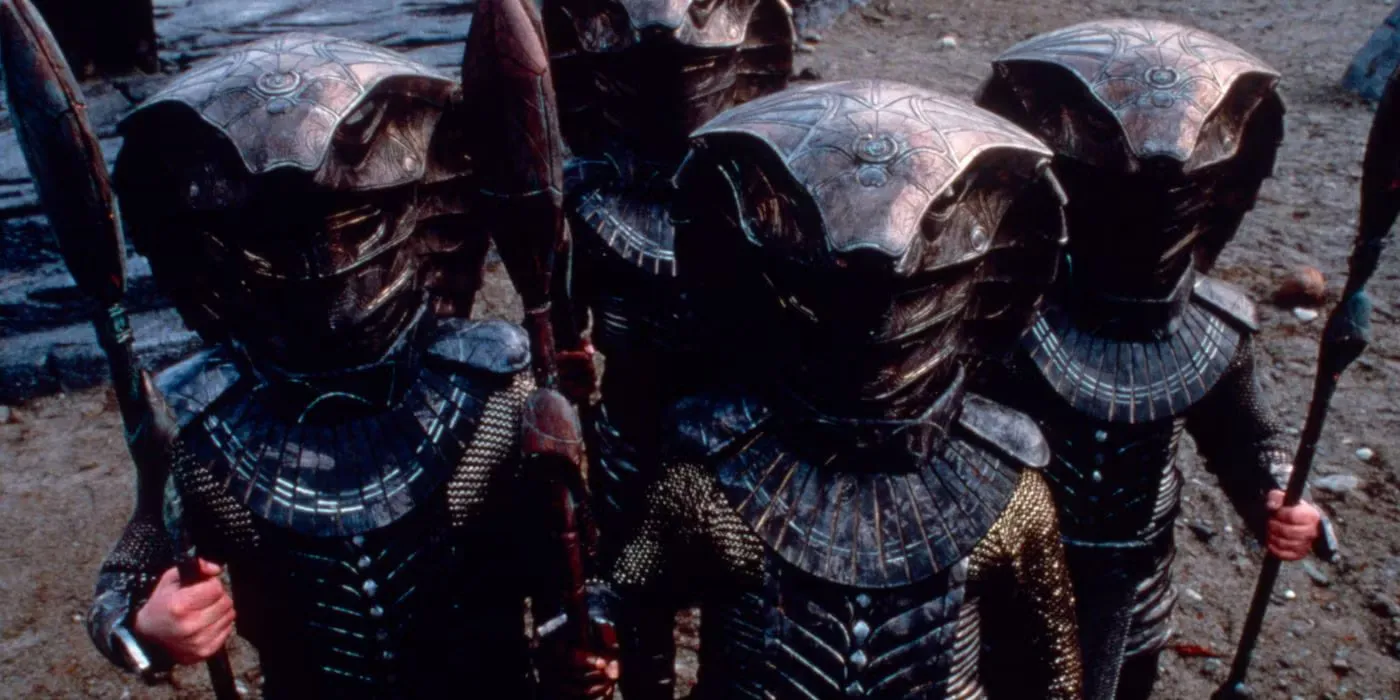
Brad Wright and Jonathan Glassner helped launch Stargate SG-1, which started as a sci-fi television series but became the launching pad for a bigger Stargate franchise. For decision-makers, it is a case study in how to engineer durable IP ecosystems from a single breakthrough.
Science fiction has a habit of building empires. You see it in the obvious, headline-grabbing places, like Star Wars and Star Trek. But one of the more underrated wins in the genre is Stargate, and its real start was not a new streaming universe or a modern content strategy. It was Stargate: SG-1, and it quietly did something hard: it turned a one-series success into a whole franchise that keeps a dedicated fanbase more than 25 years after its inception.
That success is tied directly to showrunners Brad Wright and Jonathan Glassner, who deserve credit for launching a series that has lasted this long and for using that series as a launching pad for a wider TV and film universe. Collider frames SG-1 as an origin story rooted in unexpected success, which matters because the modern mindset often assumes franchise-building is a product of streaming abundance. In this case, SG-1 did not have the luxury of a streaming service, and it debuted before genre television fare became as commonplace as it is now.
Here is why this is an executive-grade lesson. When a franchise emerges from a surprise hit, the early success has to do double duty. It has to satisfy immediate audience demand, and it has to prove to internal stakeholders, distributors, and eventually other partners that there is enough runway to justify expansion. Collider puts the spotlight on Wright and Glassner specifically because they are credited not just with producing a series that continues to hold fans, but with creating a structure where the franchise could keep growing beyond the original show.
The contrast with how genre spin-offs often work today is doing real work in the story. Collider compares the Stargate path to cases like Peacemaker and Loki, where shows can spin out of feature films. The point is not that this approach is better. It is that SG-1 did not get the same starting conditions. It did not begin with an environment where streaming platforms were manufacturing genre ecosystems every quarter. It launched in a different era, when genre series were less uniformly supported and when “massive TV universes” were harder to bankroll in advance.
Zoom out further and you get a second-order implication about how universes behave. A franchise like Stargate SG-1 does not just accumulate content. It builds expectations. Once audiences connect with the world, the franchise becomes a kind of ongoing relationship. That is how Collider can credibly say the show still holds a dedicated fanbase 25 years after its inception. From a board or investment perspective, this is where “brand durability” stops being marketing fluff and becomes a revenue thesis: longevity implies a steady stream of interest that can support spin-offs, movies, and continued relevance over time.
There is also a timing incentive embedded in Collider’s framing. If SG-1 did not have streaming-era advantages, then the durability likely came from decisions that worked under tighter conditions. In franchise economics, that translates into careful selection of what to expand, what to leave consistent, and how to keep enough coherence that audiences do not feel like they are being sold something incompatible with what they loved. Wright and Glassner are credited for the launch and for serving as that launching pad, and the implication is that their approach created enough internal momentum to justify spin-offs and movies.
And now the strategic stake for peers: the entertainment world is increasingly obsessed with “universe” language, but universes are not a vibe. They are built from repeatable systems and proof points. Collider’s narrative gives you one. Stargate SG-1 began with unexpected success, then expanded into spin-offs and movies, and ultimately into one of TV’s richest sci-fi universes. If you are an executive shaping content strategy, your question is not “Can we create a universe?” It is “Do we have a model that can survive the era we are in, without relying on convenience factors like streaming scale or pre-existing feature pipelines?”
If SG-1 is a reminder of anything, it is that the most consequential IP growth sometimes looks quiet at first. A hit series in the right hands can become a franchise engine, and the earlier you understand that, the less you gamble on hype.
This story's Key Insights and Take-aways are locked.
Create a free account to unlock Executive Actions for one credit.
Register to UnlockAlways free for Executives Club members. Join the Club
More in Entertainment

Russell Brand's accuser 'bewildered and confused' as he denies 7 sex charges
The criminal case against the comedian is a live test of how media companies manage talent risk when serious allegations go public.

'It's a Magic Trick': Ballet Experts Say Rosalía's SNL Pose Is Impossible
Three ballet experts tell Rolling Stone Rosalía's gravity-defying SNL stillness shouldn't be possible - and why the debate is now part of the show.

Activision CMO: GTA 6 Will Boost Call of Duty, Not Bury It
Activision's top marketer says Rockstar's blockbuster will drive players back to consoles and into Modern Warfare 4, even as the company admits its recent strategy failed.