

Starship Flight 13 reattempts after last-second abort, replacing Raptors without a static fire
SpaceX aims to launch July 24 after weather scrubs and engine swaps, pushing toward heatshield imagery and a relight test.
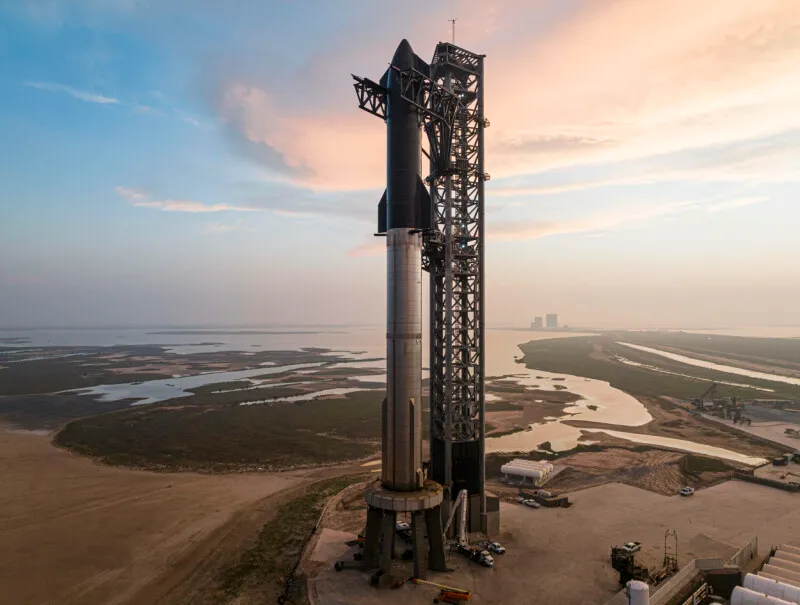
SpaceX is preparing Starship Flight 13 for a July 24 liftoff window after a July 16 last-second abort and a weather scrub, with replacement Raptor engines heading to the pad. The move matters for decision-makers because NASA deadlines, public-market optics, and engine reliability all collide in the next test.
SpaceX is gearing up for another shot at launching Starship on July 24 with Starship Flight 13, after two setbacks that forced the team to rethink timing and hardware. The 90-minute launch window opens at 1745 CT on Friday, July 24, following a launch postponement of 24 hours due to weather, according to SpaceX. The earlier attempt, on July 16, was aborted in the final seconds after some of the booster’s Raptor engines failed to start.
This is not a routine retry. SpaceX says it is swapping in replacement Raptors, but it did not run the kind of full-throttle verification some observers expect. Elon Musk previously said that “two Raptors will be removed and replaced” after the last-second shutdown on July 16. The key twist for this attempt: replacement Raptors are planned to fly without a static fire test of the booster with the new engines on July 22. In a post on X, SpaceX only stated “additional preflight testing on Super Heavy complete.” The Register asked SpaceX what testing it performed, but it has yet to respond.
So why press on without the static fire step that would normally calm nerves? SpaceX’s stated reason for the specific Friday attempt is about visibility, not just engine readiness. The company explained that “a key objective for the flight test is to get clear imagery from the ground of Starship's heatshield as it flies at a higher dynamic pressure during ascent, which won't be possible with today's weather conditions.” Visibility is forecast to be ideal for a Friday launch, and that matters because the heatshield is one of the toughest problems in reentry vehicles. If you cannot see it clearly when it is under higher stress, you may not learn what you need to learn.
But the engine story keeps looming in the background. The launch attempt last week was aborted in the final seconds after some booster Raptor engines failed to start. The substitution plan, as Musk described it at the time, was to remove and replace two Raptors. Then, after that, SpaceX’s approach appears to have shifted toward other preflight checks: on July 22, it did not conduct a static fire test of the booster with the new engines, and instead only communicated that “additional preflight testing on Super Heavy complete” was done.
For executives, boards, and capital allocators watching this program, that difference is meaningful because it changes the risk profile of the next data point. A static fire is essentially a ground truth rehearsal for ignition and early-life behavior. Not doing it with the replaced engines introduces an element of “we will learn on the pad or in flight” rather than “we already learned it before.” The Register notes speculation that last-second shutdowns, whether during a static fire or launch attempt, may not be kind to Raptor engines. Even if that speculation is not confirmed in the source, the underlying operational question is real: when engines fail to start, reliability is not only about whether they start, but whether the hardware survives the cascade of events around a late abort.
Now layer in the external pressure. Starship is under greater scrutiny than ever. NASA requires it to have orbital capability for Artemis III in 2027, and requires a launch cadence high enough to support a lunar landing mission in 2028. Those are not “someday” targets. They are program-level constraints that force SpaceX to convert hardware iterations into successful flights on a timeline that regulators and customers can plan around.
That schedule pressure runs directly into the public-market lens. SpaceX is publicly traded, and while its current stock price has already fallen below its IPO, the company “could do without further rattling investor nerves with a failure,” according to The Register. In other words, this is not just a technical test anymore. It is a narrative test for stakeholders. When you are trying to build a launch cadence and win government milestones, each abort and scrub has downstream effects: employee morale, supplier confidence, and the confidence investors assign to delivery.
If Flight 13 goes well, the mission duration should be just over an hour. The planned profile is familiar but still ambitious. After launching Starship, the Super Heavy booster is expected to make a controlled splashdown in the Gulf of Mexico. Starship will use its Raptor engines to enter a suborbital trajectory before coming down in the Indian Ocean. Before re-entry, SpaceX plans to deploy 20 Starlink V3 satellites, which will follow the vehicle on its suborbital trajectory, and attempt a relight of a Raptor engine. The relight is described in the source as “a critical step on the path to Starship going orbital,” because going from suborbital demonstration to orbital operations means restarting engines and managing energy in a more demanding regime.
For executives in aerospace, launch, defense-adjacent tech, or any hardware-heavy business, the second-order lesson is about how programs balance evidence, timing, and optics. SpaceX is tying a launch decision to heatshield imaging conditions while still managing an unresolved question about engine verification steps after late-start issues. In the near term, that means the Friday launch is both a technical test and a credibility check across multiple audiences: NASA, investors, partners like the Starlink ecosystem, and the internal team that has to keep shipping even while the plan keeps changing.
This story's Key Insights and Take-aways are locked.
Create a free account to unlock Executive Actions for one credit.
Register to UnlockAlways free for Executives Club members. Join the Club
More in Business

Anthropic’s Levant Alpöge cracks the Jacobian conjecture after 87 years
A Harvard valedictorian used Claude to hit a 1939 breakthrough, but the missing “why” is the real problem.

Uber buys Delivery Hero for nearly $15B, vaulting to top food delivery outside China
The deal doubles Uber's dual-services footprint and pushes a ride-and-eats bundling play into 50 more markets.

Epic and Google drop settlement bid, forcing rival Android app stores by July 22
Google told the court it is ready to carry third-party app stores starting Wednesday, July 22.