
Steam Deck OLED prices jumped $549 to $789, and Valve’s cheaper dreams collapsed fast
Valve blamed component costs and global logistics. Here’s how the Steam Machine and Deck pricing reshaped PC “mainstream” odds.
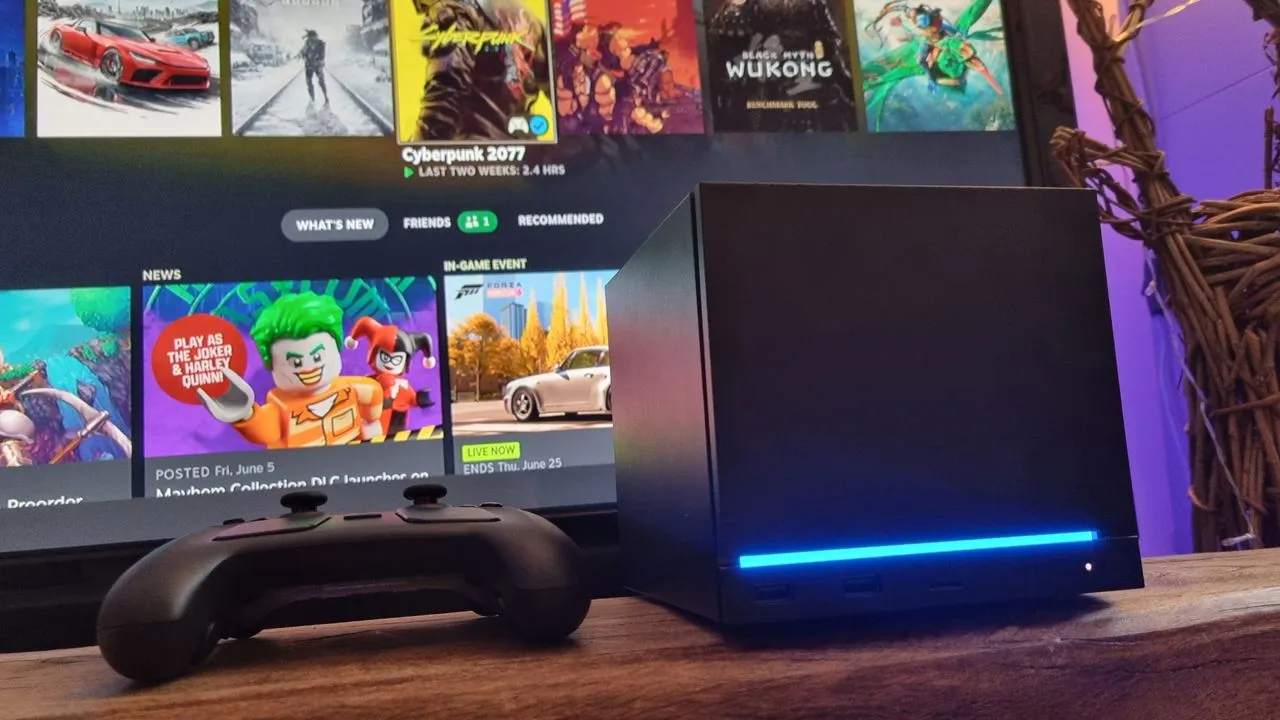
Valve raised Steam Deck OLED pricing in May, citing component costs and global logistical challenges, while the Steam Machine remained expensive and in extremely short supply. For decision-makers watching consumer hardware demand, the takeaway is brutal: “mainstream-friendly” PC gaming hardware is getting priced out in real time.
Valve quietly made its PC hardware future feel a lot less accessible. In May, Valve said “These new prices reflect the current state of component costs and other global logistical challenges across the industry as a whole,” and the numbers landed like a delayed bill: the Steam Deck OLED 1TB model rose from $649 to $949, and the 512GB model went from $549 to $789.
The pain point is not theoretical. Valve’s own timeline says the Steam Deck OLED turns three in November, but in under that horizon it stopped behaving like an entry point for “budding PC gamers” and started looking like a luxury purchase. The immediate “why” is straightforward: Valve tied the change to component availability, including the knock-on effects of AI datacentres consuming much of the hardware supply chain used for gaming devices. And the result is what you feel at checkout, not in a whitepaper. A device that once looked like the on-ramp to PC gaming got materially harder to justify financially.
That pricing shift did more than change demand. It also punctured a broader narrative Valve had an opening to win. PC gaming is immeasurably easier in 2026 than it was even in 2016, but consoles are still considered the easier route by millions of people. Valve, via the Steam Deck and the long-promised idea behind the Steam Machine, had a chance to show that “PC, but simple” was actually real. Instead, both the Deck’s affordability trajectory and the Steam Machine’s supply reality made the mainstream story much harder to tell.
The Steam Machine illustrates the same pressure from another angle: not just what it costs, but whether anyone can even find one. PC Gamer notes that Valve’s Steam Machine is “expensive and anyway, in extremely short supply,” and that the “launch” was “more of a waitlist launch.” Even the basics of discovery look awkward. To see if something is compatible with the device, you have to click Steam Deck Compatibility, which then shows a nested result for the Steam Machine, and this is true in both desktop and Big Picture modes. Translation: if a typical shopper is browsing Steam, they will often not even notice the Steam Machine exists. If developers are not foregrounding compatibility the way they increasingly do for the Steam Deck, the hardware stays stranded in the UI, not the customer journey.
Andy Edser’s June review, as summarized by PC Gamer, supplies the sharpest phrase in the whole mess: the Steam Machine is “the biggest victim of the RAMpocalypse to date.” PC Gamer also ties the expected price to the reality gap. The Steam Machine was predicted to cost around $600 in November 2025, yet it now bears a minimum $1,049 price tag. That is not a rounding error, it is a category shift. PC Gamer writes that it was “with utmost certainty” going to buy if the price had been closer to $600, but at the current going rate, there’s “just no way,” implying a large cohort is quietly sitting on their hands.
And here is the part that should make executives pay attention, not just Steam fans. Even with these hardware headwinds, Steam Deck revenue stays stubbornly high. PC Gamer reports that in Valve’s list of Steam’s top products by revenue, the Steam Deck hit 14 in the week ending July 21 and 9 the week before. Since Steam Deck costs much more than an average game, that revenue bump can be influenced by price alone. Still, it confirms people are buying the Deck, even as affordability shrinks.
So what does this mean for the “mainstream PC hardware” bet, and why now? PC Gamer frames a key timing reversal: from the vantage point of November 2025, the Steam Machine seemed to arrive at an “immaculate” moment given existential crises facing both Xbox and PlayStation. But “It’s amazing how much difference three months makes,” and PC Gamer concludes that Steam Machine having any long-term effect on the industry seems “hugely unlikely right now.” The second-order implication for decision-makers is obvious: hardware strategies tied to a narrow window of consumer confidence are fragile when the global component economy is being pulled in another direction.
Meanwhile, Steam’s week-to-week ecosystem keeps moving, and it’s a useful counterweight to hardware anxiety. The “Top Steam games by revenue” chart for July 21 to July 28 has Counter-Strike 2 at number one, followed by Dota 2, Palworld, Halo: Campaign Evolved, and Apex Legends, with additional entries like Assassin’s Creed Black Flag Resynced, Battlefield 6, Shift at Midnight, and PUBG Battlegrounds. Mistfall Hunter, released on Thursday, is flagged as not accounted for in that revenue chart but positioned third on the live concurrents list as a “dark fantasy extraction ARPG.” The point is not that these games solve the component crisis. It’s that Steam’s software engine can keep idling through hardware turbulence, while hardware depends on supply chains that are moving targets.
The week’s deeper cuts underline what Steam does well: long-tail discovery, weird niche success, and fast surprise. Machine Party, from the creator of Buckshot Roulette, lands on July 31 with “failure to win means death,” in a PS1-style low-poly weirdness. Dog of Wisdom, originally developed for Game Boy Color, is playable on PC and is based on viral web videos, with the first video over 94 million views. Midnight Moments is a cyberpunk diorama builder inspired by Townscaper and Tiny Glade, priced “just a little over two bucks” at the moment. Dverghold is an early access blobber with an environment described as a traditionally boxy, gridlocked labyrinth and 3D models likened to fantasy-tinged Quake, with full release expected toward the end of next year. Even Steam reviews of the week lean into internet culture misfires, like “I now understand why people push people in front of trains. It’s super funny.” Alien Kink VR, “taking the wrong learnings from Machine Party.”
Put it together and the story stops being only about Valve hardware. It becomes a template for any company trying to sell consumer devices while the component market is getting raided by other priorities. When pricing snaps upward, mainstream adoption does not just slow down. It changes who buys, how quickly, and how visible the product becomes in the UI and in developer messaging. Steam Deck sales show demand still exists. Steam Machine signals what happens when affordability, supply, and product discoverability all miss at once.
This story's Key Insights and Take-aways are locked.
Create a free account to unlock Executive Actions for one credit.
Register to UnlockAlways free for Executives Club members. Join the Club
More in Business

Anthropic’s Levant Alpöge cracks the Jacobian conjecture after 87 years
A Harvard valedictorian used Claude to hit a 1939 breakthrough, but the missing “why” is the real problem.

Uber buys Delivery Hero for nearly $15B, vaulting to top food delivery outside China
The deal doubles Uber's dual-services footprint and pushes a ride-and-eats bundling play into 50 more markets.

Epic and Google drop settlement bid, forcing rival Android app stores by July 22
Google told the court it is ready to carry third-party app stores starting Wednesday, July 22.