

Suno's new AI model trains on licensed WMG, BMG tracks
The music AI startup's licensed-data pivot could set the template for how generative AI companies buy their way out of copyright wars.

Suno CEO Mikey Shulman announced a new AI model trained on licensed tracks from Warner Music Group and BMG, marking a major shift toward authorized data. For music executives and AI investors, this deal tests whether licensing can replace litigation as the default business model for generative music.
Suno CEO Mikey Shulman is betting that the future of AI music will be built on licensed tracks, not scraped ones. The company announced a new AI model trained on music from Warner Music Group and BMG, a direct answer to the copyright lawsuits that have shadowed the generative music sector. "We believe this is a blueprint for how AI and the music industry can strengthen one another and build entirely new product experiences for artists, fans, and the broader music community," Shulman said in a statement. The move is a sharp reversal from the industry's default posture, where AI startups train on whatever data they can find and rights holders sue first, ask questions later. Suno is now positioning itself as the rare model that pays for its inputs, and the music industry is watching to see whether that trade-off actually works. For a startup that has faced litigation from the major labels, this is not just a product update. It is an attempt to rewrite the terms of its own survival. The deal gives Suno access to catalog music from two of the three largest music groups, and it gives WMG and BMG a stake in the AI boom rather than a front-row seat to their own disruption. The strategic logic is straightforward: if generative AI is going to produce music that sounds like the artists people already love, the companies that own those catalogs want a cut of every generation. Suno, for its part, wants to avoid the fate of other AI companies that have burned through legal fees fighting over training data. The licensing model converts an existential legal threat into a recurring cost of doing business. That is the trade-off Shulman is making explicit: pay now, or risk being shut down later. The announcement also lands at a moment when the entire generative AI industry is being forced to confront the question of training data. The New York Times sued OpenAI and Microsoft over copyright infringement, and a wave of class actions from authors, visual artists, and musicians has made "fair use" the most contested phrase in technology. Suno's move is a bet that the market will reward companies that solve the rights problem early, rather than waiting for courts to define the boundaries. It is also a bet that the labels are willing to make deals, not just file lawsuits. WMG and BMG have both been aggressive in protecting their catalogs, but they have also shown a willingness to experiment with licensing when the economics make sense. The question now is whether the other major labels follow. Universal Music Group, which has been the most litigious of the three, has not signed on to this deal, and its stance will shape whether Suno's blueprint becomes an industry standard or a one-off arrangement. If UMG sees Suno's licensed model as a viable revenue stream, the entire AI music sector could shift toward authorized training. If it holds out for a different structure, the market could fragment into licensed and unlicensed tiers, with all the legal chaos that implies. For executives in adjacent industries, the Suno deal is a case study in how to turn a legal liability into a competitive advantage. Every AI company that trains on copyrighted material is sitting on the same risk, and the ones that move first to license their inputs can convert that risk into a moat. The cost of licensing is real, but so is the cost of litigation, and Suno is betting that the former is easier to predict. The company is also betting that artists and fans will care about the provenance of AI-generated music, and that a licensed model will win trust that unlicensed rivals cannot match. That is a softer advantage, but in a market where consumers are increasingly aware of how AI models are built, it could matter just as much as the legal protection. The bigger picture is that Suno is trying to write the rules for a new category before the courts write them instead. By partnering with two major labels, it is creating a precedent that other AI music companies will have to respond to. If the model produces compelling music and the licensing economics work, the labels will have a new revenue stream and Suno will have a durable edge. If it fails, the industry will have learned that even licensed AI music cannot clear the bar set by human artists. Either way, the experiment is now underway, and the result will shape how every generative AI company thinks about the data it trains on. For founders and executives building in AI, the lesson is simple: the cheapest training data is not always the most valuable. Suno is paying for the right to build without looking over its shoulder, and that peace of mind may be worth more than any catalog. The next few quarters will show whether the labels agree, and whether the blueprint Shulman described actually holds up under the weight of real commercial pressure. For now, Suno has done something no major AI music company has done at this scale: it has made the copyright problem a feature, not a bug.
This story's Key Insights and Take-aways are locked.
Create a free account to unlock Executive Actions for one credit.
Register to UnlockAlways free for Executives Club members. Join the Club
More in Business

Amazon Prime Air 767 overshoots Miami runway, killing at least 5
The Boeing 767 freighter from San Juan struck vehicles and erupted in flames, prompting a ground stop and a fresh NTSB investigation into Amazon's air cargo network.

Death sentence for TV presenter Sarah Khalifa: Egypt's drug case hits media
The sentencing of Sarah Khalifa and 11 others underscores the severity of Egypt's anti-drug laws and the exposure of public figures to capital punishment.
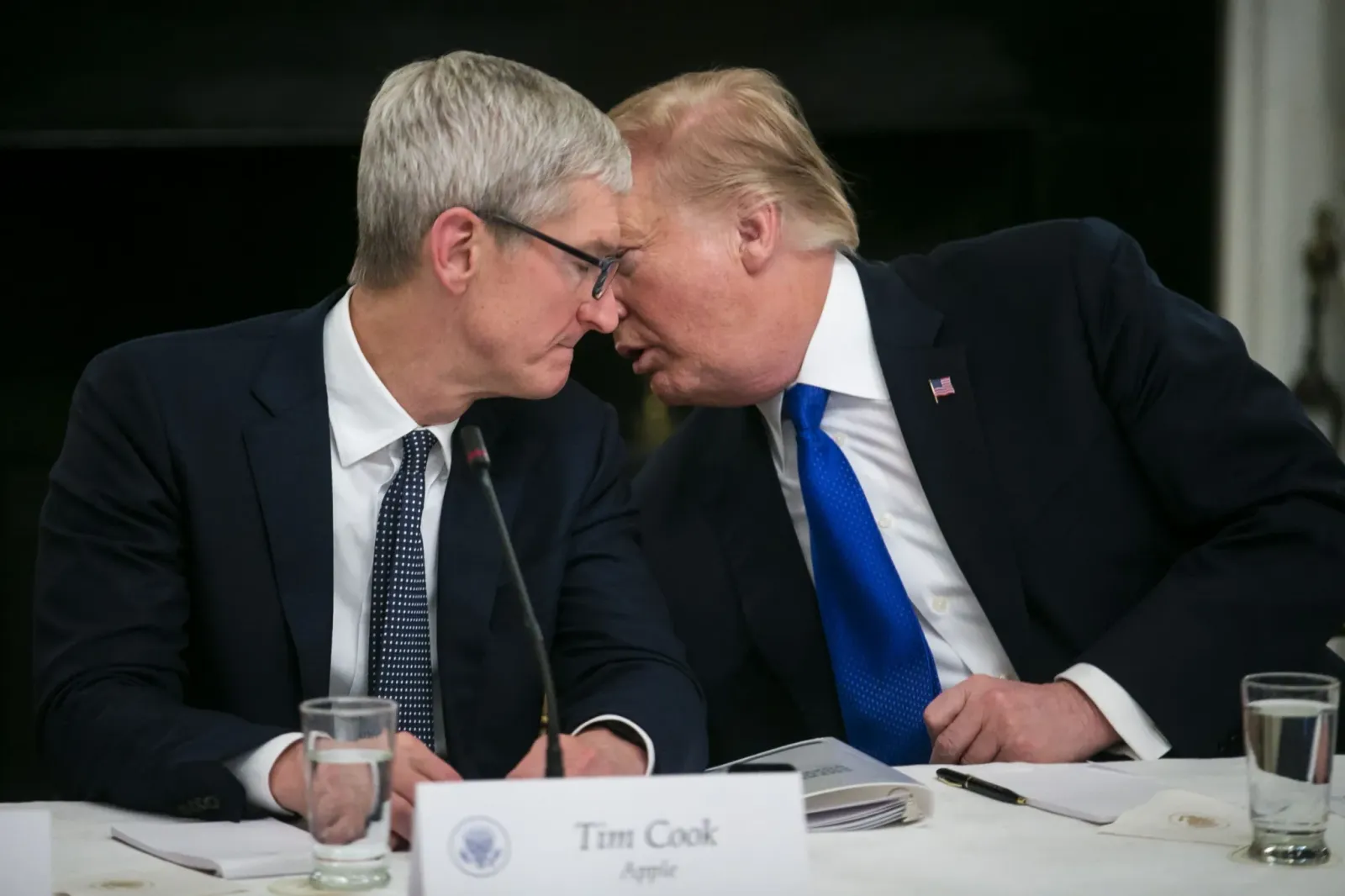
Tim Cook steps down as Apple CEO, stays on as chair with $45M equity
The 'Trump whisperer' keeps his White House and Beijing access as Apple navigates tariffs and a $4.6 trillion market cap.