

Super El Niño odds are rising. Expect stronger typhoons, famine risks, and worse wildfires
A warming ocean pattern could intensify multiple disasters at once, forcing governments, insurers, and supply chains to plan for compounding shocks.
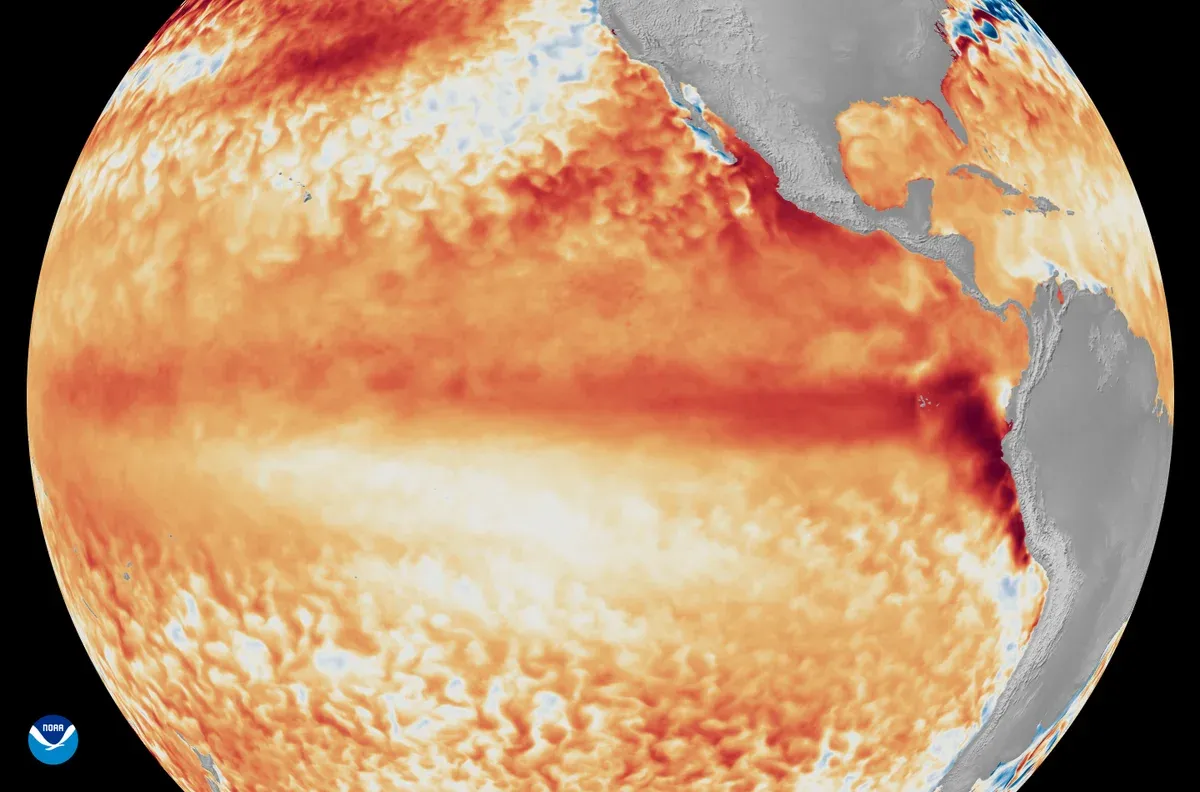
Scientific American reports that odds of a Super El Niño are rising. The potential consequence is a climate pattern linked to more powerful typhoons, plus higher risks of famine and wildfires, creating cross-sector stress for decision-makers.
The odds of a Super El Niño are rising, and Scientific American is blunt about why that matters: this climate pattern is tied to more powerful typhoons, as well as famine and wildfires. In plain English, it is not just “hotter weather.” It is the possibility of a system that can stack disasters on top of each other, pushing countries and industries past the point where they can absorb the hit with normal procedures.
That “stacking” part is the key. Super El Niño is a shift in ocean and atmospheric conditions that can reverberate through weather systems. When the ocean-heat pattern tilts the odds toward an El Niño at the higher end, the knock-on effects can show up as stronger typhoons. And typhoons rarely arrive alone. When storms intensify, they can disrupt food production, infrastructure, and access to staples. The downstream risk is famine, alongside conditions that can support or worsen wildfires. For leaders, the problem is timing and interdependence: one event can cascade into multiple bottlenecks, from agriculture to logistics to emergency response.
If you run a government agency, a humanitarian fund, an insurance business, or a supply-chain-heavy company, compounding risk is the enemy. Most organizations build playbooks for single failures. A Super El Niño scenario is closer to a “portfolio” of correlated losses. A stronger typhoon can mean more than damaged buildings. It can mean contaminated water, delayed planting seasons, destroyed storage, and transport interruptions. Those disruptions can combine with heat and drying patterns that raise wildfire danger in affected regions. The consequence is not abstract. It is higher probability that costs climb in multiple budgets at the same time: emergency spending, repair costs, and rising prices for food and basic inputs.
There is also a practical reason this story should land in boardrooms: climate risk is increasingly treated like a financial risk, not just an environmental one. Regulators and supervisors worldwide have been moving toward frameworks that pressure firms to understand physical climate hazards and their implications for underwriting, lending, and operational continuity. A forecast that “odds are rising” does not automatically translate into a regulator filing, but it can influence internal risk models, stress tests, and contingency planning. Companies that wait for a headline to become a claim often discover that the most expensive time to prepare is the same time disasters start.
Boards should think about incentives too. In many organizations, disaster planning is siloed. Risk teams may track physical hazards, but they may not control procurement timelines, supplier redundancy, or inventory strategies. Operations teams may know where facilities are exposed, but they may not model how those exposures affect customers and cash flows. A Super El Niño driven by rising odds is a forcing function. It encourages leaders to integrate hazard scenarios into enterprise planning rather than treating them like an annual sustainability report checkbox.
For insurers and reinsurers, the link to more powerful typhoons is a direct line into catastrophe exposure. Typhoons can concentrate losses geographically and across multiple lines of business. When the same climate pattern is also associated with famine and wildfires, underwriting gets more complicated. Wildfire losses can interact with utility outages and property damage, while famine-related disruption can influence demand shocks and political risk in supply regions. Even for businesses far from coastlines, stronger typhoons can interrupt ports, roads, and regional logistics. That is how a climate system becomes a balance-sheet story.
For governments and public agencies, famine and wildfires are reminders that response capacity is not unlimited. Disaster management often scales based on how many incidents hit simultaneously. A Super El Niño forecast that connects multiple hazards raises the probability that emergency services face parallel demands. That can strain evacuation systems, food distribution networks, and land management for wildfire prevention and response.
Second-order implications are where executives can distinguish themselves. Planning is not only about “what could happen.” It is about who gets stuck when the unexpected becomes normal. Supply chain teams need to stress-test supplier regions against typhoon-driven transport delays and the knock-on effects on agriculture. Finance teams should consider how higher commodity prices and reconstruction spending might affect margins. Legal and compliance teams may need to ensure that contractual obligations, force majeure clauses, and supplier agreements are aligned with realistic disruption scenarios. This is also where capital allocation matters. If odds of a Super El Niño are rising, leaders should use that information to prioritize resilience investments that can reduce correlated losses.
The strategic stakes for peers are straightforward: this is a climate-linked risk that touches storms, food systems, and fires. Scientific American’s framing connects a single phenomenon to multiple deadly consequences. If you are an executive, that is the type of risk that can move quickly from “monitoring” to “material impact.” The smart move is to treat rising odds as a prompt to tighten the whole system, not just the part you manage.
This story's Key Insights and Take-aways are locked.
Create a free account to unlock Executive Actions for one credit.
Register to UnlockAlways free for Executives Club members. Join the Club
More in Science

Alaska's 1,580-foot tsunami had warning signs. Scientists just found them.
Rapid glacier retreat, heavy rainfall, and thousands of tiny tremors preceded Alaska's 1,580-foot tsunami, a warning for every coastal community in a warming world.

The rare mutation that lets high-risk brains dodge Alzheimer's
Scientists found a natural defense against protein buildup, opening a new path to preventive treatments.

3,000 steps a day may halve Alzheimer's decline, study finds
New research links a modest daily walk to less tau buildup and nearly half the cognitive and functional decline, even for those with early signs.