

Superhuman buys GPTZero to authenticate AI writing, turning “odds” into a strategy
Superhuman’s acquisition of GPTZero signals that AI writing tools are racing beyond generation into trust and verification.
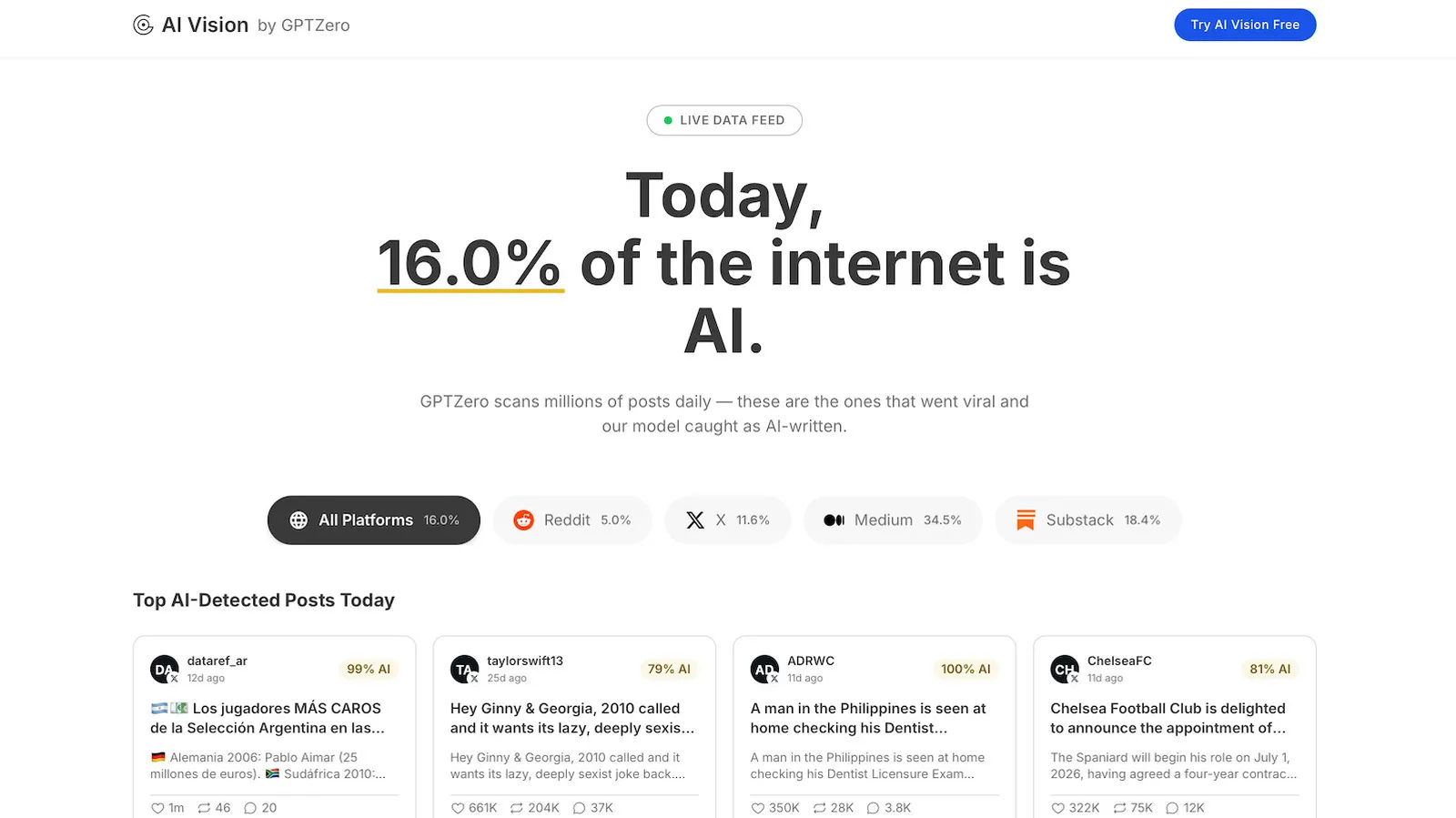
Superhuman has acquired GPTZero, the AI authenticity service, according to Engadget. For decision-makers, the move reframes AI writing from “make content” to “prove it,” reshaping competitive and compliance conversations.
Superhuman just acquired GPTZero, an AI authenticity service. If you sell an AI writing assistant, buying a tool that helps verify whether content is AI-generated is an odd pairing on the surface. But that “odd-seeming” move, as Engadget frames it, is also the point: the market is moving from producing text to establishing trust around text.
The practical payoff is straightforward. Superhuman is taking a verification layer off the sidelines and pulling it into the same orbit as its writing product. GPTZero is known for AI authenticity, which matters because more people are asking a new question: not just “Can you write this?” but “Can you reliably tell if this was written by a model?” When verification becomes part of the workflow, it stops being an afterthought for moderators, publishers, or skeptical readers and starts becoming a feature teams can use before content goes out the door.
Why would an AI-writing company do this now? Because the incentives are converging. Writing assistants compete on output quality, but they also face a credibility problem. If too much AI content floods the internet, readers and platforms demand stronger signals. That demand tends to travel in predictable arcs. First, users want convenience. Then, users want guardrails. Finally, institutions want evidence that policies are being followed. An authenticity service sits exactly in that last step.
There is also a distribution angle that executives should recognize quickly. Superhuman is a product that already lives close to where writing happens. Verification tools often get bolted on later, after content is posted or exchanged, where they’re harder to operationalize and harder to integrate into user behavior. By acquiring GPTZero, Superhuman can align authenticity checks with the moments that matter: before sending, before publishing, before workflows make it expensive to rewind. In other words, the verification layer can become part of the default motion rather than an optional detour.
Regulatory and platform pressure is another background force that is hard to ignore, even when the source story is short. The AI boom has pushed regulators and standards bodies toward questions of disclosure, accountability, and provenance. Even without naming specific rules in this Engadget report, the underlying trend is clear: governments and platforms increasingly care about whether AI systems can be traced, explained, or at least flagged in ways that support enforcement. Authenticity technology aligns with that general direction because it targets provenance and helps sort content by origin.
But authenticity is not just “compliance theater.” It also changes how companies position their products. If Superhuman is now building around GPTZero, it can sell something that feels different to buyers: not just assistance, but defensible output. For teams in communications, marketing, HR, customer support, and internal knowledge, the risk is not only producing content. The risk is producing content that triggers skepticism, policy violations, or reputational damage. A bundled authenticity story can reduce those risks by giving users a practical way to communicate provenance.
This acquisition also hints at a broader competitive shift for AI startups and incumbents. The center of gravity in AI products has been moving. Early winners emphasized generation. The next wave emphasizes control, safety, and verification. When an assistant maker acquires an authenticity service, it’s essentially acknowledging that “just write it better” may not be enough. Differentiation is shifting toward systems that can help organizations explain what their content is, how it was produced, and what that means for trust.
Second-order, board-level implications follow from that shift. Once verification is part of the product roadmap, go-to-market messaging changes, partnerships become more strategic, and incident response gets different. If a tool is used to authenticate content, accuracy expectations rise. That increases scrutiny from customers and possibly from any institutions that depend on provenance signals. In that world, owning the authenticity component can be a defensive move: you reduce dependence on third parties and you control the integration points.
Engadget calls the move odd-seeming. But the oddness may actually be the signal. Superhuman is treating AI authenticity as core infrastructure, not as a niche add-on. For decision-makers in AI tools, content platforms, and productivity software, the stake is whether trust becomes a feature that ships with generation. The Superhuman-GPTZero pairing suggests that is no longer optional, and it is coming to the workflow, fast.
This story's Key Insights and Take-aways are locked.
Create a free account to unlock Executive Actions for one credit.
Register to UnlockAlways free for Executives Club members. Join the Club
More in Business

A flaw in PHP just forced governments to pull their own sites offline
European agencies from Belgium to Germany took websites dark to patch a critical weakness in the language behind almost 70% of the web, and the blast radius extends far beyond government portals.

BioWare shuts down, Mass Effect 5 dead after $55B EA buyout
The legendary RPG studio's closure lands months after a $55 billion investment group buyout of EA, raising tough questions for gaming's biggest acquirers.

Musk weighs Tesla-SpaceX mega-merger as boards form review panels
Special committees at both companies will examine a tie-up that could fuse electric vehicles and space launch, forcing a fresh look at governance and valuation.