

Switch 2 jailbreak: SmileBasic integer overflow unlocks homebrew
A software-only exploit gives researchers userland access to Nintendo's new console, opening the door to mods, backups, and reverse engineering.
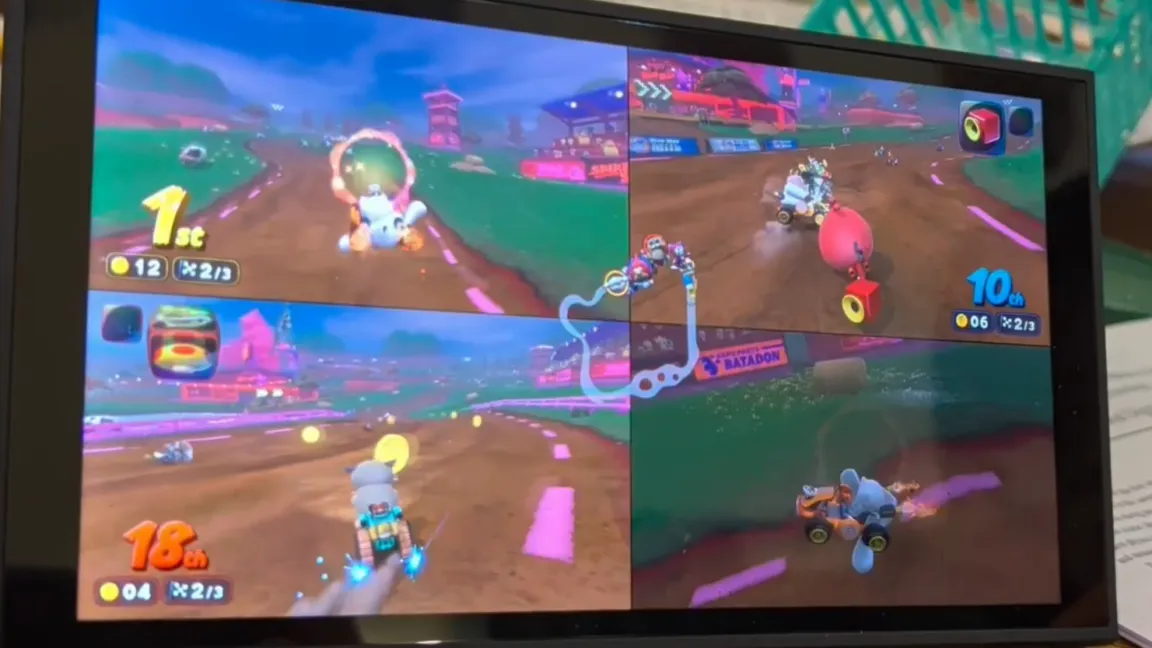
Security researcher Sammy Hajhamid demonstrated a software-only partial jailbreak of Nintendo's Switch 2 via a 32-bit integer overflow in SmileBasic 4. The exploit grants userland access, enabling homebrew, game modding, save backups, and peripheral control, though it requires a tethered PC connection.
Nintendo's Switch 2 has its first publicly demonstrated jailbreak, and the entry point is a 32-bit integer overflow hiding in a decades-old programming language. Security researcher Sammy Hajhamid showed that a software-only exploit in the SmileBasic 4 interpreter grants "userland" access to the console, letting him run homebrew, reverse engineer and mod Switch 2 games, back up save files, and reach most peripherals via MMIO. The discovery is a significant crack in the armor of a console that launched with promises of stronger security, and it immediately puts Nintendo's patch team on the clock.
The bug triggers when removing items from an array in SmileBasic, corrupting an array pointer that then allows read/write access to system memory. But it's a "tethered" hack: it requires a macOS or Linux PC on the same network running a node.js package to enable privileged access, so it's not a one-click consumer jailbreak. Userland access means the researcher can run code with the privileges of a normal user process, not the kernel, so it's not a full jailbreak. But it's enough to open the door to a wide range of unauthorized activity, and it often serves as a stepping stone for deeper exploits. For the homebrew community, that's a beachhead; for Nintendo, it's a reminder that even the most locked-down hardware can be undone by legacy software.
SmileBasic is a long-running series of programming environments that have appeared on Nintendo hardware for decades, and the exploit uses the original Switch version of SmileBasic 4, not a Switch 2-specific app. That detail matters because it suggests the vulnerability is a legacy issue, not a flaw in Nintendo's new silicon. The company has historically been aggressive about patching exploits, but the tethered nature of this one gives researchers a window before a fix lands. For the homebrew community, that window is precious: it allows time to develop tools and documentation before Nintendo closes the hole. It also highlights the tension between preserving access to older software and maintaining platform security, a balance Nintendo has struggled with since the original Switch's jailbreak scene took off.
Hajhamid's methodology is as notable as the bug itself. He says he used OpenAI's Codex to poke at SmileBasic's language interpreter, building a custom harness that could send USB commands to the system and view results via HDMI, with a Bluetooth light switch for power cycling. After "substantial effort for ~2 weeks," the harness discovered the integer overflow. That combination of AI-assisted fuzzing and hardware tinkering is a new playbook for console security research. It also raises questions about how many other vulnerabilities are waiting to be found by similar automated approaches. The barrier to entry for finding console exploits just dropped, and that has implications far beyond Nintendo's latest hardware.
For the homebrew community, this is a beachhead. Userland access is the first step toward custom firmware, emulators, and game mods, though the tethered requirement and the need for a PC limit its reach. For game preservationists, the ability to back up save files and mod games is a win, but it also raises the same copyright questions that have dogged the homebrew scene for years. Nintendo has spent years fighting jailbreaks on the original Switch, and this exploit shows that backward compatibility can be a double-edged sword. The company's decision to support SmileBasic on Switch 2, even in its original Switch form, created a bridge from old software to new silicon, and that bridge now has a crack in it.
The use of an AI coding assistant to find the bug is itself a shift. Security research has traditionally been a manual, painstaking process; Codex helped Hajhamid automate the probing and analysis. That could lower the barrier for finding vulnerabilities in game consoles and other embedded systems, accelerating the cat-and-mouse cycle between hackers and platform makers. Expect more researchers to adopt similar tooling, which could shorten the window between a console's release and its first jailbreak. For platform vendors, that means security teams need to assume that AI-assisted attackers are coming, and they need to harden not just new code but every piece of legacy software they choose to carry forward.
For executives at hardware and gaming companies, the lesson is that backward compatibility and legacy interpreters are attack surface. As more devices ship with compatibility layers, the security debt compounds. The Switch 2 jailbreak is a case study in how a single integer overflow in a niche programming tool can ripple into a platform-wide security event. The fix may be straightforward, but the broader lesson is that every line of legacy code is a potential entry point. The next time a product roadmap includes "support for older software," the security team should be in the room from day one, because the cost of a jailbreak is measured not just in patched firmware, but in lost control over the platform's ecosystem.
This story's Key Insights and Take-aways are locked.
Create a free account to unlock Executive Actions for one credit.
Register to UnlockAlways free for Executives Club members. Join the Club
More in Technology

AI turns 2024 PHP flaw into live threat: 70% of websites exposed
A decade of PHP versions is vulnerable, and governments already pulled sites offline. Here's what to patch now.

Etsy bans AI-generated recipes and patterns, demands human involvement in listings
The marketplace's new AI policy targets automated listings and AI-created content, signaling a broader crackdown on generative AI in e-commerce.
Meta ad revenue slows after EU gives users a privacy choice
Europe's Less-Personalized Ads model, live since the start of the year, is now showing up in Meta's earnings - and it is a warning shot for every business built on targeted advertising.