

Syndio CEO builds AI agents for judgment, not drafting, after “AI slop” emails
The surprising lesson: executives don’t need faster text. They need systems that remember context and push back before board mistakes.
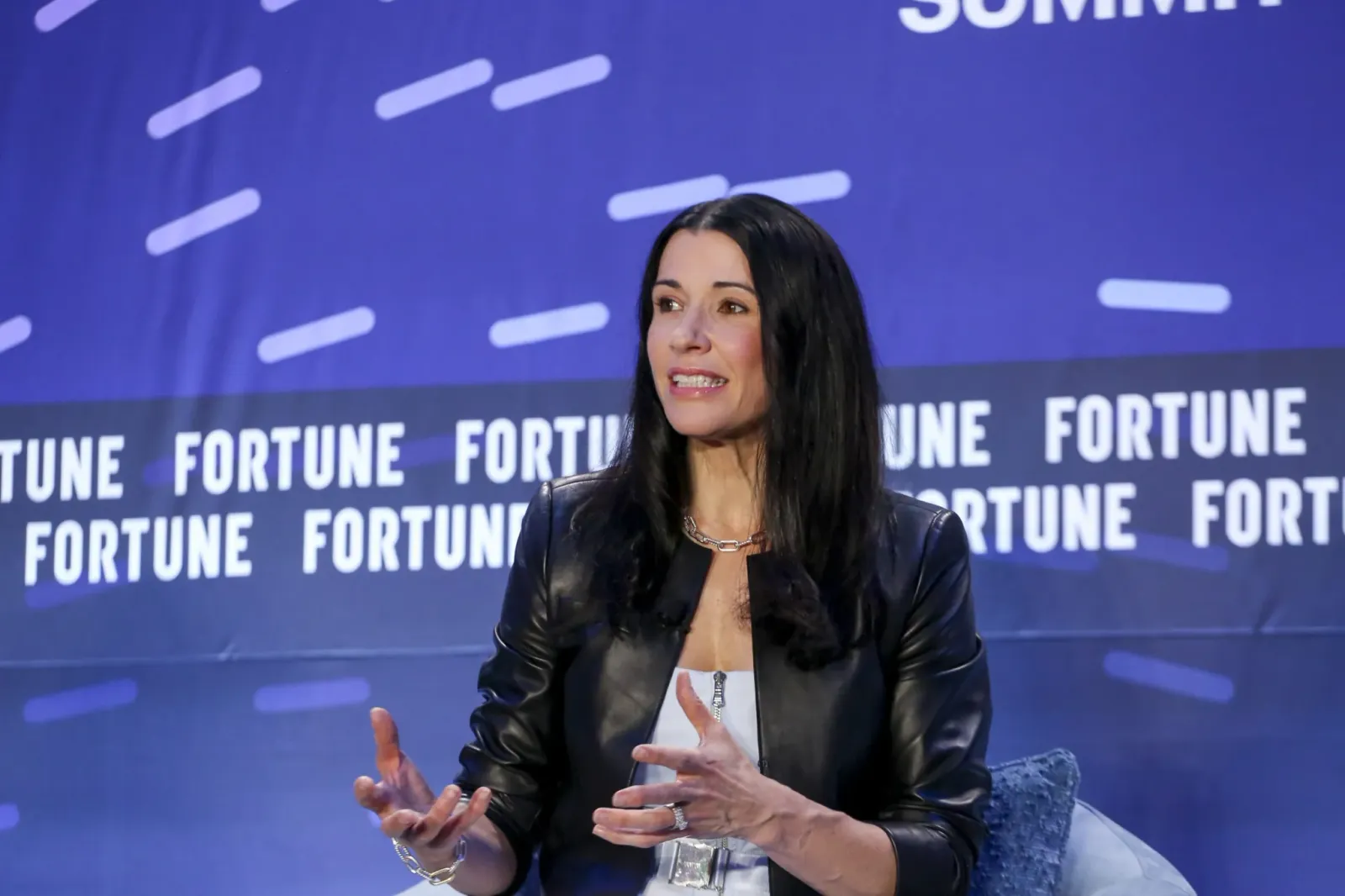
Syndio CEO and founder (Fortune contributor) describes how her early AI use for agendas and emails produced word salads and voice mismatches. After a six-week course taught by Nufar Gaspar, she switched to custom-built, workflow-trained AI agents focused on judgment and decision pushback.
The first lesson the Syndio CEO learned building AI agents herself was brutally simple: AI still can’t do what executives think it can do. The second lesson was worse: many executives don’t even know what that gap looks like, until the gap shows up on a customer thread or in a board packet.
In the early innings, she used AI the way most leaders do. Organize information. Draft emails. Polish language. It helped at the margins, but it missed what mattered most: reasoning that actually matched her and her business. Her drafts sounded polished but “nothing like me.” More importantly, the AI reasoned nothing like she did. And because she was modeling for her team, her rookie mistakes spread into how agendas were built for executive-leadership meetings. Without context and direction, those agendas turned into “word salads and AI slop.”
So she enrolled in a six-week course for executives taught by Nufar Gaspar, a former Intel executive. The course did not teach executives to “use AI.” It taught them to build systems that could reason alongside them, remember context, challenge assumptions, and adapt to how they think, not how a product manager imagined they might. She took the class on weekends and evenings, because the point was uncomfortable and inconvenient: you cannot get good at AI in between meetings. It requires the unstructured thinking most leaders wish they had more of.
That shift points to a core executive incentive mismatch. The common assumption is that AI’s value is productivity. Go faster. Delegate drafting. Automate routine. Real. But also the least interesting thing these systems can do, according to her. The right level is not speed. It is judgment. Today she uses three custom-built agents every day, and the distinction matters. They are not chatbots. They are trained around her workflows, her decisions, her communication style, and the institutional knowledge of her business.
A concrete example: one of her employees used AI to draft an email on her behalf. It was competent, but the voice was wrong. The framing missed the customer’s actual concern. Her own agent fixed the problem by comparing drafts against a writing rubric built from years of her sent emails. The rubric includes specific rules, like “no em dashes, ever,” and stylistic logic like reflecting the other person’s idea back before pitching, plus customizing the sign-off based on the relationship. The result: it restructured the message entirely, cut unnecessary setup, changed the opening to the customer concern, and referenced a concern from a conversation six weeks earlier. In her telling, “an AI caught what another AI had missed,” because the systems were different in the way that matters most: one understood how she communicates; the other understood how people generally communicate.
The more consequential agent is her strategic advisor, “less a tool than a thinking partner.” Before major decisions, board updates, or anything she brings to leadership, she goes to it first. The agent uses a prompting framework called “grill me,” originally created by developer Matt Pocock. It interrogates the logic behind a decision question by question: What evidence supports this? What assumptions are you making? What would an investor challenge here?
She also built a memory-layer chief of staff that sorts her inbox into four buckets every morning: urgent, needs response, FYI, and ignore. Before meetings, it pulls context from past conversations and drafts follow-up emails in her voice, assembles agendas, surfaces buried Slack messages, and prepares Monday-morning briefings. The key surprise was how much quality depended on what she fed it. Ingesting transcripts and emails is only part of it. Giving the agent qualitative observations after conversations, including tone, body language, and off-the-cuff reactions, makes it more accurate than systems that rely only on “systems-of-record” data. That matters for board prep because she also built profiles for each board member, using past meeting transcripts, public interviews, investment theses, and prior conversation notes. The point is not to impersonate opinions. It is to pressure-test how the conversation will land: one board member wants data, one watches leading indicators, one evaluates through long-term positioning. She doesn’t walk into meetings reacting anymore. She walks in having already had the argument.
Zoom out, and the strategic stake gets clearer. Her biggest impact claim is not that AI replaces judgment. It strengthens it. The systems save time, but she argues the real value is catching weak logic before it becomes a public mistake, freeing cognitive load, and ensuring she rarely walks into important conversations without full context. She describes the cumulative effect as more context, more clarity, and better pattern recognition than she could have alone, which is a different category of advantage than productivity.
This is also why she is sending 20 employees through the same program. Not to turn them into engineers. Instead, to build the organizational capability to recognize a new capability, understand what it makes possible, and let go of how things used to work. Every week, they meet to share what they are building, what is failing, and what they are learning. The most consistent observation: people become less intimidated once they are building. The technology stops feeling abstract. It starts revealing its own limits, which she frames as the thing leaders need to learn.
She notes that underlying models are improving faster than most executive timelines assume, costs are falling, and capabilities that felt experimental six months ago are now usable. She also shares a detail from a senior engineering candidate: she was the first CEO he’d ever interviewed who was actively building AI agents herself. His point, as she reports it, was that many executives talk about outcomes and urgency but don’t understand the mechanics well enough to know where real friction lives. If you are a peer in leadership, that is the policy implication hiding in plain sight: betting the company on AI assumptions without learning what the systems still cannot do is a liability. Meanwhile, the opportunity is not just automation. It is judgment at scale.
This story's Key Insights and Take-aways are locked.
Create a free account to unlock Executive Actions for one credit.
Register to UnlockAlways free for Executives Club members. Join the Club
More in Business

Anthropic’s Levant Alpöge cracks the Jacobian conjecture after 87 years
A Harvard valedictorian used Claude to hit a 1939 breakthrough, but the missing “why” is the real problem.

Uber buys Delivery Hero for nearly $15B, vaulting to top food delivery outside China
The deal doubles Uber's dual-services footprint and pushes a ride-and-eats bundling play into 50 more markets.

Epic and Google drop settlement bid, forcing rival Android app stores by July 22
Google told the court it is ready to carry third-party app stores starting Wednesday, July 22.