

Tanzania drought killed 306,358 animals. Maasai women turned grass into a $2,500 business
Fodder seed banks and hay sales in northern Tanzania are helping households stabilize as drought losses mount.
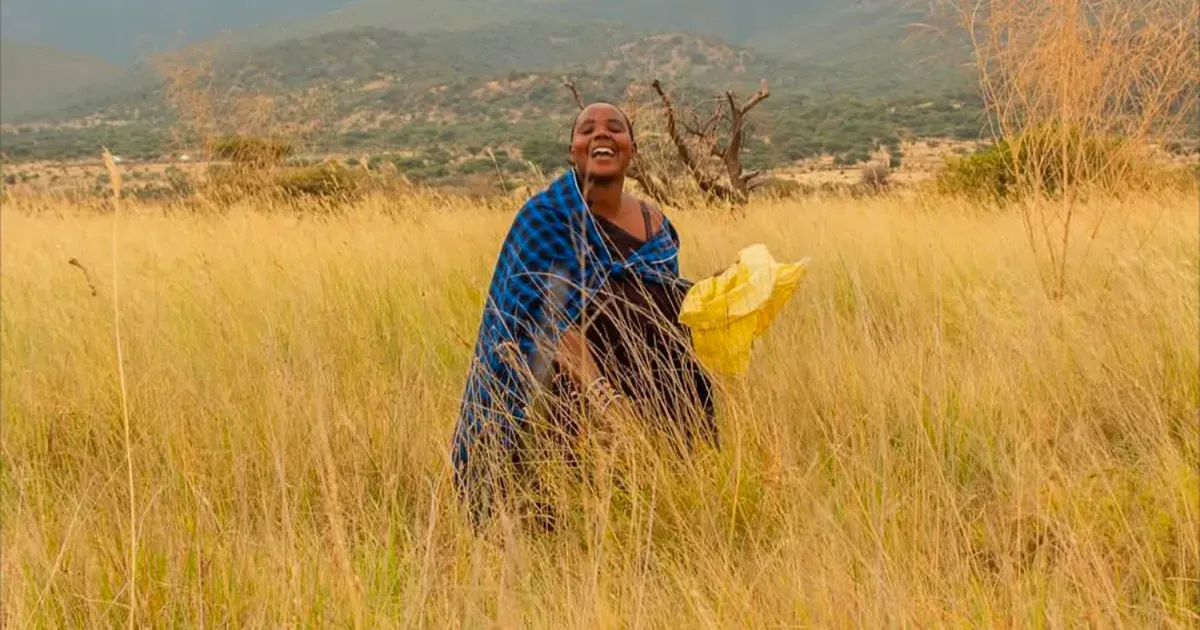
In northern Tanzania, Maasai women coordinated through the Pastoral Women’s Council (PWC) are growing and selling drought-resistant livestock fodder after Tanzanian drought deaths. The model is funded and backed by groups like the Global Fund for Women and Oxfam, with a reported 6.6 million Tanzanian shillings from a single seed bank in 2025.
Monduli, Tanzania. When prolonged drought killed livestock, Maasai mother of four Nesirkar Loongidong’i watched her goats die and then rebuilt her income by growing drought-resistant livestock fodder. She told Al Jazeera that before planting fodder she “lost most of our goats,” but now people from other villages come to buy grass, allowing her to support her children and live with less fear of drought.
Her personal turnaround is part of a much bigger shift happening across northern Tanzania: Maasai women are turning fodder production from a survival tactic into a climate-adaptation business. The urgency is easy to understand, because the damage from drought is not theoretical. Tanzania’s Ministry of Livestock and Fisheries reported that at least 306,358 animals, including cattle, goats, sheep, and donkeys, died between September 2021 and January 2022 due to prolonged drought. In Simanjiro district alone, 92,047 livestock were lost, wiping out livelihoods across pastoral communities.
So what do you do when rains fail and pasture disappears? You manufacture feed. That is the basic logic behind the Pastoral Women’s Council (PWC), a women-led membership organization founded in 1997 that now counts around 6,500 members in 90 villages. PWC coordinates fodder production across three northeastern districts, covering more than 28,000 square kilometres (10,810 square miles) and serving about 456,000 people, most of them Maasai pastoralists. The organization’s longer agenda includes land rights, economic empowerment, and girls’ education, but the drought response has made its economic work feel immediate.
In response to the livestock losses, PWC established 10 major grass seed banks across eight villages in Monduli and Longido districts. Today, about 75 hectares (185 acres) are under fodder production, and another 37 hectares (90 acres) are expected to be added in the 2025-2026 season. About 250 women directly manage these farms, while thousands of herders depend on them for feed during dry seasons. The operational detail matters: because demand stays steady, the income is steadier too. Loongidong’i describes living in a house with a metal roof while her goats graze in a fenced area as their numbers slowly grow again.
The economics are where this stops being only a climate story and starts looking like a small, resilient market. According to the article, in 2025 a single seed bank earned 6.6 million Tanzanian shillings (about $2,500) from seed sales, plus 1,111 hay bales sold at 6,000 shillings ($2.30) each. Some women are also trading seeds when demand rises, and the fodder cycle continues beyond hay and grass bundles. The seed bank project, managed by Naisho, generated about 6.6 million Tanzanian shillings from seed sales, alongside more than 1,000 bales of grass. Even small in scale, it is described as steady output that proves what organized local production can achieve.
For executives and investors, the key second-order implication is that this is not charity-driven in the way many people assume. The PWC is backed by organizations such as the Global Fund for Women and Oxfam, and the article also notes support from Justdiggit, Trees for the Future, and Swissaid. That backing likely helps kickstart infrastructure like seed banks and community plots, but the revenue streams come from buyers who need feed. Herding families benefit during drought periods when natural grazing disappears, and managed plots become a lifeline for livestock. In other words, the market demand is real, and the seed and fodder supply becomes a locally controlled adaptation asset.
The practical farming details also explain why the model is replicable, at least in principle. As rainfall declines, women grow resilient species such as Rhodes grass (Chloris gayana) and Masai love grass (Eragrostis superba). These grasses stay green longer than natural pasture during dry periods. Harvesting then feeds a sales loop: grasses are bundled and sold to local herders as animal feed, and seeds are saved and traded later when demand rises. Some buyers reportedly use fodder for cattle feed, others for thatching houses, and some community members grind fodder into animal feed.
Still, the article makes clear that the shift has friction. Farms can be hit by weeds and by fence failures that let livestock, and sometimes wild animals, destroy cultivated plots. Guarding fields every day is not easy. There are also tensions within groups, including disagreements over responsibilities and income sharing. Even with these challenges, women involved in the project describe it as preventing cattle from dying and sustaining the bulls they raise. Rachel Letiety, a founding member of the PWC, told Al Jazeera that women who once depended entirely on their husbands now have their own income, families are becoming more stable, and men are beginning to value women’s contributions, especially during droughts.
At a strategic level, what’s happening in Monduli and Longido reads like a business lesson disguised as a pastoral survival story. When climate shocks repeatedly destroy the assets a community relies on, income pathways that convert local ecological knowledge into tradable inputs can rewire household risk. PWC’s work is described as a replicable model for protecting a livestock economy worth millions of dollars. For leaders building climate adaptation programs, funding rural livelihoods, or thinking about resilient supply chains, the takeaway is not just that drought is bad. It is that drought creates demand for feed, and organized local production can capture that demand in a way that stabilizes lives, shifts gendered economic roles, and makes the next drought less financially catastrophic.
This story's Key Insights and Take-aways are locked.
Create a free account to unlock Executive Actions for one credit.
Register to UnlockAlways free for Executives Club members. Join the Club
More in Business

Anthropic’s Levant Alpöge cracks the Jacobian conjecture after 87 years
A Harvard valedictorian used Claude to hit a 1939 breakthrough, but the missing “why” is the real problem.

Uber buys Delivery Hero for nearly $15B, vaulting to top food delivery outside China
The deal doubles Uber's dual-services footprint and pushes a ride-and-eats bundling play into 50 more markets.

Epic and Google drop settlement bid, forcing rival Android app stores by July 22
Google told the court it is ready to carry third-party app stores starting Wednesday, July 22.