
Task Force 59 used a drone boat to rescue Apache pilots at 7:33 pm June 8
It marks the first reported US sea-rescue using an uncrewed surface drone, with Task Force 59 in the driver’s seat.
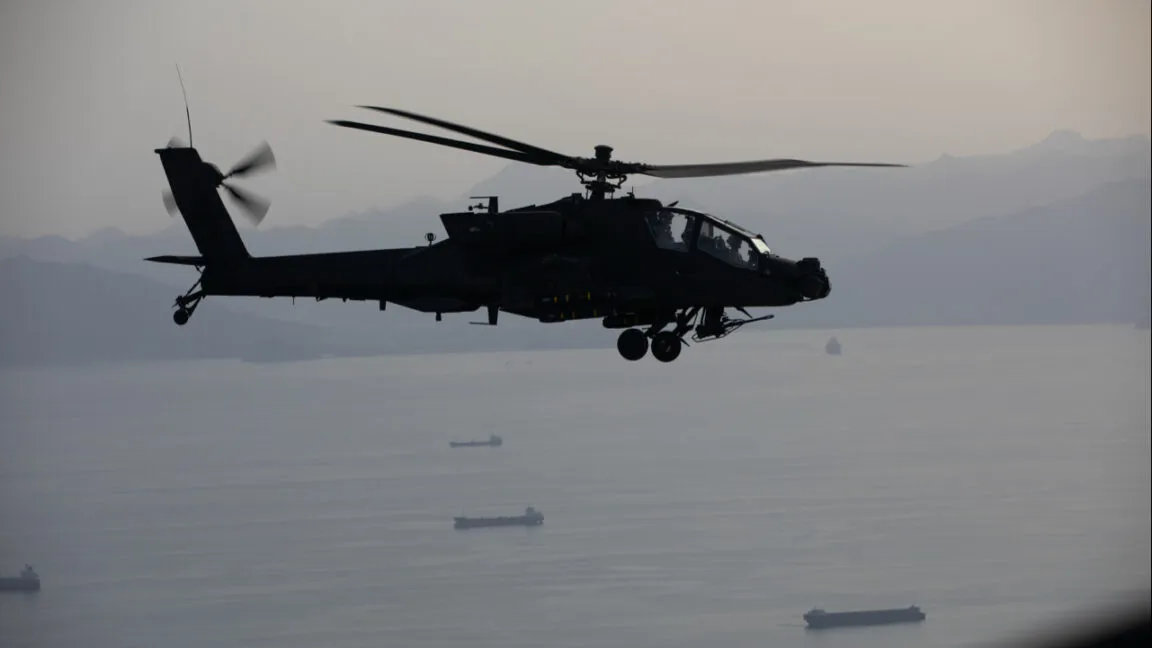
US Central Command says an uncrewed surface drone operated by Navy Task Force 59 rescued two US Army Apache pilots at 7:33 pm US Eastern Time after the helicopter went down near the Strait of Hormuz on June 8. For decision-makers, it signals the military is operationalizing uncrewed systems in real, high-risk missions instead of keeping them in the lab.
A US Army AH-64 Apache went down off the coast of Oman on June 8, and at 7:33 pm US Eastern Time, the two pilots were “rescued by American forces” in a sea rescue that used a drone boat. The driver was US Navy Task Force 59, the unit charged with integrating uncrewed aerial, surface, and underwater vehicles, plus AI, into 5th Fleet maritime operations, according to a US Central Command press release.
This is not just another “tech demo” story. US military officials told CBS News that the Apache air crew was rescued by an uncrewed surface drone operated by Task Force 59 from the US Fifth Fleet in Bahrain. They also described the incident as the first time the military had used a drone to rescue people from the water. In other words, uncrewed systems crossed a line from assisting to actively pulling humans out of a lethal situation.
To understand why this matters, zoom out for a second on how the 5th Fleet battlespace usually looks. The Strait of Hormuz is a chokepoint, and operations there tend to be fast-moving and unforgiving. When a helicopter goes down at sea, time is the enemy. Rescue depends on search patterns, location accuracy, sea state, and the availability of ships and air assets that can get there quickly and safely. A drone boat changes at least one part of that equation because it can be tasked and positioned to reach distressed personnel, without risking additional crew in the same immediate danger window.
Task Force 59 is explicitly built around this kind of shift. The Central Command press release highlighted that Task Force 59 is charged with integrating uncrewed aerial, surface, and underwater vehicles, alongside AI, into 5th Fleet maritime operations. That is a mouthful, but the underlying idea is simple: don’t treat uncrewed capability as a standalone program. Bake it into day-to-day fleet operations so it is ready when reality shows up unannounced, like a helicopter crash on June 8.
There is also a governance and “credibility” angle here. When the armed forces talk about new tech, the early phase often looks like incremental capability building. The second-order risk is that people assume it is still optional or experimental until the first high-stakes use case proves otherwise. This rescue, involving actual pilots from an AH-64 Apache crash, is the opposite of optional. It is a public-facing validation that uncrewed surface drones can be used in a life-critical, time-sensitive scenario.
For executives and boards watching defense technology, the strategic implication is that the adoption curve may be steeper than the procurement headlines suggest. Integration units like Task Force 59 function as a bridge between research and operations, and the nature of the mission matters. In a regulated, mission-driven environment, “first-of-its-kind” operational use cases tend to accelerate internal trust because they come with after-action scrutiny. If the rescue worked as described by Central Command and the officials interviewed by CBS News, then stakeholders in acquisition, operations, and compliance all get a clearer picture of what is feasible in the field.
There is also a second implication for the broader uncrewed market. Investors and suppliers often ask whether uncrewed systems can survive contact with human stakes. Sea rescue is one of the most demanding tests imaginable, because it is not optional navigation or a low-consequence demonstration. It is about locating people in water, coordinating with rescue forces, and executing a task where mistakes can be fatal. A reported first time the military used a drone to rescue people from the water is the kind of signal that can ripple across contracts, partnerships, and product roadmaps.
Finally, for peers in similar roles, the lesson is not “drones can do everything.” It is narrower and more valuable: uncrewed capabilities get adopted when they are integrated into operational structures before an emergency happens. Task Force 59 did not wait for a crisis to invent a workflow. The helicopter went down near the Strait of Hormuz, Task Force 59 and the broader 5th Fleet ecosystem in the region responded, and the uncrewed surface drone was part of the rescue at 7:33 pm US Eastern Time, after support was referenced in the Central Command press release. That is how technology becomes doctrine. Not with a press conference. With a rescue.
This story's Key Insights and Take-aways are locked.
Create a free account to unlock Executive Actions for one credit.
Register to UnlockAlways free for Executives Club members. Join the Club
More in Technology

OpenAI says 10,000 agents cracked a 90-year math problem in 88 hours
The company's claim is audacious, but one mathematician is pushing back. Here's what it means for AI-driven discovery.

Meta still serves child sexual abuse ads on Instagram in India - BBC report
A new report following the BBC Eye investigation says the ads are still there - what it signals for every platform with a self-serve ad engine.

White House yanks 'Build the Wall' game after Tetris Company copyright warning
The administration's arcade game vanished in hours - and the takedown playbook every brand can learn from.