

Tata's Sarkar: AI's real payoff hides below the hype
The Asia-Pacific VP says the AI story is less about grand promises and more about networks, data centres, and operating models.

Amitabh Sarkar, Tata Communications' Vice-President for Asia Pacific and Japan, argues that the real AI story sits inside data centres, networks, and operating models, not in executive rhetoric. For decision-makers, the consequence is that AI advantage will go to companies that fix the underlying technology plumbing before chasing use cases.
Amitabh Sarkar, Tata Communications' Vice-President for Asia Pacific and Japan, has a warning for executives who talk about AI in absolutes. The real story, he argues, lies beneath the rhetoric, inside the data centres, networks, and operating models that are supposed to turn corporate ambition into measurable results. "In the last 20 to 30 years, technology has moved from supporting the business," Sarkar says, and that shift means AI's success will be decided by infrastructure, not powerpoint slides.
Sarkar's point lands at a moment when boardrooms are split between fear and euphoria. Some see AI as an existential threat, others as a historic opportunity, and many as the next great productivity leap. But those absolutes miss the mundane reality that AI models do not run in a vacuum. They require compute, data, connectivity, and a workforce that can actually use the output. The companies that treat AI as a strategy exercise may be the ones left with expensive pilots and no operational lift.
The infrastructure question is especially sharp in Asia Pacific and Japan, where Tata Communications operates across diverse markets with varying levels of digital maturity. In Japan, an ageing workforce and a culture of precision create a strong pull for AI that can augment human judgement. In faster-growing Southeast Asian economies, the pressure is often about scaling services quickly while keeping costs low. Sarkar's team has to help clients navigate these differences, which means the conversation about AI is less about the model and more about the network that connects the model to the business problem.
That network is not just fibre and switches. It includes the data centres where training and inference happen, the edge nodes that reduce latency, and the security layers that protect sensitive corporate data. When executives talk about "AI transformation," they rarely mention these components. Yet a model that takes seconds to respond when it should take milliseconds, or that cannot access the right data because of a network bottleneck, is a model that will never deliver the promised productivity gain.
Sarkar's historical framing matters here. Over the past two to three decades, technology has moved from the back office to the core of the business. It used to be a support function, something that kept accounting systems running or enabled email. Now it is the product, the channel, and often the competitive moat. AI accelerates that transition, but it also exposes the cracks in the foundation. A company that has been running on legacy infrastructure for twenty years cannot simply plug in an AI tool and expect it to perform.
The operating model is just as important as the hardware. AI does not deploy itself; it changes workflows, creates new governance questions, and demands skills that most organisations did not hire for last year. Sarkar's emphasis on operating models suggests that the real work is organisational. Who owns the data? Who is accountable for the model's output? How do you measure value beyond a proof of concept? These are questions that a chief executive or a board must answer before writing a big AI cheque.
For peers in similar roles, the strategic takeaway is that AI is not a trophy to display in an annual report. It is a discipline that touches procurement, IT, talent, and risk. The companies that win will be the ones that stop asking "What can AI do?" and start asking "What is our infrastructure ready for?" That may be less exciting than a keynote speech, but it is the difference between the rhetoric and the return.
This story's Key Insights and Take-aways are locked.
Create a free account to unlock Executive Actions for one credit.
Register to UnlockAlways free for Executives Club members. Join the Club
More in Technology

Cop fired after sharing Flock login with ICE husband: 983 searches
A Savannah officer's shared credential let an ICE agent run hundreds of plate searches on Hispanic drivers, exposing a surveillance backdoor.

Elizabeth Holmes doc 'You Can See Everything' posts second-biggest doc debut ever
The true-crime draw shows fraud narratives still sell - a signal for media execs and a caution for founders.
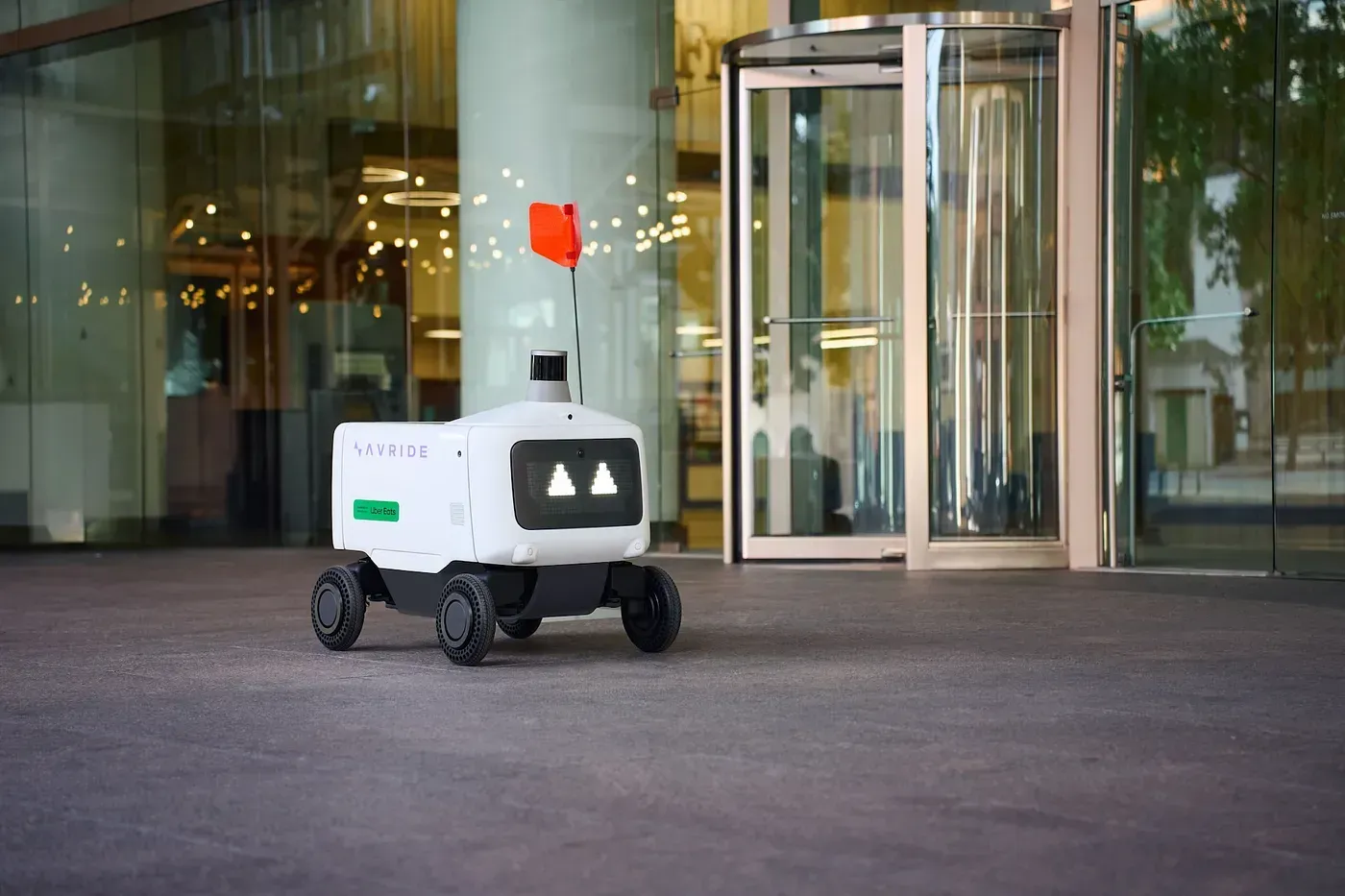
She blocked an Uber delivery robot to save jobs. Police arrested her.
Carolyn Marvin's disorderly conduct arrest turns a sidewalk standoff into a test case for how cities police the automation-versus-workforce debate.