

Tata Steel warns its £1.25bn furnace project could slip after electrical connectivity issue
A £1.25bn build faces delay risk, forcing planners, investors, and customers to rerun timing assumptions fast.
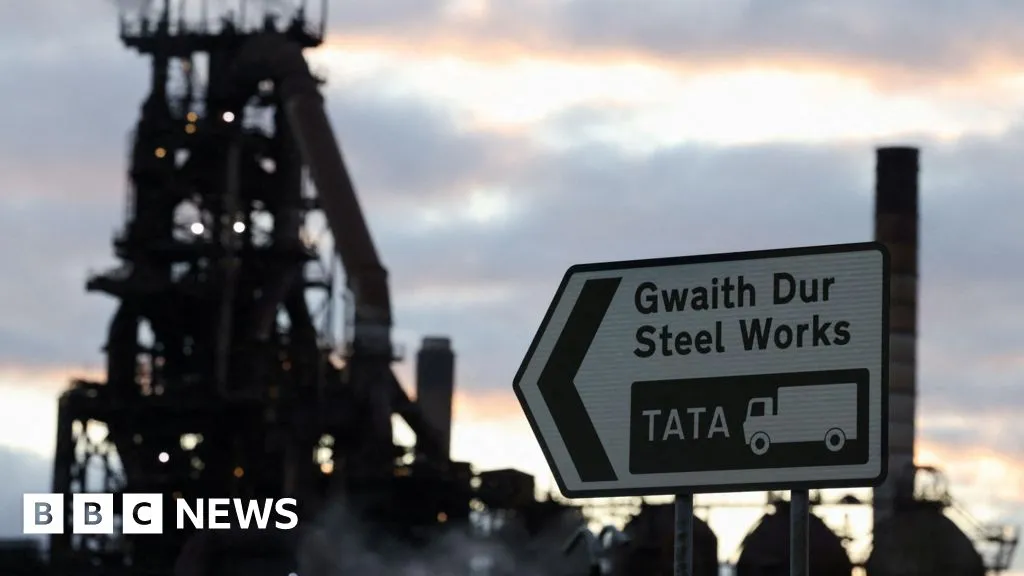
Tata Steel says plans for a new £1.25bn steel-making furnace may be delayed because of an electrical connectivity problem. For decision-makers, the practical consequence is schedule uncertainty on a capital-heavy project where timing impacts supply, costs, and downstream commitments.
Tata Steel is flagging a delay risk for a new £1.25bn steel-making furnace, citing an electrical connectivity problem. In other words, one of the most expensive parts of the steel supply chain is no longer a clean “build and commission” story. It is now a “fix the electrical issue first, then re-baseline the timeline” story.
The headline stake is simple: the £1.25bn furnace plan may not land when people assumed it would. Even without additional details, the signal matters because large-scale steel furnaces are not plug-and-play assets. They require coordinated work across electrical systems, commissioning, testing, and integration with the rest of the plant. When the problem is described as “electrical connectivity,” that usually points to an interface, reliability, or linkage issue rather than a cosmetic defect. That matters because electrical constraints can halt commissioning progress until the system behaves as designed.
If you are a board member, CFO, or project leader watching this, schedule uncertainty is not a small inconvenience. It changes cash flow timing and can add indirect costs such as extended overhead, contractor standby time, and the administrative drag of revising project governance. It can also shift the internal logic of “capex deployment to capacity ramp.” For capital-intensive industries like steel, those ramps often drive expectations about future unit economics. A delayed ramp does not just push volumes out the door. It can also distort how the company manages utilization rates across existing assets, which is crucial in a market where margins can swing.
This is also the kind of risk that ripples outward. Steel is not a standalone industry. Customers in construction, automotive, and manufacturing plan purchases and production schedules around expected deliveries. If a new furnace is delayed, it can mean that the supply plan relies more heavily on older capacity for longer than intended. That is the sort of mismatch that can show up downstream as price volatility, supply tightness, or contract renegotiations. None of those outcomes are stated in the BBC report, but the mechanism is standard: timing shifts at a bottleneck facility create second-order pressure elsewhere.
There is another layer for investors and capital allocators: large capex projects often sit inside a broader narrative about resilience and competitiveness. A new furnace is typically positioned as a step-change in efficiency, output, or strategic positioning. When the company publicly acknowledges an electrical connectivity issue that could delay the project, it implicitly tells the market that execution risk is real. Markets can forgive one-off operational glitches more easily than they forgive recurring delays. The fact pattern here is limited, but the corporate message is clear enough: the company is treating the issue as material to timing.
From a governance perspective, boards usually want two things in situations like this: transparency and control. Transparency means the company communicates what has changed, what is causing the delay risk, and what milestones remain. Control means the project has a mitigation plan for the electrical connectivity problem, with updated schedules and accountable ownership. Even a brief public warning, like the one captured by BBC News, is often the first step in that governance process. It helps align internal teams and reduces the chance that assumptions harden into mismanagement.
Regulatory framing also matters, even when the issue itself is technical. Industrial projects like steel furnace builds exist in environments where safety standards, electrical compliance, and commissioning protocols are non-negotiable. If an electrical connectivity problem is involved, it likely affects the certification and testing pathway before the furnace can operate as intended. That makes the delay risk more than a schedule slip. It is also a reminder that the “go-live” gate depends on verified operational readiness.
For peers in the steel sector and for executives at other heavy-industry firms, the broader takeaway is about execution realism. A £1.25bn furnace project is a headline-level commitment, but the real discipline is in managing the messy middle, where systems integrate and the last mile can break the timeline. This kind of public update is a prompt to revisit project risk registers, especially around electrical and commissioning dependencies. In a world where costs and supply expectations move quickly, the companies that manage timing uncertainty well are often the ones that protect both cash flow and credibility.
This story's Key Insights and Take-aways are locked.
Create a free account to unlock Executive Actions for one credit.
Register to UnlockAlways free for Executives Club members. Join the Club
More in Business

Anthropic’s Levant Alpöge cracks the Jacobian conjecture after 87 years
A Harvard valedictorian used Claude to hit a 1939 breakthrough, but the missing “why” is the real problem.

Uber buys Delivery Hero for nearly $15B, vaulting to top food delivery outside China
The deal doubles Uber's dual-services footprint and pushes a ride-and-eats bundling play into 50 more markets.

Epic and Google drop settlement bid, forcing rival Android app stores by July 22
Google told the court it is ready to carry third-party app stores starting Wednesday, July 22.