
Taylor Swift and Travis Kelce marry at Madison Square Garden as Adam Sandler officiates
A celebrity-stuffed NYC wedding closes the chapter on a nearly three-year romance and keeps the Swift universe buzzing.
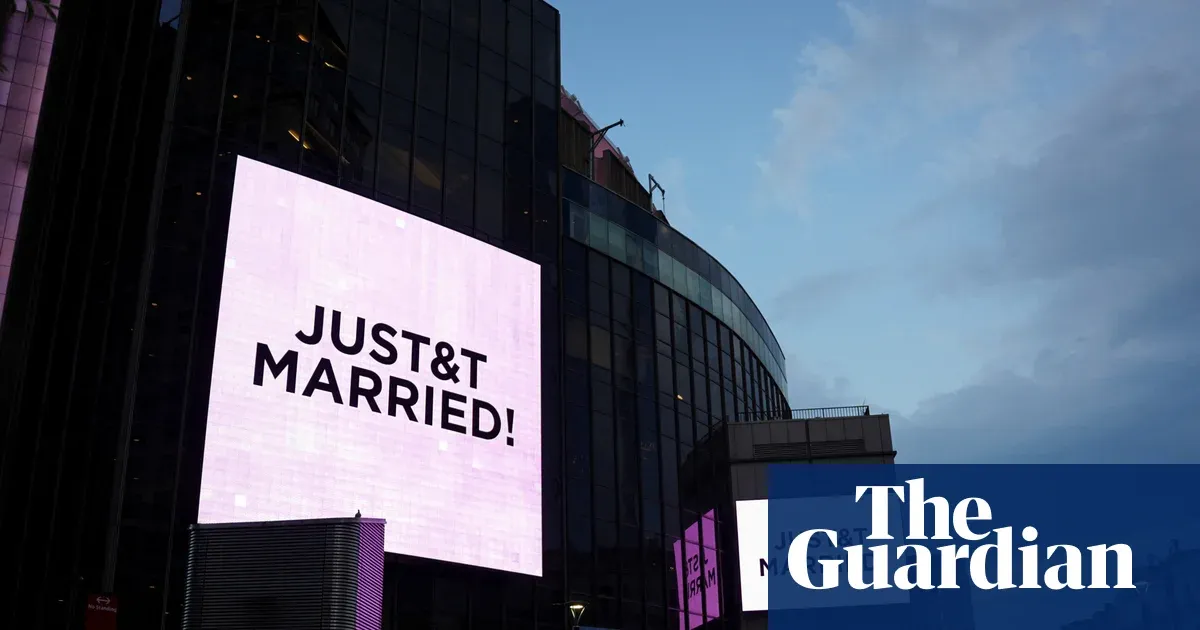
Taylor Swift and Travis Kelce were officially wed in a ceremony held Friday in New York City at Madison Square Garden. A Swift spokesperson confirmed the nuptials in a Friday statement, saying Adam Sandler officiated and listing celebrity guests including Gigi Hadid and Bradley Cooper.
Taylor Swift and Travis Kelce are officially married, after hosting their wedding celebration on Friday in New York City at Madison Square Garden. A Swift spokesperson confirmed the nuptials in a Friday statement, and the ceremony was officiated by Adam Sandler. The speed and scale of it matters because this is not a private moment anymore, it is an event with mass-audience gravity and a guest list that reads like a live roll call of mainstream culture.
The couple invited an array of celebrity guests, including Gigi Hadid and Bradley Cooper, to the wedding. That detail is the tell: this was always going to be public-facing, even if the vows themselves were not. Swift and Kelce first met nearly three years ago, and now the timeline snaps shut in the biggest room in New York, with an A-list officiant and high-recognition attendees. In other words, the headline news is the wedding, but the business-relevant story is the signal about how Swift’s brand operates like a modern media system. It does not just release music. It stages moments.
For executives watching entertainment and creator-led brands, this is a reminder that audience attention behaves like capital. Madison Square Garden is not a random venue, it is infrastructure. When a creator of Swift’s size chooses a megaarena, it tells the ecosystem around her that demand is real enough to justify the friction of major-city logistics. The same goes for celebrity guesting. Invitations are not merely social. They are amplification channels. If you are an investor, label executive, or marketer, you should recognize how quickly cultural attention can translate into reach, press pickups, and durable “where were you when this happened” energy.
There is also a second-order implication for anyone building events, campaigns, or partnerships: guest lists change distribution. Gigi Hadid and Bradley Cooper are not niche references. They are familiar to broad audiences across fashion, film, and music-adjacent fandoms. When they show up at the same moment, you get cross-pollination across multiple audience segments that may not overlap day to day. That kind of overlap is hard to engineer with ads alone, because it depends on trust and attention that pre-exists in each fanbase.
Adam Sandler officiating adds another layer. The source says he officiated the ceremony, as confirmed in a Friday statement by a Swift spokesperson. Sandler is not just a comedian with celebrity recognition. He is part of a wider mainstream entertainment pipeline that includes film, TV, and global comedy culture. That matters because Swift and Kelce sit at the intersection of music fandom and sports fandom. Kelce, by virtue of being a high-profile NFL figure, connects to a different kind of mainstream and sports media. By putting Sandler at the center of the ceremony, the event reaches an additional mainstream channel where comedy, movie stars, and celebrity culture have long-form overlap.
From a governance perspective, there is an important practical angle, even though the source is light on legal details. When a celebrity couple holds a wedding in a major NYC venue, the surrounding operation involves contracts, venue compliance, event security planning, and media coordination. Those tasks are not “regulation” in the sense of a new law being introduced, but they sit inside an ecosystem of existing rules and procedures. For decision-makers, the takeaway is that events at this scale behave like complex productions, with risk managed across public access, property, and safety. And because the source explicitly notes a Friday statement confirming the nuptials, it underscores how communication control is part of the operational plan.
Zoom out further, and the business stakes look bigger than romance. This kind of high-profile personal milestone lands in the same attention environment where product cycles, tour announcements, and media narratives compete. Swift’s history shows that her moments can become content, and content can become a platform for future releases, collaborations, and brand partnerships. For peers, boards, and leadership teams, the strategic lesson is less about weddings and more about timing and narrative. When the market is crowded, you do not just release. You frame.
Finally, consider why this matters now for executives in the wider industry. The source places the wedding nearly three years after first meeting. That “nearly three years” time window is meaningful because it suggests sustained public interest through the timeline, not just a single-day spectacle. For founders and operators building community-driven brands, it demonstrates the upside of long-running relevance. For investors, it is a reminder that celebrity and sports-adjacent ecosystems can create durable audience attention that does not expire overnight. For boards, it is a case study in why creative leadership and communications strategy are inseparable at the top of entertainment.
This story's Key Insights and Take-aways are locked.
Create a free account to unlock Executive Actions for one credit.
Register to UnlockAlways free for Executives Club members. Join the Club
More in Entertainment

Russell Brand's accuser 'bewildered and confused' as he denies 7 sex charges
The criminal case against the comedian is a live test of how media companies manage talent risk when serious allegations go public.

'It's a Magic Trick': Ballet Experts Say Rosalía's SNL Pose Is Impossible
Three ballet experts tell Rolling Stone Rosalía's gravity-defying SNL stillness shouldn't be possible - and why the debate is now part of the show.

Activision CMO: GTA 6 Will Boost Call of Duty, Not Bury It
Activision's top marketer says Rockstar's blockbuster will drive players back to consoles and into Modern Warfare 4, even as the company admits its recent strategy failed.