

Teammates triple hiring odds: Ivy sports ties beat Ivy diplomas, NBER finds
In finance recruiting, shared rosters matter far more than school prestige, with odds nearly tripling for same-team matches.
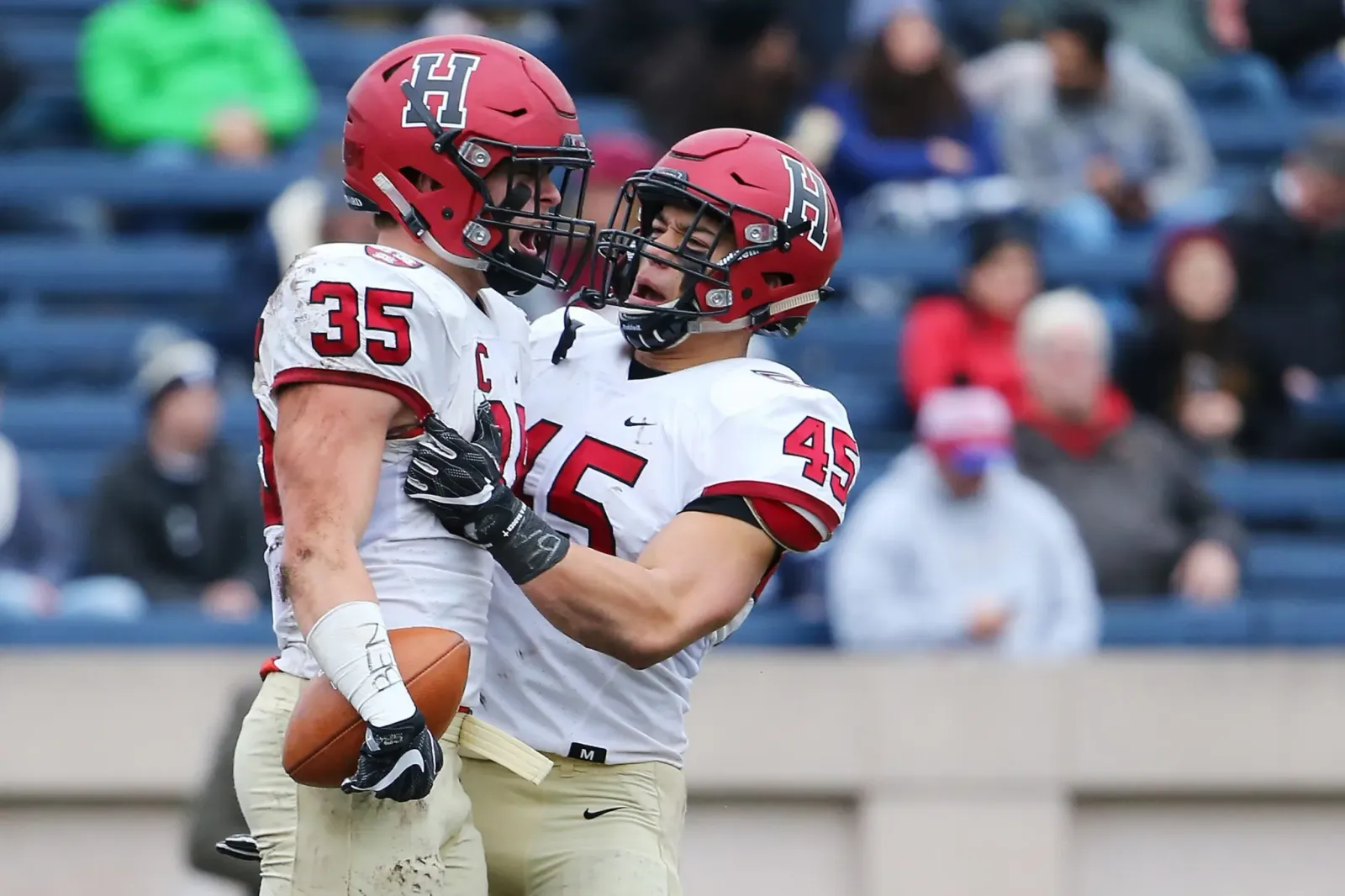
A National Bureau of Economic Research study tracking 120,306 Ivy League graduates from 1950 to 2020 finds college athletics ties outperform Ivy diplomas in predicting where graduates get their first jobs. For decision-makers, the consequence is clear: recruiting and retention pipelines in high-power industries are partly driven by “roster effects,” not just credentials.
The NBER study behind a new Fortune reporting spotlight found one recruiting force that behaves like a cheat code: a teammate. In the data, having one additional former teammate at a firm where a fellow Ivy athlete is being considered, all matching on the same sport, school, and roster, raises that fellow player’s odds of joining by 193.7%, or nearly triple the baseline.
The same paper also quantifies what most people intuitively assume matters more, the diploma. Simply sharing a university with existing employees without overlap in sport or team raised odds by just 4.6%, while sharing a sport with employees at a different Ivy raised odds by 16.4%. In plain English: the “team” is doing the gatekeeping more than the “brand,” and the numbers are large enough that finance leaders should treat alumni sports networks as an operational hiring channel, not just trivia.
This research, from NBER and Harvard, Duke, and Wharton researchers, is led by Paul Gompers, George Hu, Will Levinson, and Sachin Srivastava, who tracked first jobs for 120,306 Ivy League graduates between 1950 and 2020. The work tests an old Wall Street insistence, often passed around as recruiter lore, that being a college athlete increases hiring chances. The paper’s twist is specificity. Broad school ties do relatively little. The pull comes from intensive shared experiences like a varsity team. In a line that lands uncomfortably well in finance, Srivastava told Fortune over email that “the old boys’ club looks less like a club and more like a roster.”
The “teammate multiplier” is not a one-time handshake. The study reports that the effect doesn’t fade with graduation timing. Alumni who played on a team years before a given athlete ever set foot on campus, people that athlete never actually met, still boost that athlete’s odds of getting hired by 171.9%. That is nearly as large as the 193.7% lift for teammates who were literally in the locker room. Gompers suggests why the mechanisms might differ. Recent teammates may function as an information pipeline, while older, non-overlapping alumni may shape how recruiters and HR assess candidates who share their team affiliation, rather than simply passing along a tip.
If you are a founder, operator, or investor, the instinctive takeaway is “so what, that’s networking.” But finance is exactly the kind of industry where second-order effects turn into business outcomes. The paper notes that Ivy League athletes are only about 5% of the graduates in the sample, yet 7.08% of first jobs in the finance sector went to athletes. It also calls out employer patterns: Morgan Stanley and Bank of America topped the list of athlete-heavy employers, while Goldman Sachs and JPMorgan Chase led on overall Ivy League hiring. Consulting also shows up prominently, with McKinsey and Bain appearing on both lists.
This matters for governance and compliance conversations too, because the pipeline is both sticky and hard to audit. When team identity carries most of the effect, hiring success can become less about what candidates do in a formal process and more about who signals to whom behind the scenes. The source notes Fortune’s history of covering the machinery of elite-school gatekeeping, including Wall Street’s secretive alumni societies and the continuing debate over whether an Ivy degree still buys the career premium it once did. It also references how deeply finance has fused with athletics, including Goldman Sachs building a dedicated sports and entertainment group inside its private wealth division, and the bank tapping a fraud investigator, Nicole Pullen Ross, specifically to guard athletes’ fortunes, signaling how enmeshed the firm has become with the sports world it recruits from.
There is a regulatory and risk-management angle here as well, even though the study itself is about hiring outcomes. If hiring pipelines lean on shared social identity, firms may face more pressure around fair employment practices and consistent evaluation standards, especially as recruiting intensifies in high-turnover entry roles. The paper’s findings also land amid public comments from finance leaders about elite credentials. In January, Fortune reported that a Blackstone executive told Fortune that elite degrees “aren’t good enough” anymore and that new analysts need to simply work harder. Fortune also reported Ramp’s CEO saying he ignores résumés and Ivy pedigrees entirely, hunting for people who built things themselves. Those statements are a reminder that “credential-first” is not the only strategy on Wall Street, but the NBER results show that even when formal criteria exist, informal channels can still influence who gets in.
Just as important, the study does not reduce everything to network capture. Gompers cautions against reading the findings as pure connections. He argues that athletics can teach skills hard to learn in the classroom, like discipline, goal-setting, and dealing with failure. The point is subtle but crucial: part of the hiring premium may come from a skills-to-jobs fit assessment in addition to the network channel.
So what should decision-makers do with a number like 193.7%? Treat it as a forcing function to examine your pipeline end-to-end. If teammate effects are real, then “who we hire” may be partly shaped by roster adjacency, not just resume quality. And if you are on a board or senior leadership team trying to optimize recruiting, you need to understand whether your process is amplifying human capital, social capital, or both. In finance and adjacent industries where retention matters and high performers compound influence over time, the roster might be the real hidden recruiting pipeline.
This story's Key Insights and Take-aways are locked.
Create a free account to unlock Executive Actions for one credit.
Register to UnlockAlways free for Executives Club members. Join the Club
More in Business

Anthropic’s Levant Alpöge cracks the Jacobian conjecture after 87 years
A Harvard valedictorian used Claude to hit a 1939 breakthrough, but the missing “why” is the real problem.

Uber buys Delivery Hero for nearly $15B, vaulting to top food delivery outside China
The deal doubles Uber's dual-services footprint and pushes a ride-and-eats bundling play into 50 more markets.

Epic and Google drop settlement bid, forcing rival Android app stores by July 22
Google told the court it is ready to carry third-party app stores starting Wednesday, July 22.