

Telemundo’s World Cup 2026 coverage set records, led by a 23.9M Spain-Argentina peak
The Spanish-language network shattered viewership benchmarks across every stage, with the final becoming the most-watched match ever.
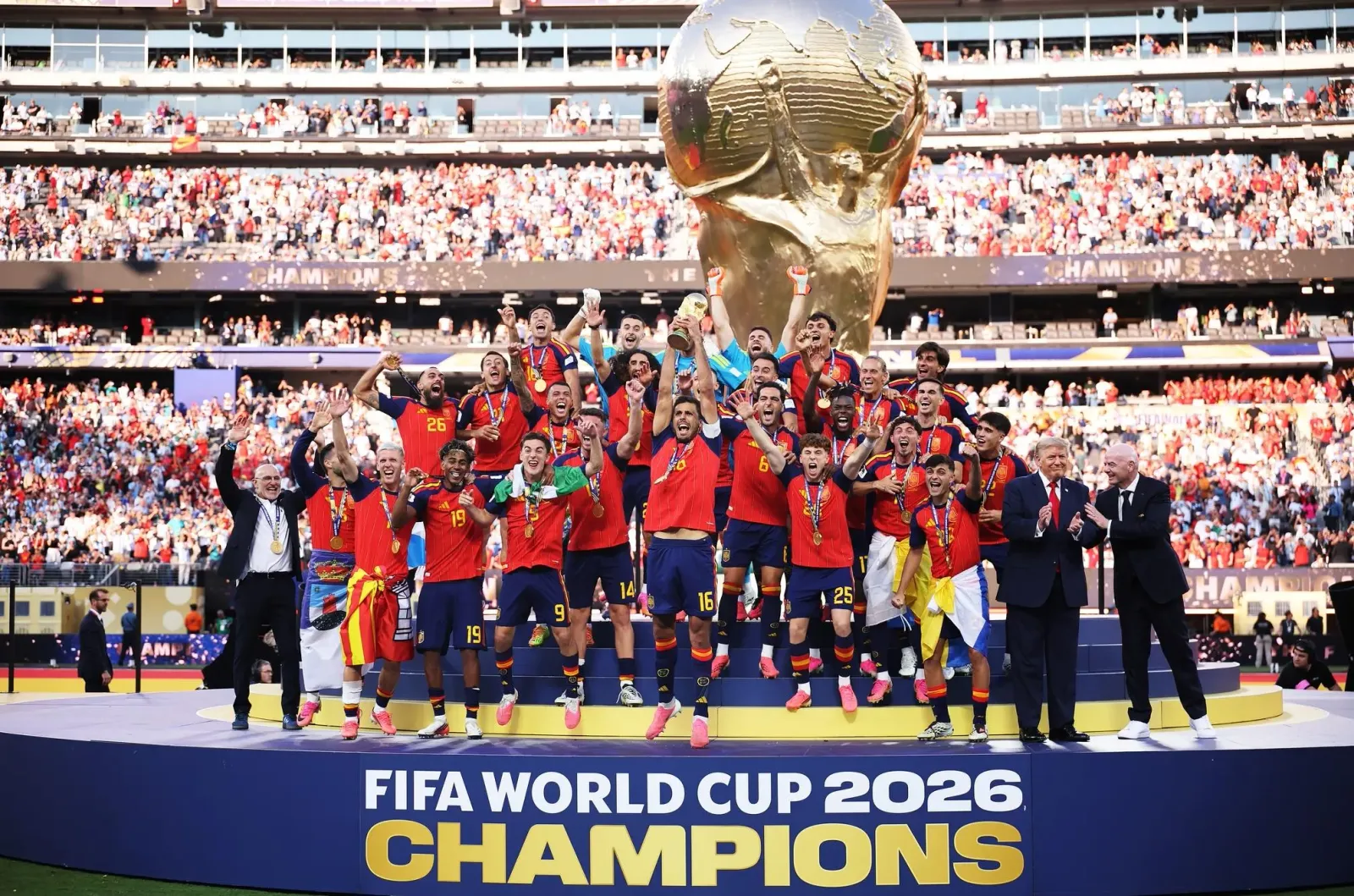
Telemundo’s World Cup 2026 coverage made history across all platforms, culminating in the Spain vs. Argentina final. The 23.9 million viewer peak reshapes the stakes for Spanish-language broadcasters and advertisers looking at mass reach.
Telemundo’s World Cup 2026 coverage did something rare in sports media: it didn’t just perform well, it broke records across every stage. The Spain vs. Argentina final became the most-watched soccer match ever, drawing 23.9 million viewers.
That number matters because it is not a niche spike. It is a category-defining signal that Spanish-language premium sports can achieve the same kind of mainstream, must-watch behavior that historically dominated English-language broadcasts for major tournaments. When a final hits 23.9 million viewers, it is telling the market something about audience scale, programming confidence, and ad inventory value that goes beyond a single game.
To understand why this is a big deal, you have to look at how international tournaments work inside a broadcast business model. World Cup coverage typically rewards the networks that can align production quality, distribution reach, and audience habits across the tournament lifecycle. It is not just about the final. This coverage “shattered viewership records across every stage,” meaning the performance repeated over multiple rounds, not just one headline moment. That repetition is what advertisers and decision-makers care about, because it suggests consistent viewing behavior, not one-off novelty.
There is also an all-platform implication hidden in the headline phrase “across all platforms.” In modern media, platform spread is not optional. Viewers move between broadcast, streaming, and social distribution, and those pathways can influence how quickly audiences adopt and how long they stay engaged. When a network’s tournament coverage sets new viewership benchmarks across stages and formats, it signals that the content team, rights handling, and distribution strategy are working in tandem. For leadership teams, this is the difference between a campaign that spikes and a franchise that sustains.
From an executive perspective, the most relevant question is usually commercial: what does record viewership do to pricing, packaging, and future negotiations? Higher audience peaks and stronger progression through the tournament can lift the perceived value of premium ad slots and sponsorships. It also changes what buyers expect for subsequent rights windows. If 23.9 million viewers can happen for a Spanish-language final, it pressures everyone in the market to reassess where “premium sports audience” actually sits.
Second-order effects show up in how boards and leadership teams allocate resources. A World Cup performance like this often reshapes internal debates around investment priorities, including studio talent, production budgets, rights strategy, and distribution partnerships. If the network can translate tournament excitement into measurable record-breaking reach “across every stage,” leadership can justify that spending with evidence rather than ambition. And because this is tied to an event as large as the World Cup, it sets a high watermark that can influence expectations not only for soccer coverage, but also for other major sports and event programming.
Regulatory and policy context is part of the backdrop too, even when the source doesn’t name specific rules. In many markets, media oversight and spectrum or licensing frameworks can influence how networks distribute content and how quickly new platforms scale. Separately, competition policy and consumer protection norms can shape how rights are allocated and how broadcasters compete for audiences. While the source focuses on viewership outcomes, the operational reality is that networks operate inside compliance constraints that affect distribution decisions. Record viewership across broadcast and digital surfaces suggests the network navigated those constraints while still landing audience demand where it matters.
For peers, creators, and investors watching the sports media ecosystem, this is a competitive reminder. TelevisaUnivision's Telemundo has not only delivered a great campaign, it has reset benchmarks for what a Spanish-language broadcaster can achieve in mainstream viewership. When the Spain vs. Argentina final becomes the most-watched soccer match ever at 23.9 million viewers, it changes the scoreboard. The strategic stakes are clear: other networks will be forced to sharpen their monetization plans, rights strategy, and platform distribution assumptions, because the “ceiling” for Spanish-language sports reach has just moved.
In short, this is not just a record for Telemundo. It is a market signal. A tournament that shattered viewership records across every stage, ending with a 23.9 million viewers peak, tells decision-makers that premium sports can scale in Spanish-language media at the highest level. And once that story becomes the new normal, the next negotiation, budget cycle, and ad-sales forecast will be judged against it.
This story's Key Insights and Take-aways are locked.
Create a free account to unlock Executive Actions for one credit.
Register to UnlockAlways free for Executives Club members. Join the Club
More in Business

Anthropic’s Levant Alpöge cracks the Jacobian conjecture after 87 years
A Harvard valedictorian used Claude to hit a 1939 breakthrough, but the missing “why” is the real problem.

Uber buys Delivery Hero for nearly $15B, vaulting to top food delivery outside China
The deal doubles Uber's dual-services footprint and pushes a ride-and-eats bundling play into 50 more markets.

Epic and Google drop settlement bid, forcing rival Android app stores by July 22
Google told the court it is ready to carry third-party app stores starting Wednesday, July 22.