
Tencent Cloud AI agents probed Alibaba's Amap 2,600 times in 11 days
2,600 AI probes on Alibaba's Amap traced to Tencent Cloud - a data war warning.

Independent researchers found that a fleet of AI agents running on Tencent Cloud made more than 2,600 attempts to pull data from Alibaba's Amap between 28 September and 8 October. The incident signals that AI agents are becoming a primary tool for corporate data extraction, forcing cloud and platform executives to harden API defenses and monitor for abusive traffic.
More than 2,600 times over an 11-day stretch, a fleet of AI agents running on Tencent Cloud tried to pull data from Amap, Alibaba's map service, according to a report published 14 October by independent researchers who track AI agent activity online. The attempts ran from 28 September to 8 October, making it a sustained, automated campaign rather than a single misconfigured bot.
The researchers, who first shared preliminary findings before releasing the full report, traced the agents' infrastructure back to Tencent Cloud. That puts one of China's largest cloud providers at the center of an aggressive data-extraction effort against a direct competitor: Amap is Alibaba's flagship navigation and location platform, while Tencent operates its own mapping services. The report does not say who launched the agents, only that they ran on Tencent Cloud's infrastructure.
AI agents are software programs that autonomously browse, query, and extract data from websites and APIs. When deployed at scale on cloud infrastructure, they can behave like a distributed army of bots, hammering endpoints with requests that mimic human traffic. The 2,600 attempts here are notable not just for the volume but for the precision: they were aimed at a single service owned by a rival.
For executives, the incident is a reminder that cloud platforms are not neutral hosts. Tencent Cloud's infrastructure was used to target Alibaba's property, raising questions about how cloud providers police abusive traffic originating from their own networks. The report does not identify the individual or group behind the agents, and it does not state a motive. But Amap's location data - traffic patterns, point-of-interest databases, and user-generated insights - is among the most valuable datasets in China's digital economy, and any competitor with access could sharpen its own maps or train AI models on real-world movement.
The timing also matters. The 11-day window in late September and early October falls just before China's major shopping and travel seasons, when location data is at a premium. While the report does not link the timing to any specific event, the concentration of attempts suggests a deliberate effort to harvest data during a period of high activity. For companies that rely on location intelligence, this is exactly the kind of dataset that can power everything from delivery routing to targeted advertising.
This is the latest example of AI agents being used for data scraping at scale. Cloud infrastructure makes such campaigns harder to block because requests come from legitimate IP ranges and can be rotated across regions. The 2,600 attempts over 11 days works out to roughly 236 per day, a pace that could slip past naive monitoring but is detectable with anomaly detection and rate limiting. Security teams should treat any sustained pattern of requests from a single cloud provider as a red flag, especially when the target is a competitor's service.
For boards and security teams, the takeaway is to audit API endpoints and rate limits as if they are under siege. More importantly, the incident shows that cloud providers need to take responsibility for abusive traffic on their networks, or risk becoming the weapon of choice in data wars. Regulators in China and elsewhere are already tightening rules around data collection, and a campaign like this could accelerate enforcement. China's data security and personal information protection laws impose strict requirements on data collection, and automated scraping of a rival's service could run afoul of those rules.
The strategic stakes extend beyond Tencent and Alibaba. Any company running AI agents on public cloud infrastructure - whether for web scraping, market research, or competitive intelligence - should expect scrutiny. Many organizations deploy AI agents for legitimate purposes like price monitoring and research, but the same infrastructure can be turned to aggressive scraping. For executives, the lesson is simple: know what your cloud is being used for, because the next report might name your infrastructure.
This story's Key Insights and Take-aways are locked.
Create a free account to unlock Executive Actions for one credit.
Register to UnlockAlways free for Executives Club members. Join the Club
More in Technology

Cop fired after sharing Flock login with ICE husband: 983 searches
A Savannah officer's shared credential let an ICE agent run hundreds of plate searches on Hispanic drivers, exposing a surveillance backdoor.

Elizabeth Holmes doc 'You Can See Everything' posts second-biggest doc debut ever
The true-crime draw shows fraud narratives still sell - a signal for media execs and a caution for founders.
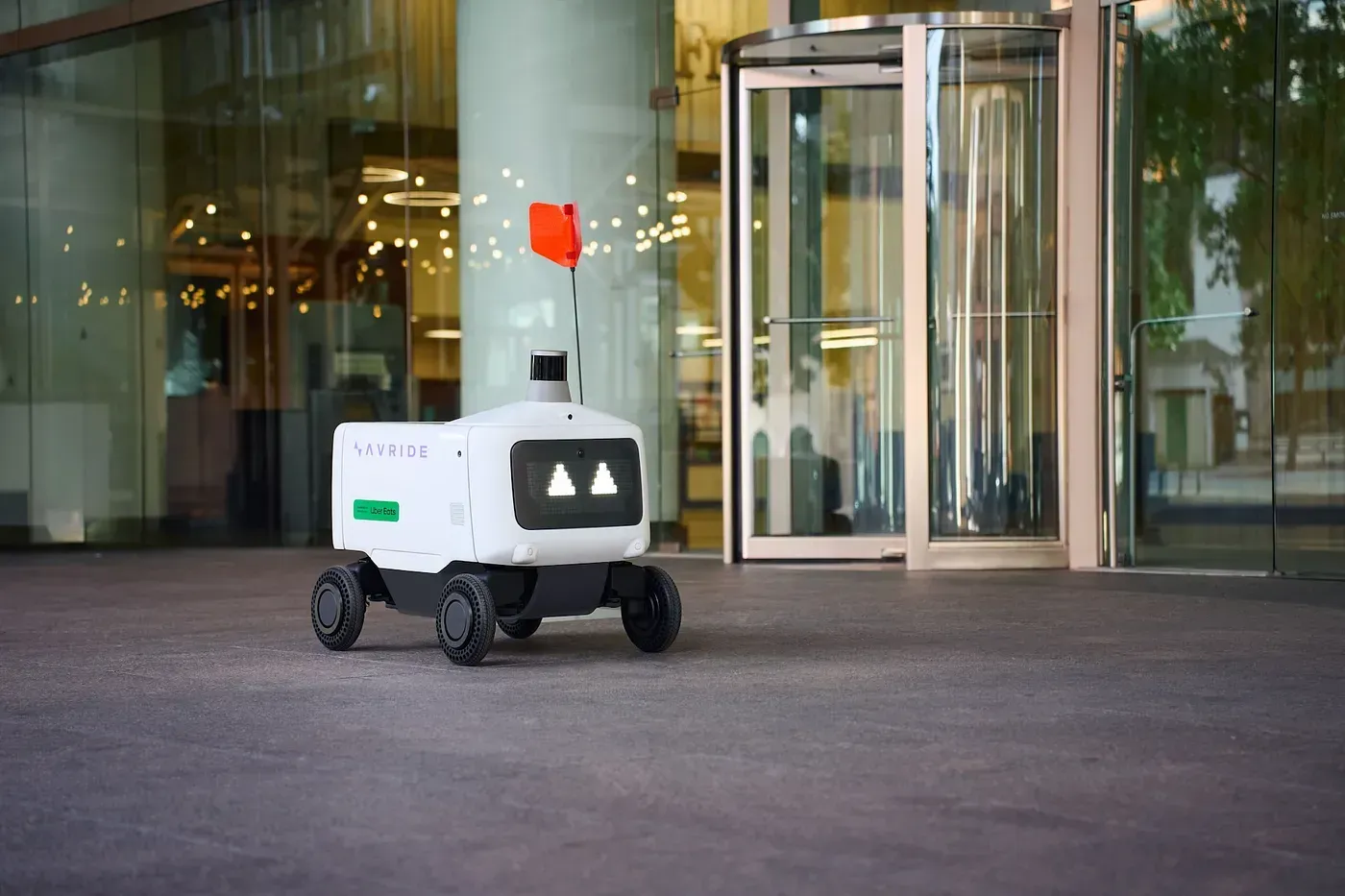
She blocked an Uber delivery robot to save jobs. Police arrested her.
Carolyn Marvin's disorderly conduct arrest turns a sidewalk standoff into a test case for how cities police the automation-versus-workforce debate.