
Tesco CEO Ken Murphy: rainy spring cut UK sales growth more than World Cup wins
Sunshine and weather mattered more than football glory and Middle East uncertainty, as Tesco said rainy conditions slowed growth.
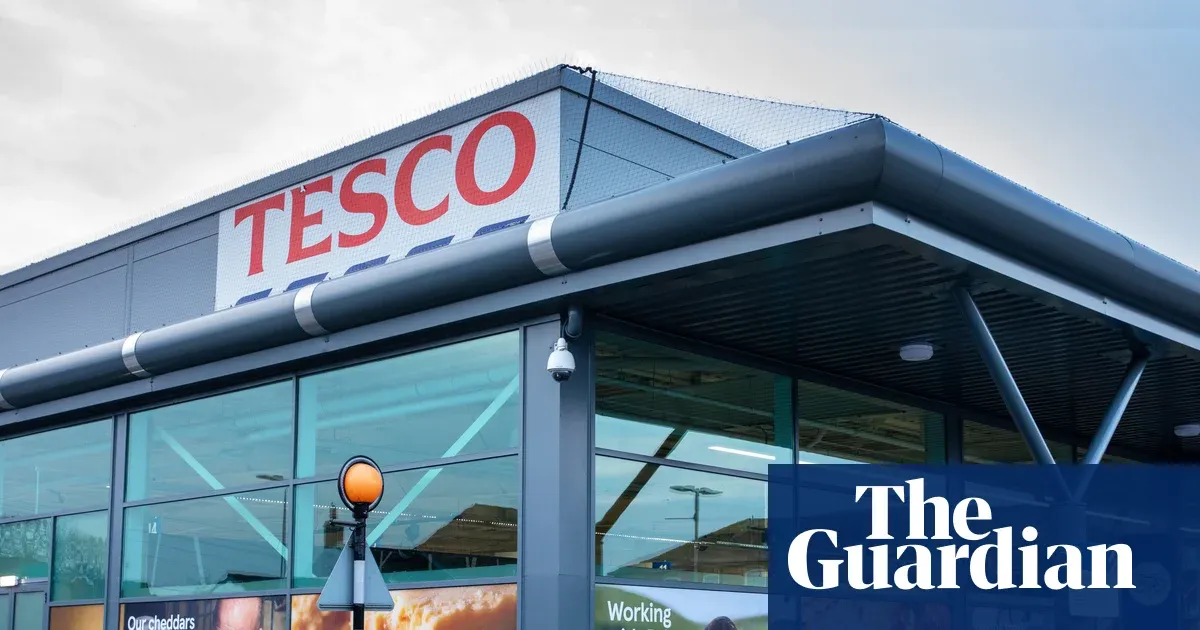
Ken Murphy, CEO of the UK’s biggest retailer Tesco, said UK sales growth more than halved during a rainy spring. He argued the weather had a larger effect on spending habits than the football or the Middle East conflict, alongside uncertainty for households.
Tesco CEO Ken Murphy is making a surprisingly simple claim: for UK grocery sales, the weather mattered more than the World Cup. In Tesco’s latest update, Murphy pointed to a rainy spring, saying UK sales growth more than halved compared with a long spell of sunshine last year. The punchline is that the retailer beat forecasts anyway, helped by specific product demand, including strong sales of canned cocktails and Irn-Bru.
Murphy’s framing is the point of the story, and it answers the headline question immediately. He said the rainy conditions for much of this spring, when set against last year’s sunnier period, had a larger effect on spending habits than football. He also said that despite the Middle East conflict creating “ongoing uncertainty for many households”, the weather’s impact on behaviour was bigger. In other words, Tesco is telling investors and operators that consumer retail patterns can be driven by something as mundane as rainfall, not just national narratives like sports or geopolitical headlines.
That matters because grocery retail is an unforgiving mix of predictable staples and volatile, mood-driven categories. Weather is one of the few variables that moves people’s day-to-day routines fast. When it is sunny, households tend to plan outings, shopping trips, and casual spending differently. When it rains, more people stay in, adjust what they buy, and rely more on convenience, comfort, and drinks that travel well. Tesco’s own update includes the tell: canned cocktails and Irn-Bru were strong. Those are not abstract “retail categories”. They are the kinds of items that fit at-home consumption patterns, especially when households do not feel like going out.
The other half of Murphy’s argument is that the World Cup and the Middle East conflict still matter, just not in the way you might expect. The football angle sounds like a classic marketing lever, and the Middle East conflict sounds like a classic uncertainty lever. Murphy suggested both had secondary effects, but “ongoing uncertainty for many households” was not enough to outweigh the behavioural shift from a rainy spring. For decision-makers, that is a useful mental model: in the short term, weather can dominate changes in footfall and basket composition, while geopolitical uncertainty can show up more slowly, if it shows up at all in sales growth.
This is not happening in a vacuum. UK consumers are living through a long-running stretch where cost pressures force retailers to fight for every incremental purchase, and where forecast beats become meaningful signals of execution. When Tesco says it beat forecasts, it suggests management can still navigate macro noise and manage demand, even when the headline driver is weather. The strategic discipline is in how quickly retailers translate weather and sentiment into merchandising, promotions, staffing, and logistics.
Board-level and executive teams should also notice what the story implicitly says about internal prioritization. If management guidance is shaped by factors like weather and household routines, then the data and planning processes become more valuable. The ability to see a rainy spell and adjust expectations around discretionary or semi-discretionary items can separate operational success from disappointment. It also affects how leaders interpret other inputs. For example, if a rainy spring cuts growth, boards should not automatically attribute the slowdown to longer-term demand weakness. The source comparison Murphy cited was straightforward: rainy conditions this spring versus a long spell of sunshine last year.
Second-order implications extend beyond Tesco. In the UK retail ecosystem, rivals and suppliers watch each other’s calls closely because small differences in category performance can reveal where consumer attention is going. If Tesco’s weather-driven pattern is real, it can influence competitor promotion strategies, inventory planning, and even contract discussions with brands tied to impulse or occasion-based sales. It can also shape how retailers evaluate campaign timing. Sports and major events might still move certain product lines, but weather can change the baseline and reshape what “event demand” actually looks like.
So the stakes are bigger than one company’s quarterly print. Murphy is effectively urging the market not to overlearn from the loudest headlines, because the quieter variable, like rain, can do more to determine what’s in the basket. For executives trying to protect growth in uncertain times, the takeaway is clear: build plans that treat the environment as a first-class driver, not a footnote. When the weather shifts, consumer behaviour can shift with it, and that can decide whether growth holds, stalls, or rebounds.
This story's Key Insights and Take-aways are locked.
Create a free account to unlock Executive Actions for one credit.
Register to UnlockAlways free for Executives Club members. Join the Club
More in Business

Anthropic’s Levant Alpöge cracks the Jacobian conjecture after 87 years
A Harvard valedictorian used Claude to hit a 1939 breakthrough, but the missing “why” is the real problem.

Uber buys Delivery Hero for nearly $15B, vaulting to top food delivery outside China
The deal doubles Uber's dual-services footprint and pushes a ride-and-eats bundling play into 50 more markets.

Epic and Google drop settlement bid, forcing rival Android app stores by July 22
Google told the court it is ready to carry third-party app stores starting Wednesday, July 22.