
Tesla's Cybercab stumbled in Austin. Now Musk faces the hard part: expansion
The robotaxi's bumpy first month raises the stakes for Elon Musk's bet beyond car sales, as Tesla prepares to scale the service.
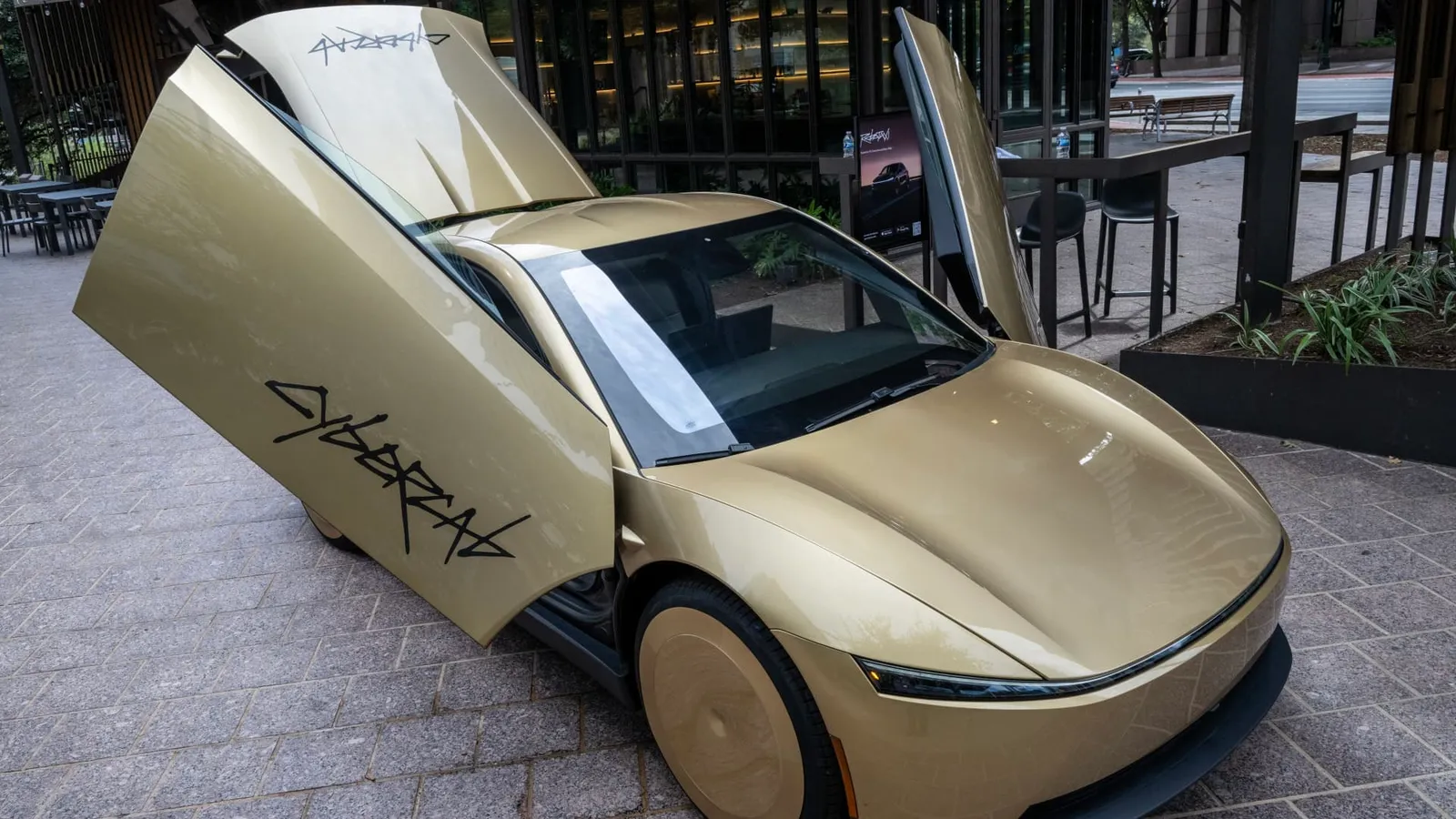
Elon Musk's Tesla launched its Cybercab robotaxi in Austin a month ago, and the first month has been rocky. The company now faces the harder challenge of expanding the service, which is central to Musk's plan to move beyond auto sales.
Elon Musk's Tesla launched its Cybercab robotaxi in Austin exactly one month ago, and the first month has been rocky. Now comes the hard part: expanding the service beyond a single city. That expansion is not just a logistical test for Tesla's autonomous driving software - it is the linchpin of Musk's strategy to transform the company from a carmaker into a mobility platform, and the stakes could not be higher for a valuation that has long priced in robotaxi dreams.
The Cybercab's debut in Austin marked Tesla's first public robotaxi service, a milestone Musk has promised for years. But early reports suggest a bumpy ride: operational hiccups, rider complaints, and the inevitable scrutiny that comes with putting driverless cars on public roads. The source notes the launch had a "rocky first month," though it does not specify the exact problems. For Musk, who has repeatedly missed self-driving deadlines, the pressure is on to prove that the Cybercab can not only work but scale - and do so safely, profitably, and before competitors cement their lead.
The robotaxi market is no longer a blue-sky concept. Waymo, Alphabet's autonomous driving unit, has been operating commercial robotaxi services in Phoenix, San Francisco, and Los Angeles for years, with a growing fleet and a track record of millions of rider miles. Cruise, General Motors' former robotaxi arm, is also re-entering the fray after a pedestrian accident forced it to pause operations. Tesla's entry into this arena is late, but Musk has always played the long game: the Cybercab is designed without a steering wheel or pedals, a purpose-built vehicle that could undercut rivals on cost per mile if the software reaches full autonomy. That "if" remains the industry's biggest open question.
What does "rocky" actually mean for Tesla? Without specific data from the source, we can infer the typical challenges of a robotaxi launch: mapping errors, edge cases in traffic, rider experience issues, and regulatory friction. Austin, a sprawling, car-dependent city with aggressive drivers and unpredictable weather, is a demanding test bed. Any safety incident - even a minor fender bender - could trigger regulatory scrutiny and public backlash, as Cruise learned the hard way. Tesla's approach to autonomy, which relies on cameras and neural networks rather than lidar, has been criticized by experts as less robust, though Musk insists it is the only path to true general autonomy.
The expansion itself is a multi-front battle. Tesla must secure permits in new cities, each with its own regulatory framework. It must ensure its software can handle diverse road conditions, signage, and driving cultures. It must build out charging and maintenance infrastructure for a fleet that is not owned by individual drivers but by Tesla itself or by fleet operators. And it must convince regulators and the public that its safety record justifies scaling. The source frames expansion as "the hard part," and that framing is apt: launching a pilot in one city is a proof of concept; scaling to multiple cities is a test of operational discipline, capital allocation, and political navigation.
For Musk, the Cybercab is not just another product. It is the vehicle that could justify Tesla's sky-high valuation, which has historically been based on the promise of full self-driving and robotaxis rather than traditional car sales. If the Cybercab fails to scale, Tesla's stock could face a reckoning. If it succeeds, Tesla could disrupt not only the auto industry but also ride-hailing, logistics, and public transit. That binary outcome explains why Musk has staked so much on this launch, and why the rocky first month in Austin is more than a blip - it is a signal of the challenges ahead.
For executives and boards watching from the sidelines, the Cybercab's trajectory offers a case study in the perils of ambitious technology deployment. The gap between a successful pilot and a scalable business is where most innovations die. Tesla's ability to navigate that gap will depend on its willingness to iterate quickly, its tolerance for regulatory setbacks, and its capacity to manage public perception. Competitors like Waymo have learned that safety and reliability trump speed; Tesla has often prioritized speed over caution. The next few months will reveal whether Musk can adapt his playbook to the realities of the robotaxi market - or whether the Cybercab becomes another cautionary tale in the long, hard road to autonomous driving.
This story's Key Insights and Take-aways are locked.
Create a free account to unlock Executive Actions for one credit.
Register to UnlockAlways free for Executives Club members. Join the Club
More in Technology

A Chinese rocket deorbited over Minnesota and landed in a farmer's cornfield
Experts tied the fragment to LandSpace's Zhuque-2E, which launched on September 15 and shed debris over the American Midwest after deploying 10 satellites.

JPMorgan Chase deploys first $5B into defense tech and hypersonic missiles
The bank is moving off its balance sheet to back robot factories, hypersonic missiles, and supply chains, signaling a new era of bank-backed military innovation.

Cop fired after sharing Flock login with ICE husband: 983 searches
A Savannah officer's shared credential let an ICE agent run hundreds of plate searches on Hispanic drivers, exposing a surveillance backdoor.