
Tesla's Cybercab Update Fails to Dazzle, Stock Drops
Investors wanted more details on Tesla's robotaxi plans, but the Cybercab update left them wanting, triggering a sell-off.
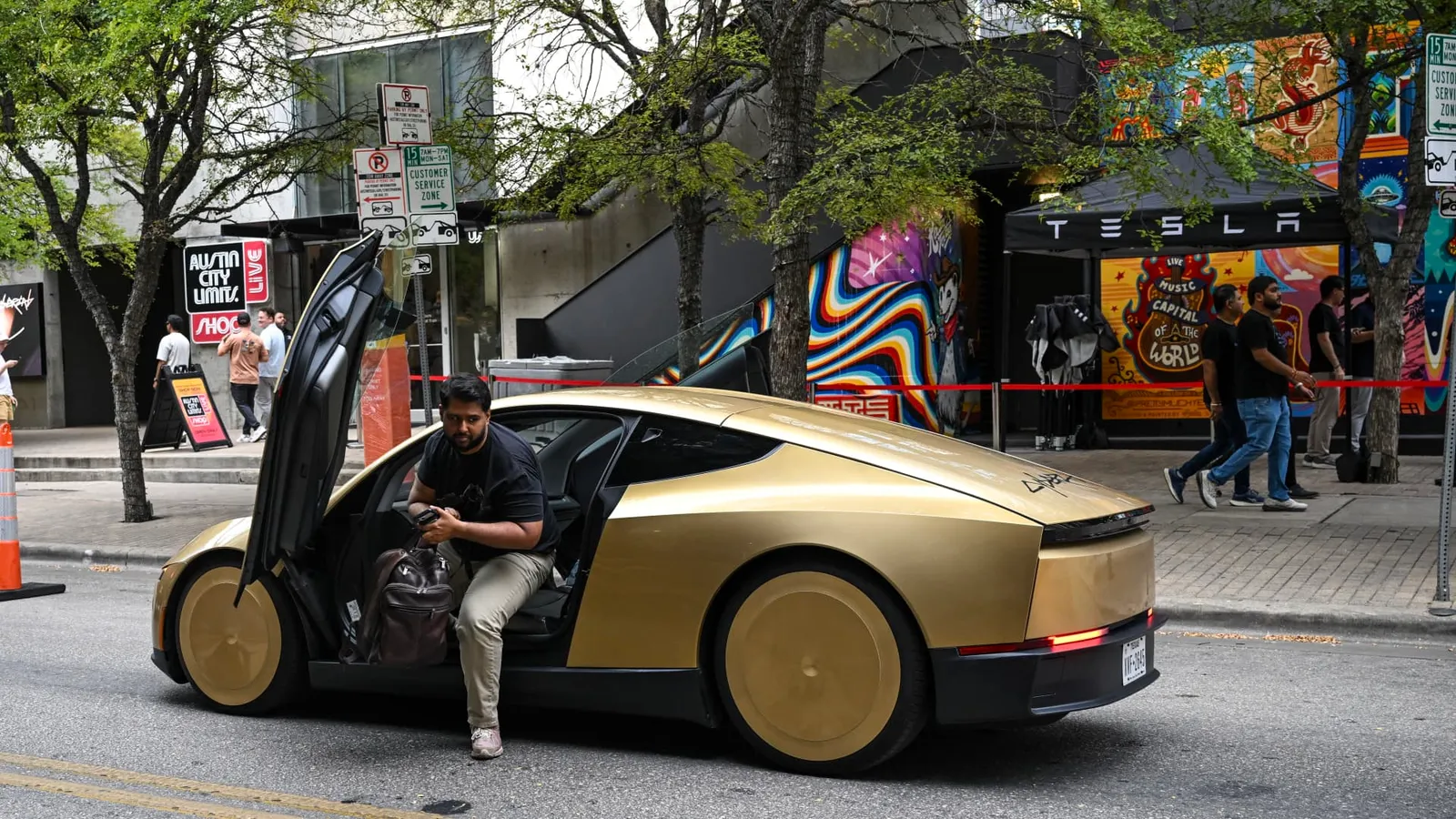
Tesla's long-awaited Cybercab update failed to dazzle investors, causing the company's stock to drop. The lack of concrete details on production timelines and regulatory strategy raises questions about Tesla's ability to lead the robotaxi market, a key growth driver for the company.
Tesla's Cybercab update, long anticipated by investors, failed to impress, sending the company's stock lower. The electric vehicle maker had built up expectations for its autonomous ride-hailing vehicle, but the presentation apparently lacked the substance needed to reassure the market. As a result, shares dropped, reflecting investor disappointment. The update was meant to showcase Tesla's progress on its robotaxi ambitions, but instead it left many on Wall Street underwhelmed, uncertain about the company's next steps in a highly competitive and capital-intensive arena.
The Cybercab is Tesla's vision for a purpose-built robotaxi, designed without a steering wheel or pedals, to be deployed in a ride-hailing network. Tesla has been promising full self-driving capability for years, and the Cybercab represents a significant step toward that goal. However, the update did not provide the concrete details on production timelines, cost per vehicle, or launch cities that investors were hoping to see. Without these specifics, the Cybercab remains more of a concept than a near-term product, and the market is struggling to assign a credible value to it.
The lack of specifics is particularly concerning given the competitive landscape. Companies like Waymo and Cruise have already deployed autonomous vehicles in limited commercial operations, albeit with safety drivers or in geofenced areas. Tesla's approach relies on its camera-based vision system and a vast fleet of existing vehicles to gather data, but the path to regulatory approval and safe deployment remains unclear. Investors are increasingly comparing Tesla's progress to that of its rivals, and the Cybercab update did little to demonstrate that Tesla is ahead of the curve.
For Tesla, the robotaxi business is a critical part of its long-term valuation. The company has argued that its autonomous technology will enable a network of self-driving cars that can generate revenue for owners and Tesla alike. This vision has helped support Tesla's high stock price, even as its core automotive business faces slowing growth and increased competition. The Cybercab is central to that narrative, and any perceived setback in its development directly impacts investor confidence in the company's future earnings potential.
The regulatory environment for autonomous vehicles is complex and fragmented. In the United States, approval is handled at the state level, with some states more permissive than others. Tesla has faced scrutiny over the safety of its Full Self-Driving (FSD) software, which has been involved in accidents. The Cybercab will need to meet rigorous safety standards before it can be deployed at scale. The update did not address how Tesla plans to navigate these regulatory hurdles, leaving investors to wonder whether the company has a clear strategy for gaining the necessary approvals.
Investors may also be worried about the timeline. Tesla has a history of delaying product launches and overpromising on technology. The Cybercab update did not offer a clear roadmap, leaving investors to speculate on when the vehicle might actually hit the road. This uncertainty is a drag on the stock, as the market prices in the risk of further delays. The lack of a definitive launch date or production target makes it difficult for analysts to model the financial impact of the robotaxi business, adding to the volatility.
The stock drop following the update is a signal that Tesla needs to communicate more effectively with its shareholders. While the company has a loyal following, the investment community is increasingly demanding evidence of progress, not just promises. The Cybercab is a bold bet, but without concrete milestones, it remains a concept rather than a near-term reality. Tesla's management must recognize that investors are looking for tangible proof that the company can execute on its ambitious plans, especially in a sector where competitors are already generating revenue.
In the coming months, Tesla will need to provide more details on its robotaxi plans, including partnerships, regulatory approvals, and production targets. Until then, the stock may remain volatile, as investors weigh the potential of the Cybercab against the execution risks. For now, the update has left the market wanting more, and the onus is on Tesla to deliver substance in future communications. The Cybercab could still be a game-changer, but only if Tesla can translate its vision into a viable, road-ready product that wins over both regulators and the public.
This story's Key Insights and Take-aways are locked.
Create a free account to unlock Executive Actions for one credit.
Register to UnlockAlways free for Executives Club members. Join the Club
More in Technology

Google quietly links your phone number to every Android account on your SIM
Adding a SIM now ties your phone number to all Google accounts - and future accounts inherit it. Here's the security and privacy stakes.

Hijacker AI 'Skynet mode' runs 100,000 attack steps against exposed models
Symantec caught a criminal AI agent that borrows other models, steals data, and mines crypto; the only relief is no confirmed victims yet.

Nvidia's AI-financier shift faces its first big test as neoclouds stumble
A rout in neocloud stocks is forcing investors to weigh Nvidia's hidden exposure as both supplier and lender to the AI buildout.