

Tesla says Robotaxi has 380,000+ unsupervised miles, with zero notable incidents
Ashok Elluswamy and Tesla expand cities, unsupervised rides, and Cybercab capacity, but regulators still hold the steering wheel.
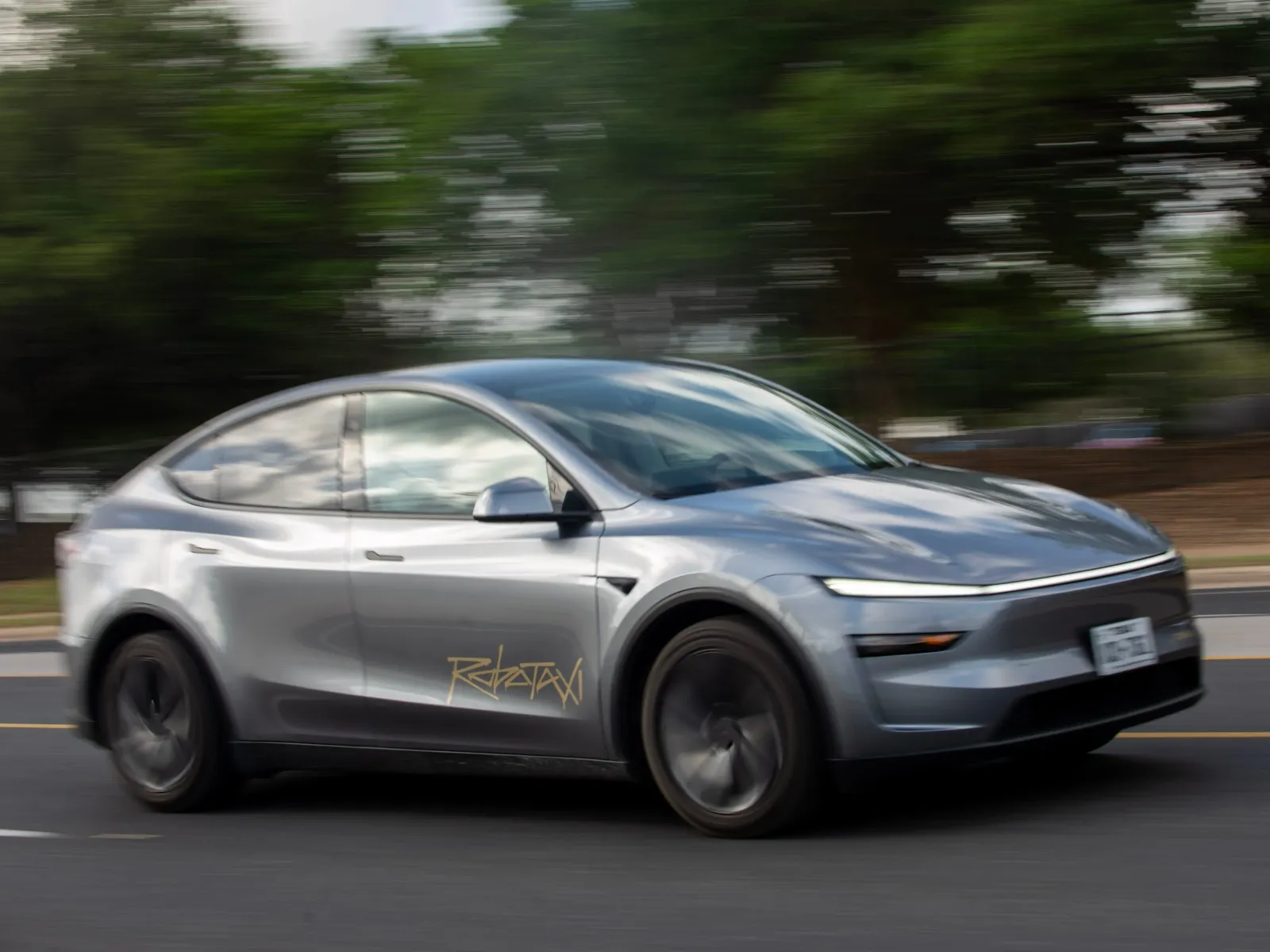
Tesla VP of AI Ashok Elluswamy told investors Robotaxi has driven more than 380,000 unsupervised miles across six cities in two states, with zero notable incidents. The company also says Robotaxi is now active in seven US markets, while ramping Cybercab manufacturing capacity and growing Full Self-Driving customers.
Tesla is backing its Robotaxi rollout with a rare kind of proof: unsupervised miles, backed by incident claims. In its own disclosures to investors, Ashok Elluswamy, Tesla's VP of AI, said Robotaxi has driven more than 380,000 unsupervised miles across six cities in two different states, and that there have been "zero notable incidents" over those unsupervised rides. For decision-makers watching autonomy, that is a big deal because unsupervised operation is where technical progress turns into regulatory permission, public trust, and ultimately scale.
It also comes with an operational reality check. Tesla said Robotaxi operates in seven US markets, including two Florida cities added Tuesday: Orlando and Tampa, alongside Austin, Dallas, Houston, Miami, and the San Francisco Bay Area. Six of the seven markets are now offering unsupervised rides, while the Bay Area still has a safety monitor behind the wheel. Translation: Tesla is expanding, but it is still drawing lines where regulators, risk appetite, and deployment constraints have not fully converged.
The wider context is that Tesla launched Robotaxi in June 2025 with a small fleet of Model Ys and safety monitors. Since then, the rollout has been slower than Elon Musk's earlier predictions. On the second-quarter earnings call on Wednesday, Musk and other executives said Tesla continues to expand its autonomous ride-hailing platform by adding more cities and more unsupervised rides. The company also has publicly stated (in July 2025) that it could reach half the US population by the end of 2025, pending regulatory approval, but Tesla has not disclosed key business and safety metrics like the overall fleet size, number of paid rides, intervention rates, or the economics of each trip. That missing data matters because miles driven and cities added are technical signals, but unit economics and incident handling are what determine whether a company can scale without getting throttled.
Musk framed those constraints around safety in plain language during the earnings call. He said safety is central to Robotaxi's deployment scale, adding that if Tesla injures even one person, it would become a worldwide headline and regulators would immediately clamp down. He also said Tesla is moving “as fast as humanly possible” in scaling Robotaxi while trying to ensure it does not harm anyone at all, and ideally does not even run over a pet. Whether or not you agree with the rhetoric, it maps directly onto why "zero notable incidents" is a key number for Tesla to put on the table: it is the argument that scaling unsupervised operation will not trigger an immediate regulatory backlash.
Tesla's numbers are also trying to answer a second question: is the system getting better fast enough to matter? Musk said Robotaxi has seen a growth rate of more than 10% for miles driven per week. Elluswamy said unsupervised mileage has increased at "double-digit growth rates" per week since the beginning of the year, and that Tesla expects to continue growing at such a large rate through the rest of this year. These are not the same as revenue, but they indicate velocity. In autonomy, speed of iteration can be more important than a single milestone, because the system improves through data, edge cases, and operational experience.
Tesla also gave specifics about what it counts as “incidents.” Elluswamy said there have been “zero notable incidents” over the more than 380,000 unsupervised miles, and noted that the known incidents involved other road users hitting stationary Teslas. Tesla has also reported crashes to federal regulators, including two low-speed crashes that occurred after Tesla's teleoperator assumed direct control of the car, with a safety monitor behind the wheel in both cases. This distinction matters for executives and boards because it separates “the system failed while unsupervised” from “the system was involved during supervised interventions” and helps regulators decide whether risk is systemic or procedural.
Then there is the industrialization piece, where autonomy meets factory planning. Tesla said it installed an annual manufacturing capacity of more than 125,000 Cybercabs at Gigafactory Texas, and production began during the second quarter. Cybercabs are Tesla's purpose-built robotaxi. Tesla did not disclose the current production rate. Musk said the Cybercab needs to accumulate more driving data specific to its chassis before Tesla can put more on the road, and Tesla said employees have started taking autonomous rides in the car at Gigafactory. For boards, this is a reminder that scaling autonomy is as much a manufacturing and data pipeline exercise as it is a software release.
Finally, Tesla tied autonomy to a broader product flywheel via Full Self-Driving. Tesla reported 1.48 million paying customers of Full Self-Driving, representing a 56% year-over-year increase. One of Tesla's long-standing promises is that FSD will no longer require driver monitoring, even though FSD for personally owned vehicles requires constant human supervision. Even without Tesla saying so directly, this is the connective tissue: more paying customers can mean more real-world driving data and more operational learning, which can feed into robotaxi performance. It is also a signal to investors that Tesla is trying to build optionality across both consumer and ride-hailing autonomy.
For executives and investors tracking the autonomy race, the strategic stake is simple: cities, unsupervised miles, and manufacturing capacity are all leading indicators, but regulators decide the pace. Waymo operates in 11 US regions and has said its Arizona plant can build "tens of thousands" of robotaxis at full buildout, while Zoox says its Hayward factory can assemble more than 10,000 purpose-built robotaxis a year once it operates at full scale. Tesla has not disclosed paid rides, intervention rates, or trip economics, so investors must watch whether the company’s safety and incident narrative can hold as it moves beyond six unsupervised markets and pushes toward additional targets like Phoenix and Las Vegas, where Tesla said "preparations [are] underway."
This story's Key Insights and Take-aways are locked.
Create a free account to unlock Executive Actions for one credit.
Register to UnlockAlways free for Executives Club members. Join the Club
More in Business

Anthropic’s Levant Alpöge cracks the Jacobian conjecture after 87 years
A Harvard valedictorian used Claude to hit a 1939 breakthrough, but the missing “why” is the real problem.

Uber buys Delivery Hero for nearly $15B, vaulting to top food delivery outside China
The deal doubles Uber's dual-services footprint and pushes a ride-and-eats bundling play into 50 more markets.

Epic and Google drop settlement bid, forcing rival Android app stores by July 22
Google told the court it is ready to carry third-party app stores starting Wednesday, July 22.