

Tesla scraps 'Full Self-Driving' name in Europe after German regulators call it 'somewhat misleading'
A 'somewhat misleading' finding just forced Tesla to rebrand its driver-assist software in Europe. Here's the warning for every autonomy marketer.
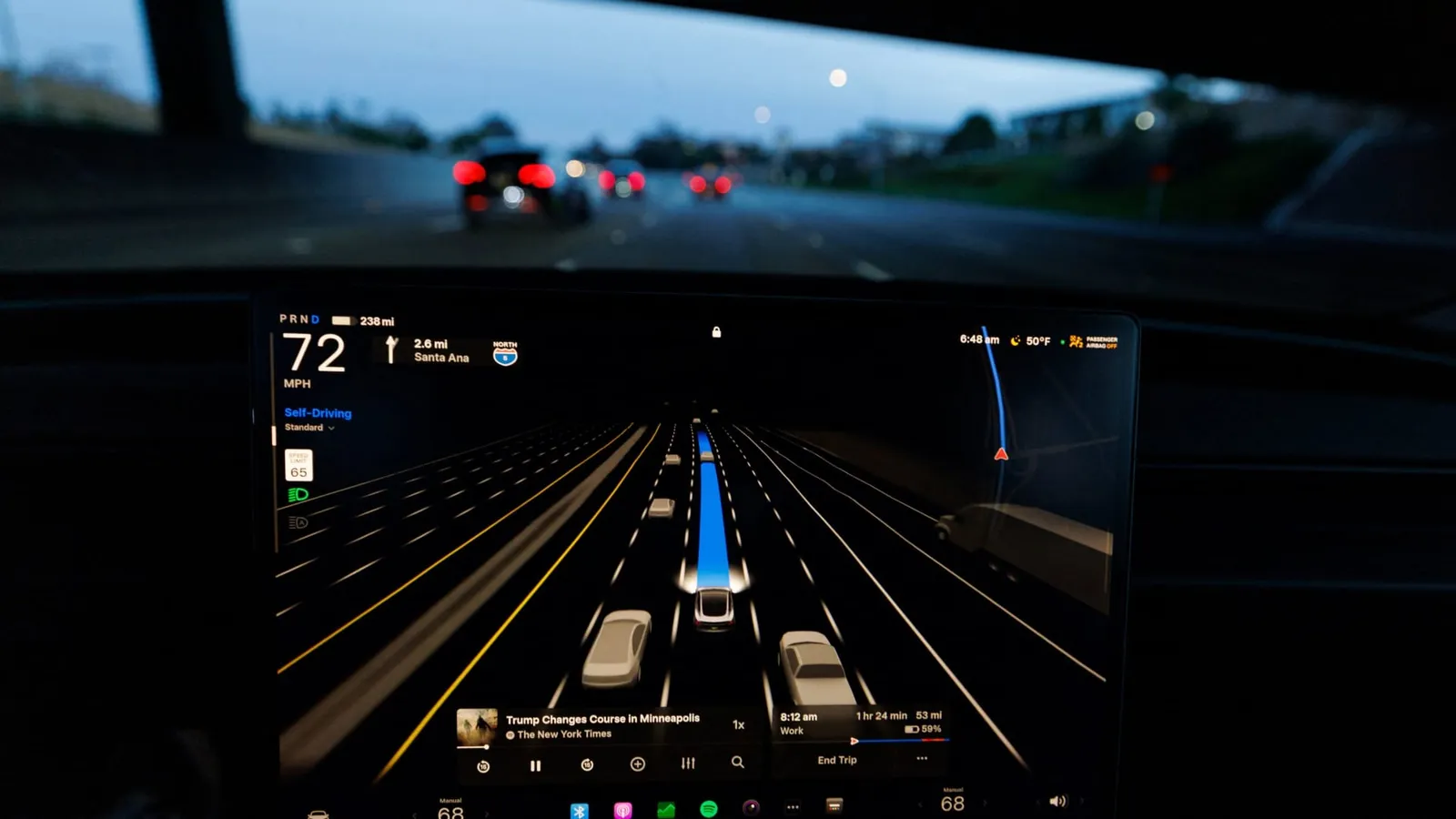
Tesla has dropped its 'Full Self-Driving' brand name in Europe after German regulators called the label 'somewhat misleading.' The rebrand signals that European authorities will police the gap between autonomy marketing and product reality, a warning for every company selling driver-assist features.
Tesla has dropped the "Full Self-Driving" name in Europe after German regulators called the branding "somewhat misleading." The move is a rare public retreat for a company that has built much of its identity around the promise of autonomous driving, and it lands in one of the world's most competitive auto markets.
The change means European customers will no longer see the Full Self-Driving moniker attached to Tesla's driver assistance software, the package that has long been the centerpiece of the company's technology pitch. German regulators' pushback, delivered in the form of a finding that the name was "somewhat misleading," was enough to force the rebrand. For a company that rarely bends to outside pressure, that is a notable signal.
For context, Full Self-Driving is Tesla's most advanced driver assistance package. It can handle highway driving, lane changes, and elements of city navigation, but it is not a fully autonomous system. Tesla has historically required drivers to remain attentive and ready to take over at any moment, which is precisely why the name always invited scrutiny. Calling a supervised assistance feature "Full Self-Driving" promised a capability the product does not yet deliver, and European regulators are not shy about policing that gap. The disconnect between the name and the reality has been a recurring theme in the autonomy debate, and this finding gives that debate a formal regulatory anchor.
The regulatory environment in Europe differs sharply from the United States. German authorities, in particular, have a track record of examining marketing claims for consumer protection risks, and the phrase "somewhat misleading" is a formal, measured way of saying the branding crossed a line. In the EU, advertising rules are enforced with real teeth, and companies that overstate what their products do can face fines, corrective orders, and reputational damage. Tesla's decision to drop the name suggests the company weighed those risks and decided the fight was not worth it.
The practical impact for Tesla is mostly reputational, at least in the short term. European sales remain important to the company's global volume, but the bigger issue is what the rebrand signals about the broader autonomy narrative. Tesla has marketed Full Self-Driving not just as a product but as a stepping stone to true autonomy, and the name was a key part of that story. Removing it in Europe complicates the narrative and gives skeptics a concrete example of regulators forcing the company to walk back its language. It also raises questions about how the company will position the same software in other markets where regulators are paying close attention.
The move also puts pressure on the rest of the industry. Automakers across the globe have used ambitious names for driver assistance features, from "Super Cruise" to "ProPILOT" to "Pilot Assist," and regulators are watching how those names match reality. If German authorities were willing to force Tesla, the most prominent autonomy marketer in the world, to blink, then every other brand with a similar naming strategy should take note. The standard for what counts as misleading is clearly tightening, and the next target could be any brand whose marketing language runs ahead of its engineering. For companies selling driver assistance in Europe, the calculation has just changed.
For executives, the episode is a case study in the cost of marketing ambition. The gap between what a product does and what its name promises is no longer just a branding risk; it is a regulatory risk with real consequences. A rebrand is embarrassing and expensive, but a regulatory finding can ripple through customer trust, dealer relationships, and investor confidence. The smart play is to audit product names against the claims regulators are likely to test, especially in markets with strong consumer protection regimes. That means asking a simple question before launch: if a regulator read this name cold, would they call it misleading?
The deeper lesson is that autonomy marketing is entering a new phase. As self-driving technology matures, the distance between marketing language and technical reality will keep shrinking, and regulators will keep closing the gap. Tesla's European rebrand is an early warning: in the EU, what you call a product matters as much as what it does. Companies that learn that lesson now will avoid the forced walk-back later.
This story's Key Insights and Take-aways are locked.
Create a free account to unlock Executive Actions for one credit.
Register to UnlockAlways free for Executives Club members. Join the Club
More in Technology

A Chinese rocket deorbited over Minnesota and landed in a farmer's cornfield
Experts tied the fragment to LandSpace's Zhuque-2E, which launched on September 15 and shed debris over the American Midwest after deploying 10 satellites.

JPMorgan Chase deploys first $5B into defense tech and hypersonic missiles
The bank is moving off its balance sheet to back robot factories, hypersonic missiles, and supply chains, signaling a new era of bank-backed military innovation.

Cop fired after sharing Flock login with ICE husband: 983 searches
A Savannah officer's shared credential let an ICE agent run hundreds of plate searches on Hispanic drivers, exposing a surveillance backdoor.