
Tesla Semi finally in volume production: 50,000 trucks a year
After nearly a decade, the Semi is rolling out of a Nevada factory at 1,000 trucks per week, with PepsiCo and DHL among the first customers - here's what it means for freight.
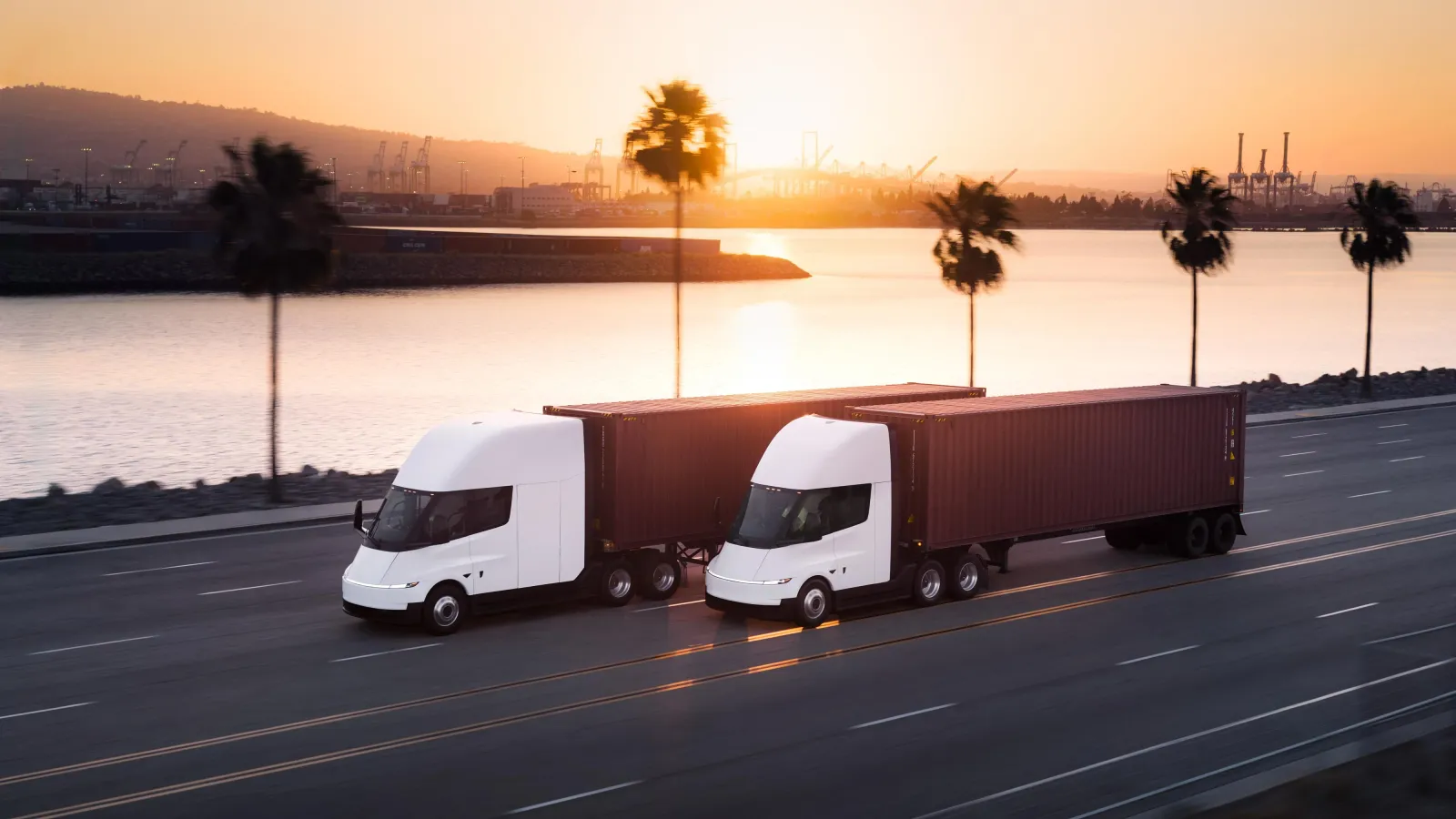
Tesla has begun volume production of its Semi truck, nine years after its 2017 concept debut, with a factory capable of 50,000 units annually. For fleet operators and logistics executives, this marks a credible electric heavy-duty option finally entering the market, potentially altering total cost of ownership and decarbonization timelines.
The Tesla Semi is finally real. On Thursday evening, the company held an event at its new Semi factory adjacent to Gigafactory Nevada to announce that the heavy-duty truck is now in volume production as of April 2026 - nearly a decade after the concept first rolled out in 2017. The facility, which Tesla says can build 50,000 trucks a year or 1,000 per week, is the physical proof that the long wait is over. But the real headline isn't the capacity figure - it's the roster of customers who showed up to validate the program. PepsiCo, US Foods, DHL, WattEV, ABF, Einride, IMC, and OK P were all named as buyers, a mix of food and beverage giants, parcel carriers, and logistics technology firms that gives the Semi commercial credibility beyond Tesla's own hype.
This is not the first Semi event - Tesla has teased the truck repeatedly since 2017, and the "yet another event" framing from The Verge underscores a history of missed deadlines. What's different now is the shift from prototype to production line. The factory capacity of 50,000 units annually puts Tesla on par with some of the largest Class 8 truck manufacturers in the world, even if actual output likely ramps up gradually. For context, that's a scale that would make Tesla a top-tier producer in the electric truck segment, which has historically been dominated by smaller startups like Nikola and legacy OEMs like Daimler and Volvo, all of whom have struggled with battery cost, range, and charging infrastructure. Tesla's vertical integration - from cells to software - gives it a structural advantage, but only if the production line actually runs at volume.
The customer list is telling. PepsiCo has been a Tesla Semi beta tester since 2017 and has placed trucks in its Frito-Lay and Pepsi beverage fleets; its commitment now becomes a real volume order. US Foods and DHL are logistics heavyweights that move perishable goods and parcels across long distances, the exact use case that demands reliable range and uptime. The inclusion of WattEV, a charging network operator, and Einride, a Swedish autonomous trucking company, suggests Tesla is courting not just fleet buyers but the entire electric freight ecosystem. This is a signal to competitors that the Semi is no longer a science project - it's a procurement option.
For fleet managers and CFOs, the math starts to shift. Electric trucks promise lower fuel and maintenance costs, but they require capital investment in charging infrastructure and face range anxiety. Tesla's ability to produce at 1,000 trucks per week - if sustained - could lower unit costs and bring the total cost of ownership closer to diesel parity sooner than many analysts expected. The company hasn't released current pricing or detailed specifications, but the production milestone itself is a forcing function for logistics firms to revisit their fleet electrification plans. No one wants to be the last operator still buying diesel when the infrastructure buildout accelerates.
There are also regulatory implications. The EPA's stricter emissions standards for heavy-duty vehicles, combined with state-level incentives like California's Advanced Clean Fleets rule, are pushing fleets toward zero-emission options. A credible, high-volume electric truck from Tesla gives regulators and policymakers a concrete example that electrification is feasible at scale, potentially accelerating the phase-out of diesel in ports and urban corridors. For Tesla, the Semi is also a margin story: commercial vehicles are less price-sensitive than consumer cars, and battery costs have fallen sharply since 2017, so each Semi sold could carry fatter gross margins than a Model Y.
But the skeptics have been right before. Tesla has repeatedly overpromised on production timelines, and the Semi's development has been plagued by battery supply constraints and engineering challenges. The factory's stated capacity is an upper bound, not a guarantee of immediate output. Investors and customers will be watching weekly production numbers, not just the event's photo ops. If Tesla hits 1,000 trucks per week by mid-2026, it will be a genuine inflection point for the trucking industry. If it stalls at a few hundred, the narrative of the Semi as a perpetual tease will resurface.
For executives in logistics, manufacturing, and energy, the takeaway is clear: the electric truck era is no longer theoretical. The next twelve months will determine whether Tesla can convert this production milestone into reliable deliveries. That means evaluating supply contracts, charging partnerships, and route planning now, not after competitors force the issue. The Semi's decade-long wait is over - the real test is whether it can outrun the diesel incumbents on cost and uptime, not just on emissions. For now, the factory is humming, the customers are signed, and the freight industry is watching every truck that rolls off the line.
This story's Key Insights and Take-aways are locked.
Create a free account to unlock Executive Actions for one credit.
Register to UnlockAlways free for Executives Club members. Join the Club
More in Technology

A Chinese rocket deorbited over Minnesota and landed in a farmer's cornfield
Experts tied the fragment to LandSpace's Zhuque-2E, which launched on September 15 and shed debris over the American Midwest after deploying 10 satellites.

JPMorgan Chase deploys first $5B into defense tech and hypersonic missiles
The bank is moving off its balance sheet to back robot factories, hypersonic missiles, and supply chains, signaling a new era of bank-backed military innovation.

Cop fired after sharing Flock login with ICE husband: 983 searches
A Savannah officer's shared credential let an ICE agent run hundreds of plate searches on Hispanic drivers, exposing a surveillance backdoor.