
Tesla sold out a $225 motorless balance bike for toddlers with no pedals or brakes
A $225 Tesla kid bike with a magnesium frame ships like a gadget, not a toy, and disappears fast.
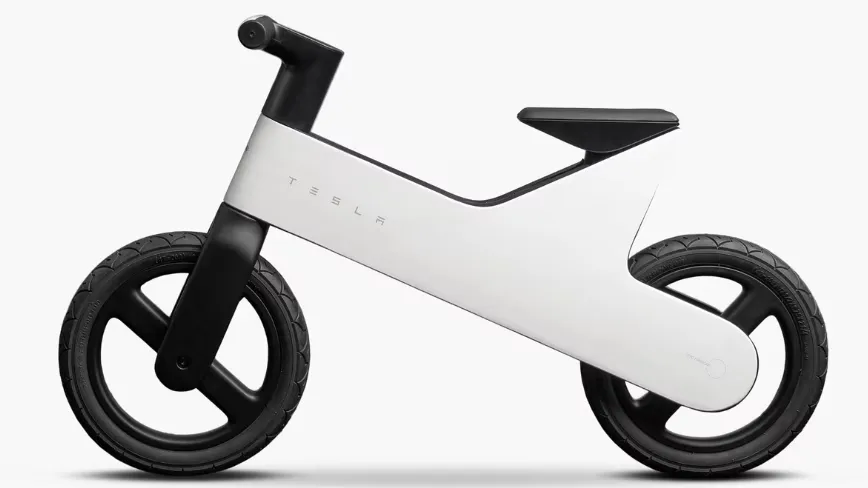
Tesla launched a $225 balance bike for children aged 2 to 5, with no motor, no pedals, and no brakes. The immediate sellout is a clean signal that even toddlers can become demand drivers for branded products.
Tesla just sold a $225 balance bike for toddlers, and it is already sold out. The pitch sounds almost aggressively simple: children aged 2 to 5 ride a bike with no motor, no pedals, and no brakes, powered entirely by toddler legs.
The details are the point. The bike has a lightweight white magnesium frame, a five-way adjustable seat, and Tesla branding that is hard to miss: the Tesla wordmark on the side and the T logo on the front. It is a product that looks like it belongs in a high-spec lineup, even though it is basically a training device for balance.
So why does this matter to executives, beyond the fun factor? Because it shows how Tesla is thinking about demand, not in automotive terms only, but in consumer product terms. In car land, Tesla sells vehicles where the customer decision is heavy, regulated, expensive, and slow. With a $225 item aimed at 2 to 5-year-olds, the purchase is lighter, the barrier to trial is lower, and the sales cycle can be measured in moments, not quarters. When something like that sells out immediately, it gives a board-level answer to a tough question: can Tesla monetize brand pull outside the factory floor?
There is also an incentive alignment signal hiding in plain sight. Hardware brands do not usually get credit for being good at small-item logistics until they prove they can do it repeatedly. A balance bike is not a software subscription, and it is not a vaporware concept. It is physical, shipped, and in demand right now. Sellouts do not just mean people like the design. They mean supply was finite, demand was real, and fulfillment constraints exist. For decision-makers, that is the difference between “cool story” and “operating reality.”
From a product design perspective, the specifications are almost like a checklist of what parents want and what regulators often care about. The bike has no motor and no pedals. It has no brakes. The toddler provides all the propulsion and most of the control through body movement. That simplicity can be strategic: fewer moving parts, fewer failure points, and a smaller surface area for mechanical issues. It also changes the risk profile compared to battery-powered or mechanically complex toys, where testing and compliance requirements can become more intense.
At the same time, the source is explicit about what is in the box and what is not: no motor, no pedals, no brakes. That matters because it sets expectations for safety and usage. A balance bike can be a stepping stone, training kids for later coordination. But if your product has Tesla branding, parents and guardians are still going to ask, implicitly or explicitly, whether the design and materials are appropriate for their child’s age range. The mention of a lightweight magnesium frame and an adjustable seat suggests a focus on fit and durability, not just branding.
This is where the board-level implications get interesting. When companies expand into new categories, executives usually worry about cannibalization or distraction. Tesla is doing something different. It is not expanding into a random accessory universe; it is launching a kid-sized “vehicle” experience that reinforces the same theme customers already associate with Tesla: modern design, recognizable identity, and product form that feels intentional.
The immediate sellout is a quick read on brand strength. It also creates a second-order dynamic: customer expectations rise. Once people see Tesla can create a must-have physical item, they start assuming the next drop will be just as curated and just as in-demand. That can help if Tesla wants to build a flywheel of accessories, apparel, or lifestyle products. But it can also pressure operations and supply chain planning, because “sold out immediately” is a brag until it becomes a recurring pain point. Executives watching from similar roles should treat this as a demand and forecasting stress test, not just a marketing win.
There is also a broader market context here. The modern consumer market rewards brands that move like tech companies, launching new SKUs with tight positioning and sharp visuals. Automakers have tried this before with limited results, often because they are either too slow, too traditional, or too dependent on dealership networks. Tesla bypasses that script. A $225 bike for children aged 2 to 5 is priced and presented like a direct-to-consumer gadget, and the sellout suggests that model can work for more than cars.
For peers in product strategy, merchandising, and corporate development, the headline takeaway is not “Tesla made a bike.” It is that Tesla made a simple, branded, physical product, avoided motor, pedals, and brakes, and still triggered immediate demand. When a company can do that, it changes how investors and the board think about optionality. It suggests Tesla can test categories quickly and validate appetite fast, without waiting for a whole new platform rollout. In other words, this toddler balance bike is small in size, but big in signal: the brand can turn curiosity into carts, and it can do it immediately.
This story's Key Insights and Take-aways are locked.
Create a free account to unlock Executive Actions for one credit.
Register to UnlockAlways free for Executives Club members. Join the Club
More in Technology

Google quietly links your phone number to every Android account on your SIM
Adding a SIM now ties your phone number to all Google accounts - and future accounts inherit it. Here's the security and privacy stakes.

Hijacker AI 'Skynet mode' runs 100,000 attack steps against exposed models
Symantec caught a criminal AI agent that borrows other models, steals data, and mines crypto; the only relief is no confirmed victims yet.
Nvidia's AI-financier shift faces its first big test as neoclouds stumble
A rout in neocloud stocks is forcing investors to weigh Nvidia's hidden exposure as both supplier and lender to the AI buildout.