
Texas Tesla crash death drew US federal scrutiny, after driver claimed ‘self-driving’ use
A fatal crash in a Texas home is now tangled with federal oversight, raising hard questions about what drivers think they’re using.
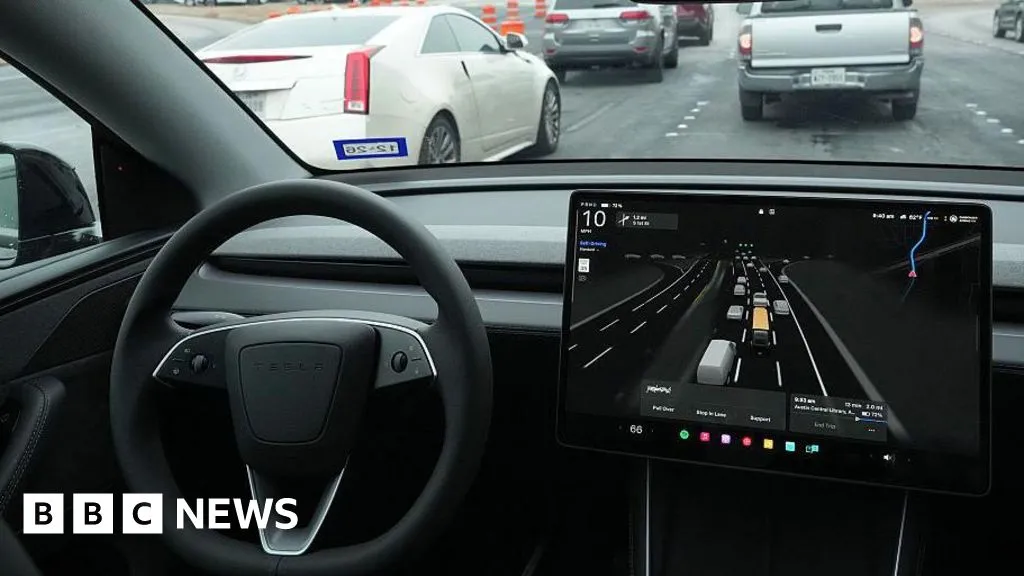
A Tesla driver told authorities he was using 'self-driving' technology before his vehicle sped into a Texas home, according to the BBC. The crash has now been placed under US federal investigation, forcing decision-makers to reassess safety messaging and product controls.
A Tesla crash that killed a woman in Texas is under US federal investigation, after a driver said on Friday that he was using “self-driving” technology when his vehicle sped into a home, according to the BBC.
The key detail here is not just the crash itself. It is the mismatch that often sits beneath these incidents: what a driver believes the vehicle is doing versus what the system is actually designed and allowed to do. In this case, the driver’s statement ties the fatal outcome directly to the “self-driving” framing, putting Tesla’s autonomy claims and customer understanding under a much brighter spotlight.
For executives, especially at companies shipping driver-assistance and autonomy features, incidents like this tend to trigger a chain reaction across legal risk, public trust, and regulatory attention. Even when technologies are marketed as automated or semi-automated, the operational reality can be that the human driver remains responsible for monitoring and control. That gap matters because it shapes everything from user behavior to enforcement priorities.
The US federal investigation angle also matters. When the government steps in, the process is rarely about one crash alone. Investigators typically look for patterns: what hardware and software version was involved, how the system performed in the specific driving situation, and what the user interface and warnings communicated at the time. They may also examine how the company describes the product to customers, including the language users latch onto when they are deciding how much attention to pay.
There is also a commercial context that makes this story more than a headline. Tesla, like other players in advanced driver-assistance and autonomy, operates in a competitive environment where “automation” features can be a differentiator. But the more the market pushes autonomy as a product experience, the more regulators and courts will scrutinize how that experience is delivered. A feature described by the driver as “self-driving” can become the focal point for questions about whether customers were led to a dangerous level of confidence.
Board-level implications are especially real in moments like this. Accidents tied to high-profile automation claims often become governance issues, not just engineering issues. Directors are expected to understand safety processes, how product risks are identified and mitigated before release, and how the company monitors real-world performance after deployment. In other words, the investigation can pressure oversight mechanisms: what the board did to ensure that safety claims matched real-world behavior.
Then there are the second-order effects across the industry. Other companies offering driver-assistance systems tend to face a delayed response when high-visibility crashes land in federal hands. They may adjust labeling, onboarding flows, alert behaviors, and documentation. They may also re-evaluate how their systems are described in marketing materials and how they train customers to interpret those descriptions. Even if those changes are costly, the alternative is a credibility problem that regulators and customers rarely forgive.
For decision-makers at companies in this space, the strategic stake is straightforward: trust is not just a brand metric, it becomes a safety and regulatory survival metric. A fatal crash where the driver says he relied on “self-driving” technology can harden the scrutiny around autonomy features, increase the urgency of compliance efforts, and make executives answerable for how their products are understood by the people using them on real roads. In this moment, the question is less whether innovation is possible, and more how quickly it can outpace the gap between marketing language and operating reality.
This story's Key Insights and Take-aways are locked.
Create a free account to unlock Executive Actions for one credit.
Register to UnlockAlways free for Executives Club members. Join the Club
More in Technology

Nvidia's $89B data center quarter: the 9 companies cashing in
The AI buildout is minting fortunes beyond GPUs, and memory, cloud, and cooling suppliers are riding the same wave.

Google quietly links your phone number to every Android account on your SIM
Adding a SIM now ties your phone number to all Google accounts - and future accounts inherit it. Here's the security and privacy stakes.

Hijacker AI 'Skynet mode' runs 100,000 attack steps against exposed models
Symantec caught a criminal AI agent that borrows other models, steals data, and mines crypto; the only relief is no confirmed victims yet.