

The $99 no-needle blood test men are using to track testosterone
A military-backed startup's button-sized device is reshaping at-home hormone testing, and telehealth giants are racing to adopt it.
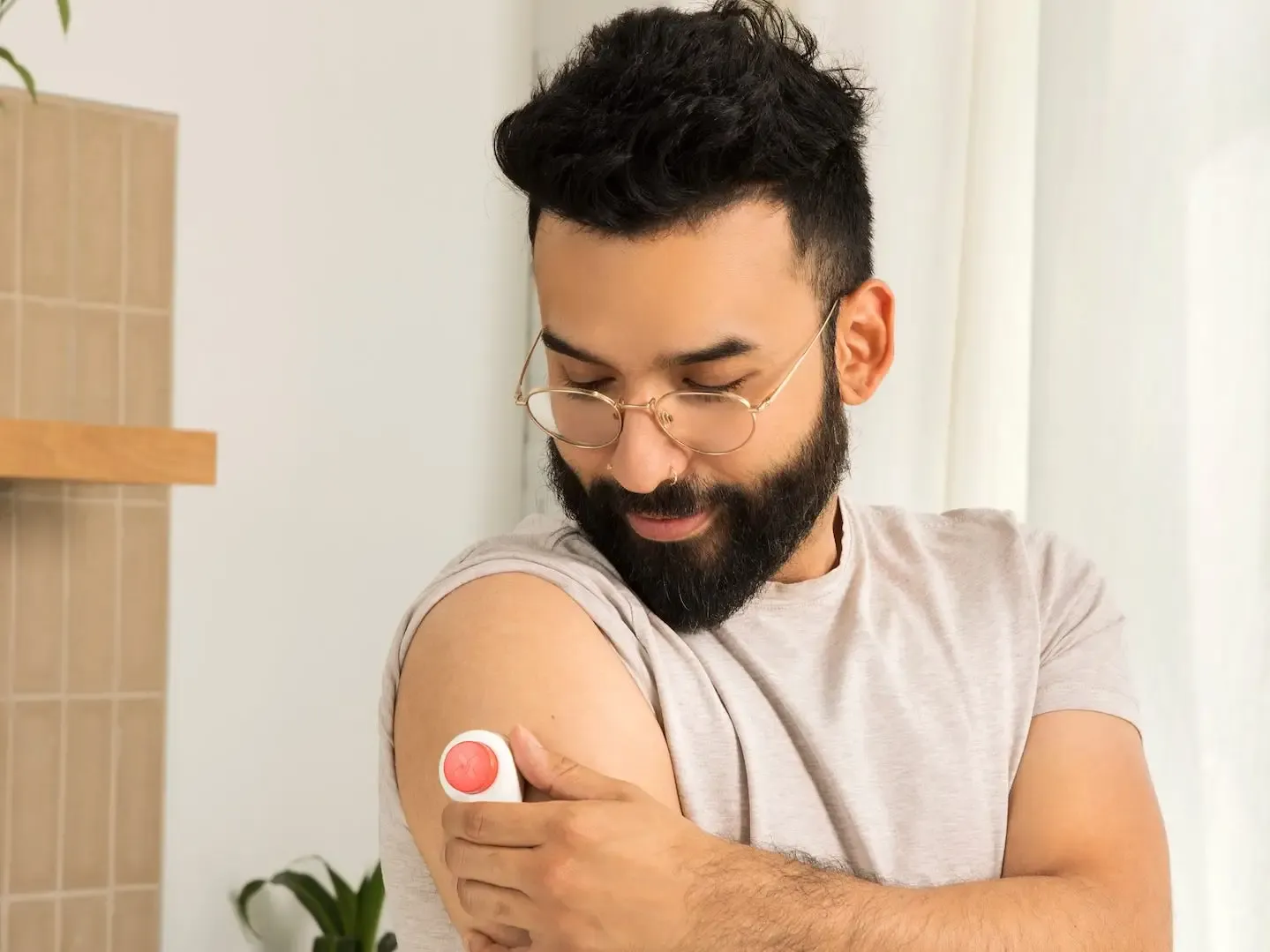
Tasso, a startup backed by the US military, has shipped 4 million of its needle-free Tasso+ blood-draw devices, now used by biohackers and telehealth brands like Hims & Hers. The device's rise signals a fast-growing at-home testing market that could be worth $67 billion by 2030.
A quarter-sized red button stuck to the bicep is quietly replacing the needle for a growing crowd of men tracking their testosterone. The Tasso+ device, made by a startup backed by the US military, draws blood in about five minutes with no needle and no phlebotomist, and it costs less than $100. Dr. Jonathan Andrews, a healthcare investor and urgent care doctor unaffiliated with Tasso, had never checked his testosterone until six weeks ago. Now he has done it three times, calling the process "foolproof" as he made breakfast while the button did its work. Telehealth companies including Hims & Hers, Balance My Hormones, and Maximus Health now offer the same device for at-home "T" checks, riding a wave of direct-to-consumer men's health services that has seen testosterone prescriptions more than double among adults aged 18 to 34 since 2018, according to health data company Truveta.
The device is not a lab in a box. Users collect capillary blood at home, pack it in an envelope, and mail it to a real lab for analysis, a deliberate contrast to Theranos' failed promise of analyzing a single drop in a small machine. Tasso+ is FDA-cleared as a Class II medical device, and the company says it has shipped 4 million devices, doubling its total over the past year. That growth comes after 14 years of development and more than $120 million in investment, including an early DARPA grant from the US military. Tasso cofounder Ben Casavant started the project "in a garage" in 2012 while a biomedical engineering graduate student at the University of Wisconsin-Madison, and the company received FDA clearance for Tasso+ in 2022.
The appeal is timing and convenience. Testosterone levels are best checked first thing in the morning, when getting to a lab is hardest, and the device is designed to be near-painless and foolproof. DJ and record producer Diplo, a brand ambassador for the blood-testing company Rhythm, says in a YouTube video: "This is the future. Everybody needs to know what's going on in their body." Billionaire power couple Jesse Itzler and Sarah Blakely, who founded Marquis Jets and Spanx respectively, are also brand ambassadors for Rhythm, a San Francisco startup launched in 2024 that offers a $79 monthly health check based solely on a Tasso+ draw. Maximus sells an at-home testosterone test kit for $99 that includes the device.
The market is expanding beyond men's hormones. Menopausal women on hormone replacement therapy and Olympians undergoing drug testing have used Tasso's system, and it is marketed to longevity-focused consumers who want data beyond what a smartwatch, ring, or scale can provide, including thyroid function, cholesterol, and hormone health. Investment bankers at Jefferies estimated in September that the global at-home testing category is growing at about 18% annually and could be worth $67 billion by 2030. That projection is drawing serious capital: Hims & Hers recently bought Tasso competitor YourBio Health for $153 million, and 20-year-old college dropout Liam McNamara has moved to Silicon Valley to "replace a $112 billion blood testing industry" with his early-stage longevity startup Matrix Bio.
The technology has limits. Tasso+ performs as well as a traditional blood draw for most routine bloodwork, but it collects capillary blood from the skin rather than veins, which means it is less painful but slower and less reliable for fragile measurements like potassium levels or specific proteins related to Alzheimer's. The classic needle-and-tube technique has barely changed since 1947, when Joseph Kleiner invented the evacuated tube still used today, and Tasso is not trying to replace it entirely. Instead, the device is becoming a tool for regular monitoring, clinical trials, and research, including genetic research with Parkinson's patients and drug trials for major pharmaceutical companies like Eli Lilly and Pfizer.
On Reddit's /biohacking forum, users share their Rhythm results like video game scores, and one user said a sky-high cholesterol reading persuaded them to stop taking oral steroids. The device is also becoming a go-to for researchers and drugmakers conducting clinical trials without requiring participants to visit labs regularly. For executives in healthcare, consumer wellness, and pharma, the Tasso+ story is a signal that the at-home testing category is moving from novelty to infrastructure, with consumer demand, regulatory clearance, and capital all aligning. The question is no longer whether patients will test at home, but which companies will own the data, the devices, and the subscription relationships that come with it.
This story's Key Insights and Take-aways are locked.
Create a free account to unlock Executive Actions for one credit.
Register to UnlockAlways free for Executives Club members. Join the Club
More in Business

Elon Musk unveils a flying car, and SpaceX helped build it
The Tesla CEO's showcase at a SpaceX facility signals a future where road and rocket engineering converge.

Apple's $2,000 iPhone Duo opens preorders, taking on Samsung and Google
Apple's first foldable hits the market at a premium price, reshaping a category Samsung and Google have led.

Pope Leo XIV, first American pope, diagnosed with lung cancer
The 71-year-old Chicago-born pontiff underwent successful surgery on his right lung, and his diagnosis raises new questions about his AI-focused papacy and the Vatican's future.