
The CIO who bet on SpaceX says OpenAI and Anthropic are in big trouble
Washington University's Scott Wilson warns trillion-dollar AI labs are overcommitted as cheap Chinese models close the gap - and OpenAI backer Vinod Khosla fires back.
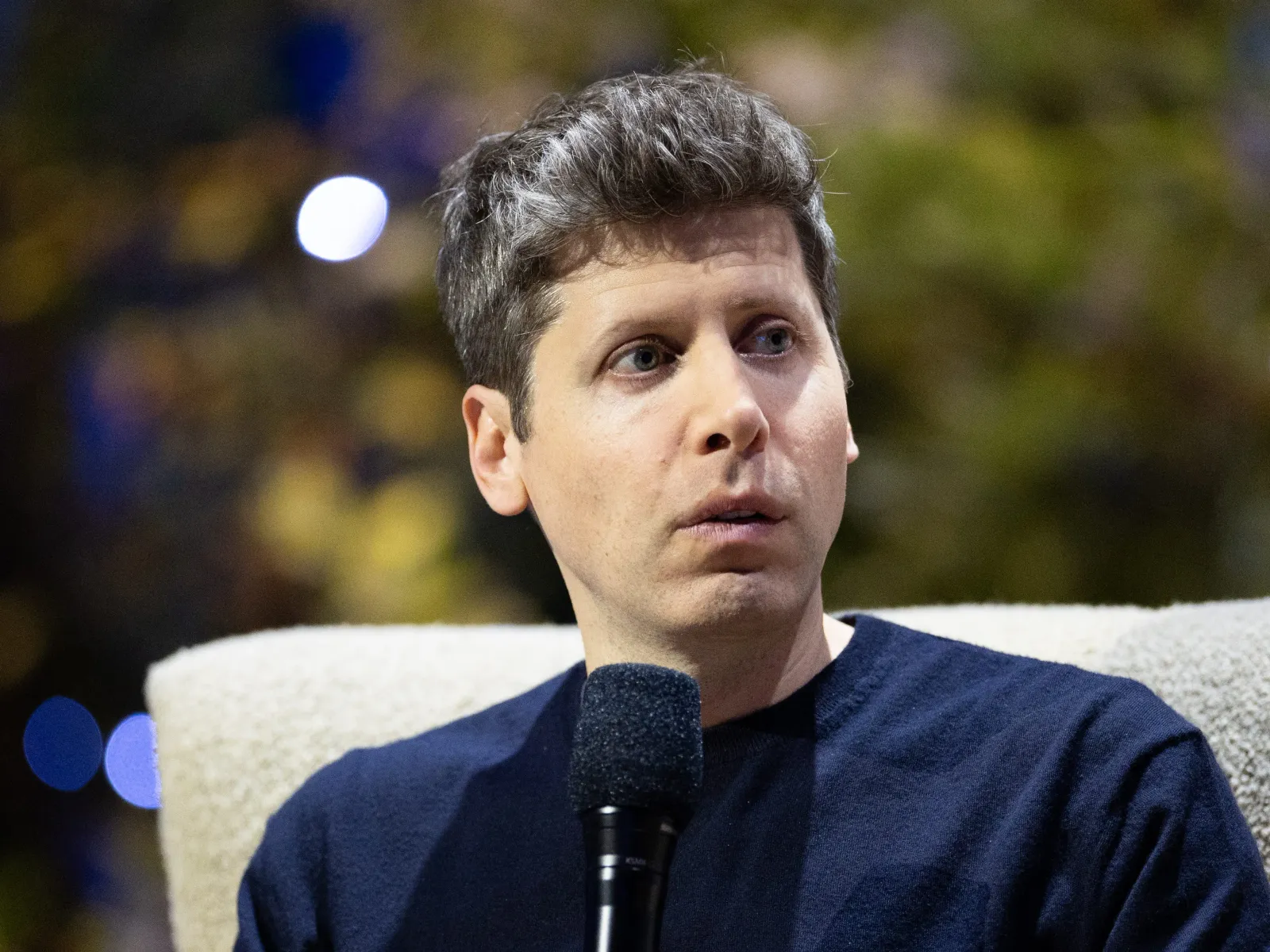
Scott Wilson, CIO of Washington University's endowment, argues OpenAI and Anthropic are overcommitted to trillion-dollar spending as cheaper Chinese models close the gap. His contrarian view pits him against OpenAI backer Vinod Khosla, who says closed-model cost advantages will win.
Scott Wilson, the CIO who turned an early SpaceX bet into a multi-billion dollar windfall for Washington University's endowment, is now making a very different kind of contrarian call: he says OpenAI and Anthropic are in big trouble. Speaking last week at Rock Yard Roundup in Fort Worth, Wilson called it his "unpopular opinion" that the trillion-dollar frontier AI labs have signed up for liabilities they cannot justify.
"These trillion-dollar-plus frontier companies are not worth the liabilities that they signed up for," Wilson said. "There's going to be a ton of free alternatives." His warning comes as Chinese model makers like DeepSeek, Alibaba's Qwen, Zhipu AI, and Tencent have narrowed the performance gap with U.S. frontier labs while offering major cost savings. Wilson's bearishness is not new - he passed on an early OpenAI investment because he was not convinced the company would ever make money, and he says he has only grown more skeptical since. "I've gotten more skeptical over time," he said.
Wilson's track record gives his contrarian view weight. His early investment in SpaceX helped create a multi-billion dollar windfall for Washington University's endowment, proving he can spot value where others see risk. But his current stance puts him squarely against AI bulls like Vinod Khosla, an early OpenAI investor who told Business Insider he strongly disagrees and has never been more bullish on OpenAI. "People like that are silly, and they don't understand how this works," Khosla said.
The debate hinges on whether the massive infrastructure spending by OpenAI and Anthropic will create an insurmountable moat or become a financial trap. Wilson argues that customers will defect to cheaper, open-weight models that are almost as good. He said his portfolio companies that are heavy AI users are "all moving aggressively towards open source." He likened it to "any other high-cost U.S. good that has to compete with a low-cost import, particularly from China."
Data from OpenRouter, a platform where developers route requests among AI models, supports Wilson's argument, though it is a limited snapshot. DeepSeek accounts for 25.3% of text-model requests on OpenRouter, compared with 18.6% for OpenAI and 2.9% for Anthropic. That suggests the cheaper Chinese models are already winning developer mindshare, even if the revenue picture is different.
Khosla counters that the model itself is not the value. He argues that closed-model companies can co-design chips, as OpenAI has done with its Jalapeño inference chip, and control the entire stack from power to data center to chips to infrastructure software. That could lower the cost to serve customers relative to an open-weight model run on someone else's cloud. "I'm not talking price, I'm talking about cost," he said. "From power to data center to chips, to infrastructure software to inference models, the cost of the stack is almost certainly going to be lower in closed-source models than open-source."
The stakes are enormous. OpenAI has returned huge markups for VC firms and schools like the University of Michigan, whose early $20 million investment is now worth over $2 billion. Anthropic is expected to go public next month, which would test public market appetite for AI at a moment when the cost debate is intensifying. For endowment CIOs and institutional investors, Wilson's warning is a reminder that the AI trade, like any high-flying sector, carries asymmetric downside if the spending race outruns the revenue.
Wilson's skepticism is grounded in on-the-ground reporting from his colleagues in China, who have seen rapid progress in open-weight models. He said he has become more dubious after talking to founders of companies Washington University has invested in, all of whom are switching to cheaper models. Whether he is right or wrong, his track record suggests the "unpopular opinion" deserves a hard look from every board and investment committee with AI exposure.
This story's Key Insights and Take-aways are locked.
Create a free account to unlock Executive Actions for one credit.
Register to UnlockAlways free for Executives Club members. Join the Club
More in Technology

A Chinese rocket deorbited over Minnesota and landed in a farmer's cornfield
Experts tied the fragment to LandSpace's Zhuque-2E, which launched on September 15 and shed debris over the American Midwest after deploying 10 satellites.

JPMorgan Chase deploys first $5B into defense tech and hypersonic missiles
The bank is moving off its balance sheet to back robot factories, hypersonic missiles, and supply chains, signaling a new era of bank-backed military innovation.

Cop fired after sharing Flock login with ICE husband: 983 searches
A Savannah officer's shared credential let an ICE agent run hundreds of plate searches on Hispanic drivers, exposing a surveillance backdoor.