

The Simpsons confirms Ralph Wiggum's real father: Chief Clancy, not Eddie the Cop
In Season 36, the show finally resolves a years-old dark fan theory about Ralph Wiggum’s parentage.
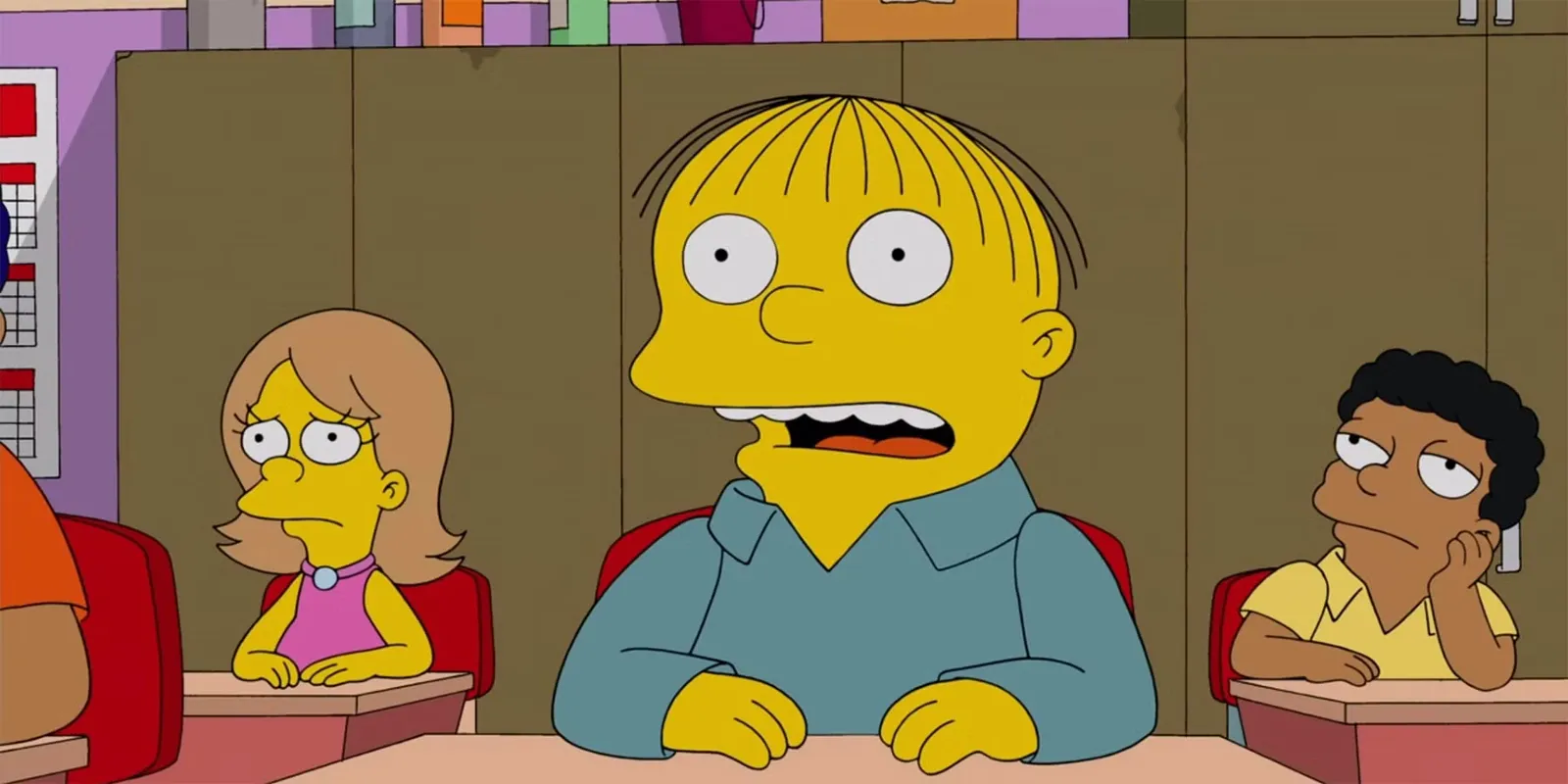
In Season 36, The Simpsons directly addresses the long-running fan theory that Ralph Wiggum’s biological father is not Chief Clancy Wiggum but Eddie the Cop. For decision-makers, it is a case study in how audiences punish ambiguity and reward shows that cash out hints at the right time.
If you have been in the “Ralph Wiggum is Eddie the Cop’s kid” camp, Season 36 of The Simpsons just yanked the floor out from under the theory. The series, which has broached the parentage question “multiple times” over the years, ultimately confirms what many viewers suspected: Chief Clancy Wiggum (Hank Azaria) is Ralph Wiggum’s real father, not Eddie the Cop (Harry Shearer). And yes, that means the “darkest” version of this fan speculation is now treated as resolved fact inside the canon.
So what was the theory in the first place? Fans long speculated that Chief Wiggum, the Springfield Police Department’s chief (and Clancy Wiggum, as voiced by Hank Azaria), might not be Ralph’s biological father. The alternate candidate was Eddie the Cop, a character voiced by Harry Shearer, whose name became shorthand for “the secret guy.” In Season 36, the show finally addresses the elephant in the room, making it clear that Ralph Wiggum’s real father is Clancy Wiggum, not Eddie the Cop.
Now, let’s zoom out from Springfield and talk about why this matters beyond fan trivia. Long-running franchises like The Simpsons run on two engines: episodic storytelling and long-form audience memory. For years, this particular parentage question stayed alive because the show hinted at it often enough to keep speculation bubbling. That is the key tension: when you plant ambiguous clues repeatedly, you do not just create Easter eggs. You create a persistence problem. Viewers start building entire interpretations, and those interpretations become their own kind of narrative investment.
From a media strategy standpoint, The Simpsons did something very specific by waiting until Season 36 to close the loop. It kept the audience engaged through uncertainty without fully committing to an answer early. But then, when the moment came, the show cashed out the uncertainty directly. The payoff is not subtle: the series effectively forces the audience to update their internal map of Springfield’s relationships. That is the same kind of “reconciliation” you see in corporate messaging when stakeholders have been running multiple theories for too long. People do not just want information, they want the organization to stop letting competing narratives coexist.
There is also a second-order implication here for how creators manage trust. The Simpsons, as a long-running series, has a brand built on tone control and payoff discipline. It can afford to play with darker theories because it is confident the audience will ultimately land in the right place. In other words, the show does not need to announce a thesis upfront. It can test the edges of what viewers think is true, hint at possibilities, and then confirm when it is ready. For executives and boards watching brand health across entertainment, this is a reminder that engagement tactics are not free. When you allow ambiguity to run for years, you are effectively accruing a debt of clarity. Fans might stick around for clues, but they will eventually demand resolution.
And resolution affects culture. Once a theory is “confirmed,” it stops being a debate and becomes a baseline. That changes what fans watch for next time. Viewers who previously reinterpreted past episodes through the Eddie the Cop lens now have to reframe those moments. That is a content lifecycle effect: the reveal shifts the interpretive framework, which can boost retention in the near term because the audience feels like they uncovered something, even if they are also emotionally forced to let go of an earlier belief.
There is one more layer worth noting: this is not happening in a vacuum. The Simpsons is in its 30s, and the audience that follows it is also the audience that follows how media institutions operate, how stories are marketed, and how “official” canon is established. When the series finally calls out the theory, it reinforces an implicit contract with its viewers. The contract is simple: hints matter, but canon matters more. If you are running a platform, a studio, or any business where community interpretation matters, the lesson is clear. Your customers build theories. Your job is to decide when to validate them, when to contradict them, and how cleanly you do it.
So, for peers in similar roles, the stake is not whether Ralph’s father is Eddie or Clancy. It is the operational principle behind why this reveal works. The Simpsons confirmed the answer in Season 36 after years of “broached the possibility multiple times.” That means the show used time as a lever. It held ambiguity long enough to deepen engagement, then resolved it in a way that stops the bleeding of competing interpretations. In a world where audiences can theorize instantly and move on instantly, landing the payoff matters as much as creating the mystery.
This story's Key Insights and Take-aways are locked.
Create a free account to unlock Executive Actions for one credit.
Register to UnlockAlways free for Executives Club members. Join the Club
More in Science

Alaska's 1,580-foot tsunami had warning signs. Scientists just found them.
Rapid glacier retreat, heavy rainfall, and thousands of tiny tremors preceded Alaska's 1,580-foot tsunami, a warning for every coastal community in a warming world.

The rare mutation that lets high-risk brains dodge Alzheimer's
Scientists found a natural defense against protein buildup, opening a new path to preventive treatments.

3,000 steps a day may halve Alzheimer's decline, study finds
New research links a modest daily walk to less tau buildup and nearly half the cognitive and functional decline, even for those with early signs.