
The World Cup stole America 250's unity, and a Belgium win could seal it
While World Cup games sidelined red-versus-blue drama, America 250 split crowds and foreign goodwill may be fading fast.
The Atlantic argues that the World Cup has delivered the national unity America’s 250th birthday largely failed to provide, with the U.S. team able to advance to the quarterfinals if it beats Belgium. For decision-makers, the lesson is operational and reputational: shared experiences can temporarily overcome geopolitical and domestic polarization, but that window is short.
America’s 250th birthday weekend promised fireworks and togetherness. It delivered plenty of wonderful moments, but not the sweeping national unity some people had hoped for. The Atlantic’s blunt takeaway: many Americans found the July 4 celebrations too political, too polarizing, and too wrapped up in President Trump. And while that sounds like political commentary, it matters because unity is not just a cultural vibe. It is the precondition for everything from social trust to the willingness of outsiders to invest attention, travel, and credibility in a country.
This summer’s unexpected unity engine? The World Cup. The tournament started with angst, “ugh” energy, and a sense that Americans might not rally behind a sport they do not typically love. Then it turned into a joyful celebration. TV ratings hit an all-time high, attendance records were being set, and the U.S. squad could advance to the quarterfinals if it wins “tonight’s game against Belgium.” The story’s point is not that politics vanished completely. It did say politics were “mostly irrelevant,” “well, until yesterday’s red-card controversy.” But for four weeks, the sport created a shared channel where red-and-blue differences briefly got packed away in soccer kits that were, fittingly, “swirly red, white, and blue.”
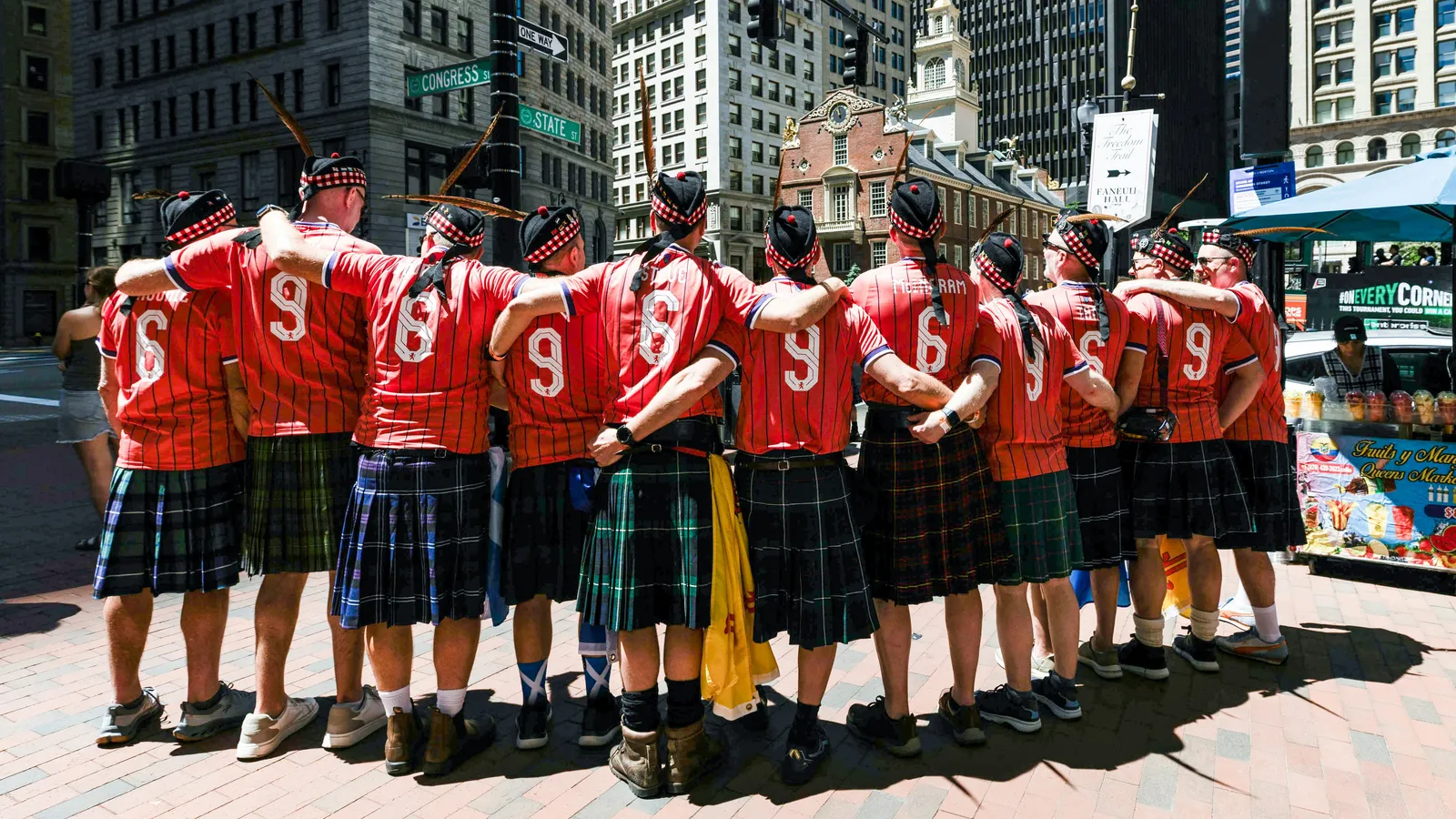
The second order effect is reputational, and it shows up in the source’s details about visitors. The Atlantic argues that the United States’ international standing has been badly damaged in the Trump era: alliances strained, bombs dropped, foreign aid cut. In that environment, the World Cup became a temporary escape hatch. “Thousands of Norwegians” marveled at the lights of Times Square. “Algerians” were delighted by a warm welcome in Lawrence, Kansas. “The Scots” drank Boston out of beer. A “supposed German tourist” even went viral for a chain-restaurant tour of the South. The story admits some of the good vibes may be online fabrications, but it emphasizes the real-world pattern: waves of foreign visitors were moved by what they found.
What did they find? The Atlantic’s answer is not subtle, and it is not about speeches. It was the land of plenty: full supermarkets, air-conditioning that works in a heat wave, endless appetizers and breadsticks. The piece makes the point that U.S. soft power now relies less on USAID than on Applebee’s. That comparison is rhetorical, but it maps to a concrete business logic: when people experience day-to-day hospitality and stability, it can counterbalance abstract narratives created by policy fights.
Meanwhile, the World Cup also exposed how attention is managed, and how sponsors, venues, and governments can either reinforce unity or fracture it. The Atlantic frames America 250 as an anniversary that organizers hoped would galvanize the country, but it compared it to the fraught bicentennial in 1976, just two years after Richard Nixon’s resignation. That older moment included a fuel crisis, skyrocketing inflation, high unemployment, the trauma of Vietnam, plus the Cold War. Even then, the source says the 200th birthday largely was a triumph, in part because President Gerald Ford tried to make it bipartisan. Ford allowed the nation’s history, good and bad, to take center stage.
Fast-forward 50 years, and the story argues partisan gravity has increased. It describes how President Trump pushed a more Trump-friendly Freedom 250, replacing the bipartisan America 250 group. It lists specific examples from Washington: a concert featuring C-list stars canceled, a state fair on the National Mall drawing sparse crowds in sweltering heat, the Lincoln Memorial Reflecting Pool closed, and even the timing of Trump’s July 4 speech delayed by storms until much of the nation had gone to bed. Poor air quality from the fireworks display added to the haze. The Atlantic also notes that Trump has put himself in charge of telling the nation’s story, including administration efforts to remove signs he does not like from parks and an eyeing of the Smithsonian next. Again, that is not just culture war narration. It is a description of how messaging control can shape who shows up and who opts out.
The World Cup, by contrast, made stadium and street culture the shared text. The Atlantic points to July 4 viewing too, when “millions of Americans” watched France take on Paraguay in Philadelphia, in the cradle of independence. That game had its own historical layer because the roster of history makers included Washington, Jefferson, Franklin, and now Mbappé. France’s 1-0 victory, the piece adds, was “perhaps the country’s biggest victory on these shores since Yorktown.” It also nods to the tournament’s problems: tickets astronomically expensive; a highly decorated referee barred from traveling from his native Somalia; international visits lower than expected; the Iranian team playing a match the same day Trump authorized a strike on Iran amid a dispute over the Strait of Hormuz.
So yes, there were wrinkles and contradictions. But the story argues the games overcame whatever had seemed off. It highlights storylines executives and operators might recognize as “stickiness” in narrative form: Cape Verde’s magical run and near-upset of defending champion Argentina; England surviving the cauldron of playing Mexico in Mexico City; and stars like Lionel Messi, Erling Haaland, Harry Kane, Mohamed Salah, and more delivering for their squads.
For business leaders and decision-makers, the practical strategic stake is the clock. The Atlantic ends with a reminder that the respite may be brief. Right around when tonight’s U.S. match wraps up, Trump would depart Washington for a NATO summit in Turkey, where the story says he could clash with world leaders over defense spending, the war in Ukraine, and other issues. A high-stakes midterm election is coming, and the piece says there is little expectation that good feelings created by the American squad’s run will last. The lesson is not that soccer fixes geopolitics. It is that when you create a shared mass experience, it can briefly reset how people see each other, how foreigners perceive the country, and how polarized audiences behave. The challenge for any institution hoping for similar unity is to understand the window, then design for it while it is open.
This story's Key Insights and Take-aways are locked.
Create a free account to unlock Executive Actions for one credit.
Register to UnlockAlways free for Executives Club members. Join the Club
More in Politics

Glacial collapse, not rain, killed 180 in Nepal's Himalayan flood
The Himalaya's extreme geography hid the true cause of Nepal's catastrophic flood, a glacial collapse that turned a geological battleground into a mass-casualty zone.

Iran’s Esmail Baghaei says Oman talks start shipping via Hormuz, not US talks yet
Temporary route plans with Oman aim to restart commerce while Tehran says Washington dialogue is not on the table.

Standards watchdog opens probe into Reform UK deputy leader Richard Tice over interests
The parliamentary standards commissioner says it began an investigation on 28 July into a possible undeclared interest.