

Tim Allen and Tom Hanks argue Toy Story 5 cuts takes by 20% without cutting joy
The stars back Pixar’s new “tech stole your childhood” message and explain how faster production still protects the performance.
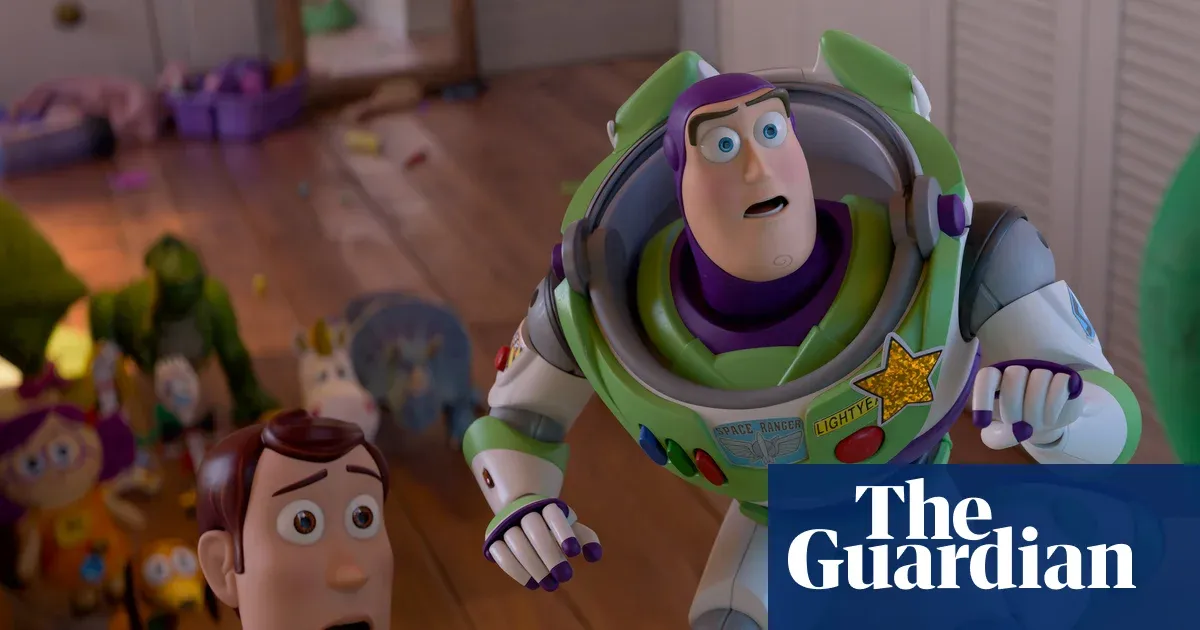
Tim Allen (Buzz Lightyear) and Tom Hanks (Sheriff Woody) discuss Pixar’s Toy Story 5 and the franchise’s new, more urgent message about technology and childhood. For decision-makers, their comments signal how studios are rebalancing creative process, time, and audience risk as production pressures mount.
Pixar’s Toy Story 5 is landing with a message aimed directly at kids and the adults who raise them: technology has stolen their childhood, and parents need to wise up fast. And when Tim Allen and Tom Hanks sat down to talk about the series’ radical new direction, the surprise was not just the theme. It was the production math. Allen, who voices Buzz Lightyear, says making the film now takes about 20% less time to produce a better product, adding that they take fewer takes and can focus and isolate his voice more efficiently.
That 20% cut matters because it reframes what “faster” means in big studio animation. Allen’s point is specific. He describes a more disciplined voice process and fewer recordings, including moments where the team effectively signals they have the right version and he can stop. Hanks, who voices Sheriff Woody, responds with his own behind-the-scenes reality check: he sometimes asks for confirmation they have it because he is “so done with this.” He then frames the overall experience as essentially the same as it was from the start, with “maybe there’s a little more importance put on it.” Translation for executives: the work may move quicker, but the stakes for getting the performance right are not dialed down.
To understand why this is more than movie trivia, zoom out to how studios and boards typically evaluate production risk. Animation is expensive, and time is money in a way that is visible in budgets, schedules, and release windows. Even without quoting any internal cost structure, the fact that a star describes a 20% reduction in production time suggests a workflow change that studio leaders can control: fewer takes, tighter direction, and a narrower band of performance options. That kind of change is the creative industry equivalent of reducing rework on a manufacturing line. It does not remove artistry. It reduces the number of times you hunt for it.
Now layer in the thematic bet Pixar is making. The film, as described in the source, tells young viewers that technology has stolen their childhood, and it pushes parents to change their behavior quickly. That is a cultural message, not just entertainment. When a studio chooses a “tech peril” framing for a mainstream, multigenerational franchise, it is effectively asking families to process a familiar world through a new lens. The performance discipline Hanks and Allen talk about becomes part of how studios try to prevent the message from feeling like lecturing. If the voice work stays emotionally recognizable, the audience might accept the new meaning without rejecting the characters.
There is also an incentive alignment story hiding in plain sight. Voice actors are not just selling a product. They are collaborating on a finished artifact where tonal consistency is everything. Allen says he learned how to focus and isolate his voice, and he suggests the process includes explicit decisions like “I think we got it. You can stop.” Hanks counters with the feeling of endurance and iteration, but he still characterizes the process as consistent from the beginning, with added importance. For boards and executives, that matters because it indicates the team is likely tightening loops rather than introducing chaos. Less time can be achieved through better direction, clearer targets, and improved coordination. In an industry where delays can cascade into marketing changes, distribution commitments, and downstream merchandising, controlling iteration cycles is a competitive advantage.
Regulatory context is not directly mentioned in the source, but the audience and family framing is the kind of area where public scrutiny tends to rise. Media about children and technology often draws attention from regulators, advocacy groups, and platform policies, even when there is no specific policy cited in a given interview. What executives should take from this is not “expect a regulation tomorrow.” It is that cultural narratives about children are becoming governance-adjacent. When a film explicitly ties technology to harm in childhood, it may have to navigate higher expectations from critics and stakeholders. The fastest way to lose broad support is to sound punitive. The fastest way to retain it is to keep the emotional delivery authentic, and that is where Allen and Hanks’ comments about performance and takes become strategically relevant.
There is a second-order effect too: production speed improvements can shift how creative teams manage experimentation. If you can cut about 20% of production time, you may free up capacity for more targeted experimentation in the remaining sessions. But you also risk compressing discovery if leadership interprets “faster” as “less effort.” Hanks’ “a little more importance put on it” is a useful guardrail signal. It implies the team did not just remove time. It reallocated it toward the critical choices that define the characters.
For executives in studios, streaming, or any content business with a family audience, the strategic stake is straightforward: you cannot afford to trade emotional trust for operational efficiency. Toy Story 5 is trying to do both. It is pitching a sharper, tech-critical story for kids, while also claiming process improvements that yield a better product in less time. The question for peers is whether they can replicate that balance in their own pipelines: tighter recording loops, clear performance targets, and a creative compass that keeps the characters recognizable even when the theme evolves.
This story's Key Insights and Take-aways are locked.
Create a free account to unlock Executive Actions for one credit.
Register to UnlockAlways free for Executives Club members. Join the Club
More in Entertainment

Russell Brand's accuser 'bewildered and confused' as he denies 7 sex charges
The criminal case against the comedian is a live test of how media companies manage talent risk when serious allegations go public.

'It's a Magic Trick': Ballet Experts Say Rosalía's SNL Pose Is Impossible
Three ballet experts tell Rolling Stone Rosalía's gravity-defying SNL stillness shouldn't be possible - and why the debate is now part of the show.

Activision CMO: GTA 6 Will Boost Call of Duty, Not Bury It
Activision's top marketer says Rockstar's blockbuster will drive players back to consoles and into Modern Warfare 4, even as the company admits its recent strategy failed.