
Tim Cook's $47M Apple chair package nearly matches successor's $58M
The outgoing CEO's compensation as executive chair signals Apple's retention strategy and pay philosophy during a historic leadership transition.

Tim Cook, now Apple's executive chair, received a $47 million pay package, nearly matching the $58 million awarded to his successor as CEO, John Ternus. The compensation structure, split between performance-based shares and time-vested stock, reflects Apple's approach to retaining top talent during a leadership transition.
Tim Cook, who stepped down as Apple's CEO on Tuesday, has been handed a $47 million compensation package for his new role as executive chair-just $11 million shy of the $58 million award given to his successor, John Ternus. The near-parity in pay between the outgoing and incoming leaders is a striking signal from Apple's board, underscoring how much it values Cook's continued presence and institutional knowledge during a delicate transition at the world's most valuable company, now worth $4.7 trillion.
The breakdown of Cook's package reveals a deliberate structure: a $2 million base salary, consistent with his previous CEO salary, plus $45 million in stock awards. Of that equity, half is tied to performance targets-likely Apple's stock price or financial metrics-while the remaining half vests over four years. This design means Cook's compensation is heavily dependent on Apple's future success, aligning his interests with shareholders even as he moves out of the day-to-day operational role. Ternus's $58 million package, by contrast, includes a similar mix of salary and equity, but with a larger performance-based component, reflecting the higher stakes of the CEO position.
The pay gap between the two is remarkably small-a mere 19% difference-which is unusual in corporate America, where former CEOs often see their compensation drop dramatically upon stepping aside. For context, when Steve Jobs transitioned to chair in 2011, he received no salary or stock options, though he already held a significant stake. Cook's package, however, suggests that Apple's board views the chair role as an active, value-generating position, not a ceremonial one. This is a departure from the norm, where chairs typically earn a fraction of the CEO's pay.
Why would Apple structure it this way? The answer lies in the company's unique circumstances. Cook has led Apple for over a decade, steering it to record revenues and a market cap that has quadrupled during his tenure. His departure from the CEO seat-while staying on as chair-is designed to ensure a smooth handoff to Ternus, who has been with Apple since 2013 and most recently served as hardware engineering chief. By compensating Cook nearly as generously as Ternus, the board is effectively buying insurance against any disruption during the transition. It also sends a message to other top executives: staying at Apple, even in a reduced role, remains highly lucrative.
For shareholders, the package raises questions about governance and pay-for-performance. While Cook's performance-based shares tie his rewards to Apple's stock, the sheer size of the award-$47 million-is notable for a non-CEO role. Proxy advisory firms like ISS and Glass Lewis often scrutinize such packages, and they may push back if they see the chair's pay as excessive relative to his duties. However, given Cook's track record and the company's stellar performance, the board is likely to argue that the package is justified. Indeed, Apple's stock has risen more than 1,000% since Cook took over in 2011, and his leadership has been instrumental in launching products like the iPhone X, Apple Watch, and services like Apple Music and iCloud.
The broader implication for corporate America is significant. As more founder-led or long-tenured CEOs approach retirement, boards are grappling with how to retain their expertise without creating pay disparities that irk investors. Cook's package offers a template: a chair role with meaningful compensation, tied to performance, and structured to vest over time. This approach can ease succession anxiety and preserve institutional memory, but it also sets a precedent that may be hard to ignore. Other tech giants, such as Microsoft, Alphabet, and Amazon, are watching closely. When Satya Nadella eventually steps down, or when Sundar Pichai transitions, will their boards offer similar packages to outgoing CEOs? If Apple's model proves successful, it could become the new standard for executive transitions in the tech sector.
For Ternus, the pressure is now immense. He steps into the CEO role with a compensation package that is only slightly larger than his predecessor's chair pay, which signals that the board expects him to perform at a similar level. The performance-based portion of his equity will likely be tied to aggressive targets, such as maintaining Apple's growth trajectory and launching new product categories. Meanwhile, Cook's continued presence as chair means Ternus will have a powerful sounding board-but also a shadow that could loom large. The dynamic between the two will be closely watched by investors and employees alike.
Ultimately, the $47 million package is more than just a number. It is a statement about Apple's confidence in its future, its commitment to rewarding loyalty, and its willingness to break from convention. For other boards, the lesson is clear: when transitioning leadership, consider how to keep the outgoing CEO engaged and incentivized, but do so in a way that aligns with shareholder interests. Cook's deal achieves that by tying half his equity to performance and spreading the rest over four years, ensuring he remains invested in Apple's success long after he has left the corner office. As the tech industry enters an era of generational leadership changes, Apple's approach may well become the blueprint.
This story's Key Insights and Take-aways are locked.
Create a free account to unlock Executive Actions for one credit.
Register to UnlockAlways free for Executives Club members. Join the Club
More in Business
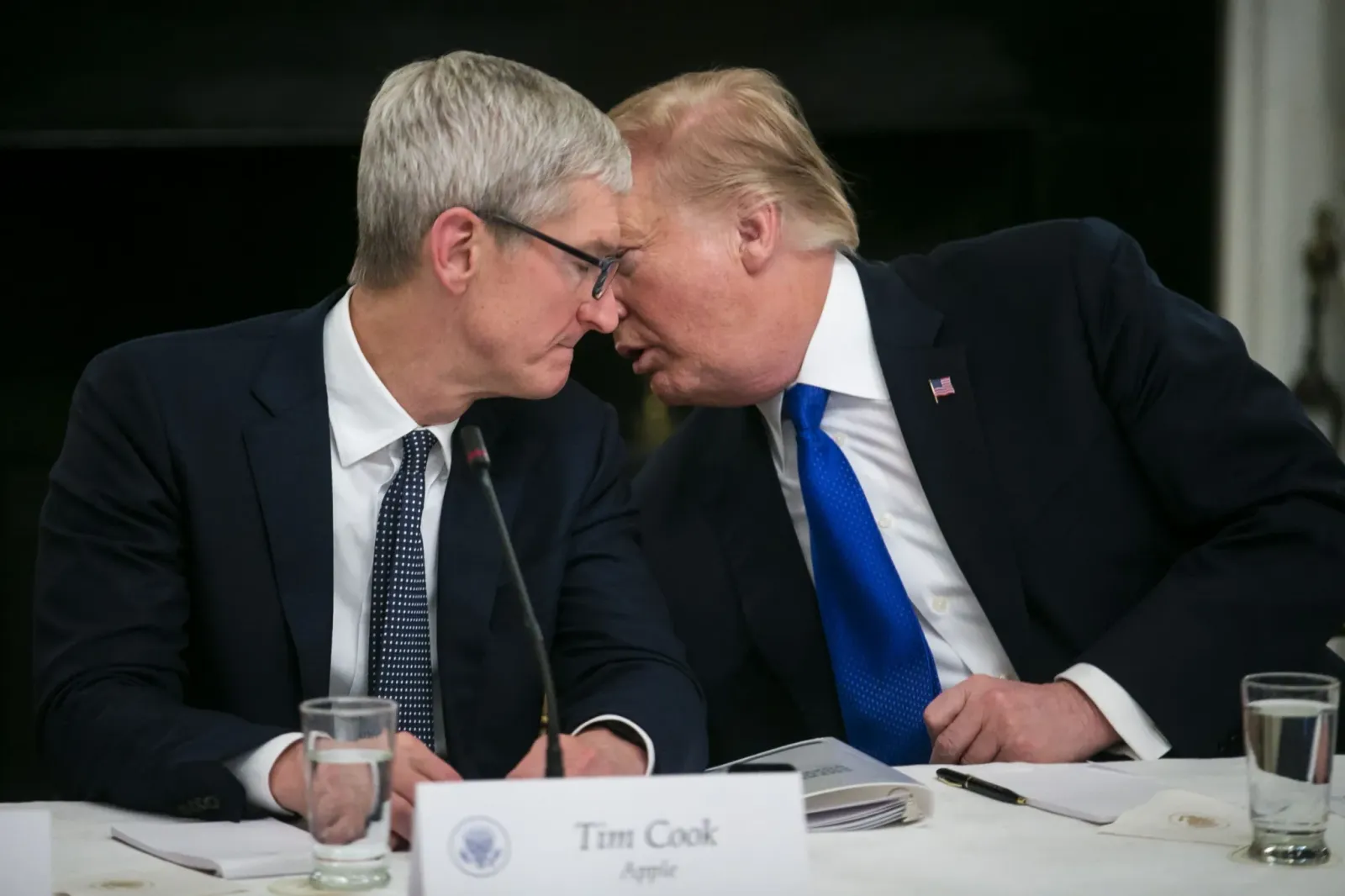
Tim Cook steps down as Apple CEO, stays on as chair with $45M equity
The 'Trump whisperer' keeps his White House and Beijing access as Apple navigates tariffs and a $4.6 trillion market cap.
Snowflake shares surge as AI data demand crushes estimates, lifting full-year forecast
Stocks jumped on stronger-than-expected guidance, signaling enterprise AI workloads are accelerating faster than Wall Street priced in.
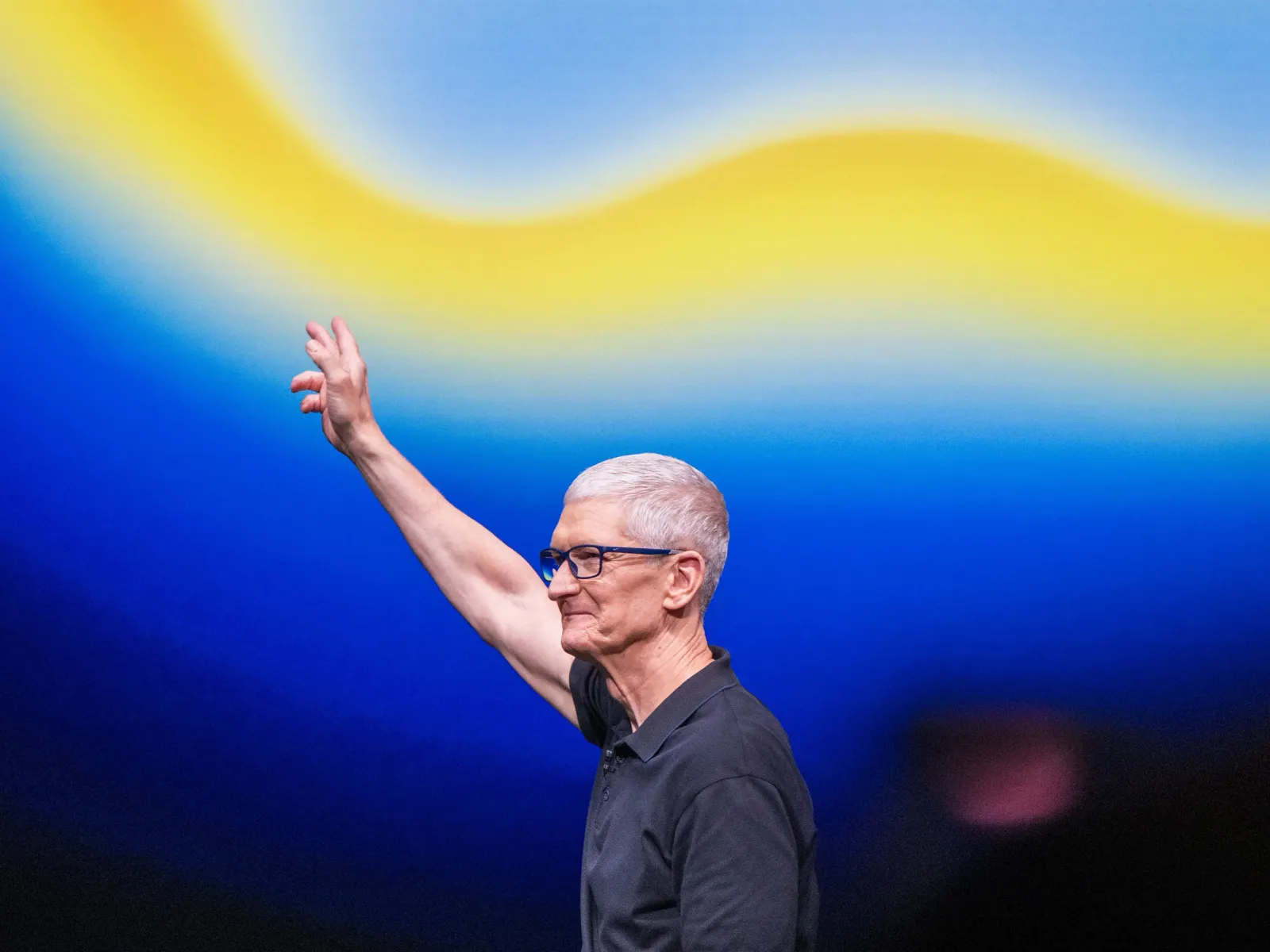
Tim Cook's 15-year Apple CEO run ends: 3 lessons for any successor
After 15 years, Tim Cook hands Apple to John Ternus - here's how he turned a $350B company into a $4.6T juggernaut.