
Trade war turns cultural as Canada hits back with $20B in tariffs
Ottawa's 15-50% counter-tariffs on $20B of US goods follow Washington's new 50% levy - and the fight has spilled into language and culture.

Canada announced retaliatory tariffs of 15-50% on roughly $20B of American goods after new 50% US tariffs took effect Saturday, escalating a trade war that now includes cultural and linguistic dimensions. For executives, this signals deeper bilateral friction that could disrupt supply chains and consumer pricing on both sides of the border.
Canada has fired back with retaliatory tariffs of 15-50% on roughly $20 billion of American goods, responding to new 50% US tariffs that took effect Saturday. But the trade war has escalated beyond steel and aluminum - it has turned cultural and linguistic, with French-language issues now part of the fray. The announcement confirms that Ottawa is matching Washington's aggressive posture, and the sheer scale of the response - a broad basket of goods ranging from 15% to 50% - signals that neither side is prepared to blink.
The escalation marks a sharp inflection point in North American trade relations. The 50% US levy on Canadian products is a significant jump from earlier tariff rounds, and Canada's countermeasures are designed to hit American industries where they hurt most. While the exact list of goods was not detailed in the report, the range of tariffs suggests a deliberate strategy to maximize political and economic pressure. For executives, the immediate consequence is clear: cross-border supply chains that once operated on predictability now face a volatile, tit-for-tat environment where costs can shift overnight.
The cultural and linguistic turn is perhaps the most striking development. The dispute has moved from pure economics into identity and sovereignty, with French-language concerns emerging as a flashpoint. For Canada, French language and cultural protections are constitutionally embedded, making any US action that touches on these areas particularly sensitive. The trade war, once about goods, now risks becoming a battle over national identity - a shift that could harden public opinion on both sides and make compromise even more difficult. This is not just about tariffs on lumber or dairy; it is about what each country stands for.
For businesses, the practical impact is immediate and far-reaching. Tariffs on $20 billion of goods will ripple through industries from agriculture to manufacturing, raising input costs and squeezing margins. Companies that rely on cross-border trade will need to reassess sourcing strategies, pricing models, and inventory buffers. The uncertainty itself is a cost: CFOs cannot accurately forecast input prices, and procurement teams must model multiple tariff scenarios. Consumer-facing businesses may face the choice of absorbing higher costs or passing them on to customers, potentially dampening demand in an already cautious economic environment.
The regulatory and political context adds another layer of complexity. The US has increasingly used tariffs as a tool to pressure allies on non-trade issues, and Canada's response shows that such tactics can provoke equally aggressive countermeasures. This creates an unpredictable environment for long-term planning. Boards that previously treated trade policy as a background risk must now elevate it to a front-and-center strategic concern. The cultural dimension complicates matters further: disputes can quickly move from economic to symbolic, making them harder to resolve through traditional trade negotiations.
For C-suites and boards, the key takeaway is that trade relationships are no longer stable. The cultural turn is a warning that economic conflicts rarely stay contained. As both countries dig in, the cost to businesses and consumers will only grow. Executives should watch for further escalation, particularly any moves that target cultural or linguistic sectors, which could signal a deeper rift. The $20 billion in retaliatory tariffs is not an endpoint; it is a marker of how far the conflict has already come - and how much further it could go.
In this environment, agility is the only defense. Companies with exposure to Canada or the US should model multiple scenarios, including prolonged tariff wars and potential retaliatory measures on services or intellectual property. The trade war's cultural turn means that even non-tariff areas - such as media, education, or technology platforms - could become battlegrounds. For now, the immediate priority is to protect margins and supply chains, but the longer-term imperative is to build resilience against a relationship that has fundamentally changed.
This story's Key Insights and Take-aways are locked.
Create a free account to unlock Executive Actions for one credit.
Register to UnlockAlways free for Executives Club members. Join the Club
More in Business
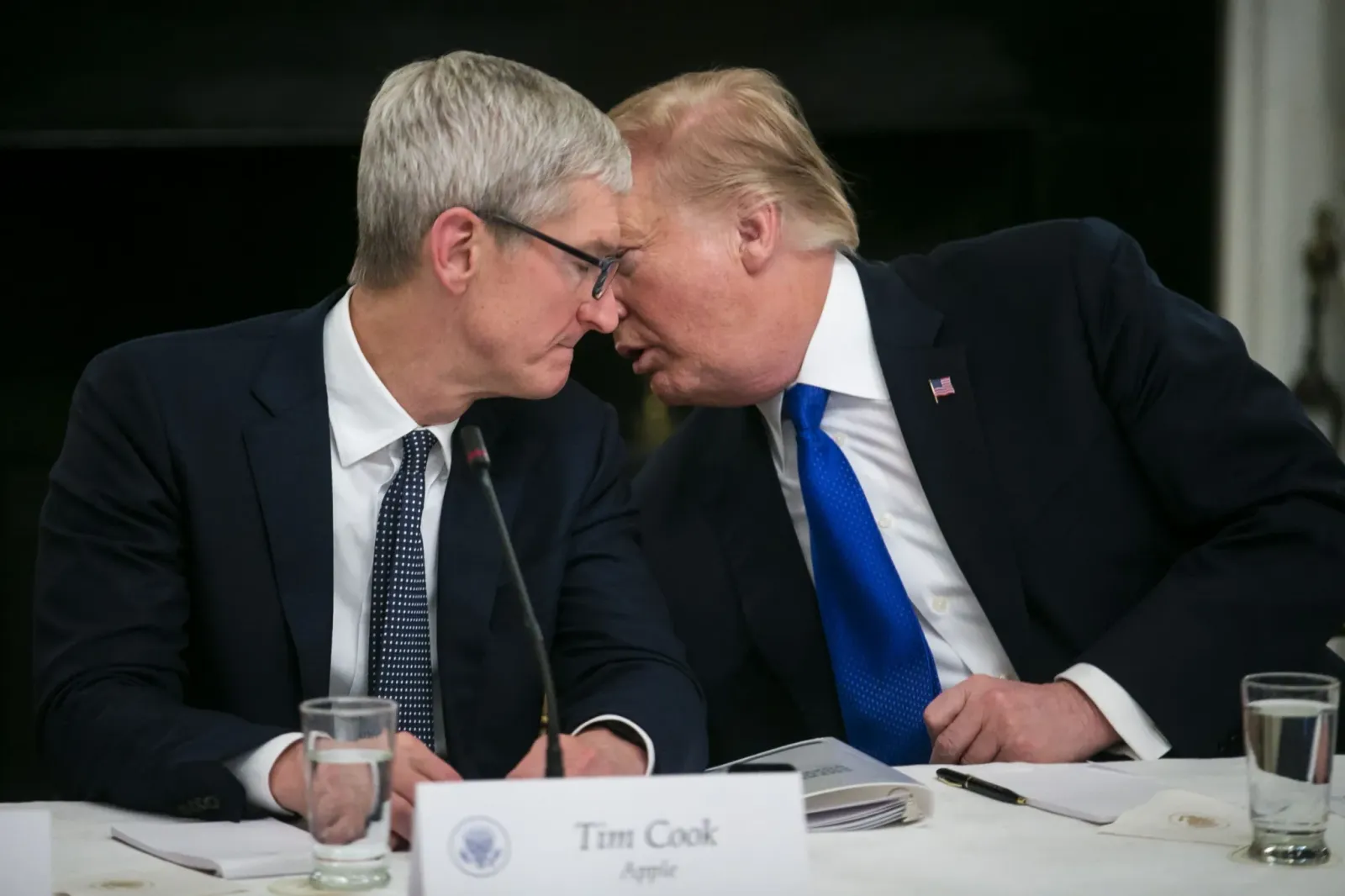
Tim Cook steps down as Apple CEO, stays on as chair with $45M equity
The 'Trump whisperer' keeps his White House and Beijing access as Apple navigates tariffs and a $4.6 trillion market cap.

Snowflake shares surge as AI data demand crushes estimates, lifting full-year forecast
Stocks jumped on stronger-than-expected guidance, signaling enterprise AI workloads are accelerating faster than Wall Street priced in.

Tim Cook's 15-year Apple CEO run ends: 3 lessons for any successor
After 15 years, Tim Cook hands Apple to John Ternus - here's how he turned a $350B company into a $4.6T juggernaut.