

Travis Kalanick raises $1.7B for Atoms, with Uber and a16z backing his robotics return
Kalanick, the Uber founder forced out in 2017, is back with $1.7 billion for industrial AI and robotics.
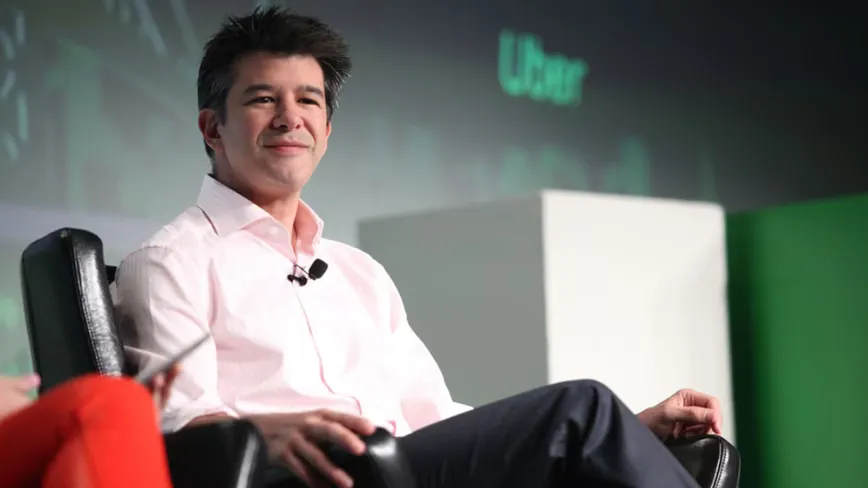
Travis Kalanick, the Uber founder forced out in 2017, has raised $1.7 billion for Atoms, his industrial-AI and robotics company built in near-total stealth. Andreessen Horowitz led the round, Ben Horowitz is joining the board, and Uber is among the investors.
Travis Kalanick is back in a big way. The Uber founder who was forced out in 2017 has raised $1.7 billion for Atoms, an industrial-AI and robotics company he built in near-total stealth for years. And the funding is not coming from a single corner of the market. Uber has chipped in too, signaling that the story is not just “Kalanick returns,” but “the ecosystem around him still wants to bet.”
The money and the marquee names matter immediately. Andreessen Horowitz led the round. Its co-founder Ben Horowitz is joining the board of Atoms. Uber sits among the investors, meaning this is a cross-section bet, with both a top-tier venture firm and an operating platform with deep logistics and mobility DNA putting weight behind Kalanick’s new direction.
Why $1.7 billion is the headline, beyond the sheer scale: robotics and industrial AI are capital-hungry by nature. They require not only models, but sensors, hardware iterations, field testing, and the messy reality of deploying systems in real environments. In that context, near-total stealth for years is a common pattern for companies trying to avoid premature noise. They want engineering cycles, data accumulation, and prototype refinement to happen without the market reacting too early. The risk is obvious. If you go stealth too long, you can starve attention and partnerships. But the upside is also obvious: when you emerge, you do it with a clearer technical story and fewer “what are you building?” distractions.
This financing round also lands inside a specific venture dynamic that executives should pay attention to. When a founder with a controversial operating past returns, boards and investors get more than the usual pitch. They inherit reputational and governance considerations. It is not enough to ask whether the tech can work. They also have to ask whether the founder can build teams, manage escalation, and handle scrutiny. That is where board composition gets interesting, and Ben Horowitz joining the board is a particularly loud signal in the source. Andreessen Horowitz does not only fund. It tends to engage deeply with governance, and a board seat typically means active involvement in decision-making.
Now add Uber into the mix. Uber being among the investors ties the money to a company that operates at massive scale across routing, dispatch, operations, and increasingly, automation-adjacent systems. Even though this story is specifically about Atoms and robotics, the “why now” question is hard to ignore. Industrial AI and robotics are slowly shifting from lab curiosity to operational necessity, and large operators often look for asymmetric advantages in efficiency and reliability. Investors like Uber have a long list of reasons to care about automation, because operations are where margins live, and where downtime is costly.
Regulatory context is part of the background that decision-makers cannot ignore, even when sources keep the details thin. Robotics and industrial AI deployments raise questions around safety, liability, workforce impacts, and compliance standards depending on the environment. When a company is building quietly, regulators are still watching the broader trend. And when that company suddenly surfaces with major backing, the spotlight intensifies. Board members then need to ensure that growth does not outpace the ability to meet safety and operational requirements, especially for systems meant to interact with real-world infrastructure.
There is also an incentive story here for Andreessen Horowitz and its leadership team. Leading a $1.7 billion round, and placing a co-founder on the board, suggests the firm sees more than “cool robotics.” They appear to be treating Atoms as an enduring bet on industrial AI and robotics, not a short-duration experiment. For a16z, the second-order effect is portfolio concentration around real-world automation. For the broader market, it pressures other investors to show their work: if Atoms is scaling, peers will have to explain their own progress, not just their vision.
For executives watching from the sidelines, the strategic stake is clear. Kalanick returning with large-scale capital and high-profile governance involvement means robotics will continue to attract top-tier talent and money, and it will do so with the kind of urgency that comes from prior experience, not from pure novelty. Whether you are running an industrial tech company, a logistics operator, or an AI platform, the message is that robotics is moving from prototypes to serious funding rounds. And when a founder of Kalanick’s profile gets traction backed by Uber and Andreessen Horowitz, the market has to start taking his next steps seriously, fast.
This story's Key Insights and Take-aways are locked.
Create a free account to unlock Executive Actions for one credit.
Register to UnlockAlways free for Executives Club members. Join the Club
More in Business

Anthropic’s Levant Alpöge cracks the Jacobian conjecture after 87 years
A Harvard valedictorian used Claude to hit a 1939 breakthrough, but the missing “why” is the real problem.

Uber buys Delivery Hero for nearly $15B, vaulting to top food delivery outside China
The deal doubles Uber's dual-services footprint and pushes a ride-and-eats bundling play into 50 more markets.

Epic and Google drop settlement bid, forcing rival Android app stores by July 22
Google told the court it is ready to carry third-party app stores starting Wednesday, July 22.