
Treasury's 'Operation Economic Outcast' puts Chinese banks in Iran crosshairs
Treasury Secretary Scott Bessent signals secondary sanctions could hit Chinese lenders, escalating the U.S. pressure campaign on Iran's oil revenue.

Treasury Secretary Scott Bessent announced 'Operation Economic Outcast' and warned that no country is 'above the reach of U.S. sanctions,' signaling Chinese banks could face consequences for facilitating Iran's trade. For decision-makers, this escalates compliance risk for any financial institution with exposure to Iranian-linked transactions and raises the stakes in U.S.-China economic tensions.
The Treasury Department's new 'Operation Economic Outcast' is a direct warning shot at Chinese banks. Treasury Secretary Scott Bessent declared that no country is 'above the reach of U.S. sanctions,' a clear signal that Beijing's financial institutions could face consequences for helping Iran move money and oil. The operation, announced as the U.S. tightens its grip on Iran's economy, puts China's lenders on notice: facilitate Iranian trade and risk being cut off from the U.S. financial system.
This is not just rhetoric. The U.S. has long used secondary sanctions to punish foreign companies and banks that do business with sanctioned nations like Iran. These measures extend Washington's reach beyond its borders, threatening to freeze assets, block dollar access, or bar executives from the U.S. market. For Chinese banks, which process a significant share of Iran's oil payments, the threat is existential: losing access to the dollar clearing system would cripple their global operations.
The context: The U.S. reimposed sweeping sanctions on Iran after withdrawing from the 2015 nuclear deal in 2018. Since then, Washington has targeted Iran's oil exports, its central bank, and its access to international finance. But enforcement has been uneven, and China has emerged as a major buyer of Iranian oil, often using yuan-based settlement or barter arrangements to bypass dollar channels. Operation Economic Outcast appears designed to close those loopholes.
The stakes for China are high. If U.S. sanctions hit Chinese banks, they could face penalties similar to those imposed on European and Asian lenders in past decades. Historically, U.S. sanctions enforcement has resulted in multi-billion-dollar penalties for banks that violated them. Chinese banks, including the big state-owned institutions, have already been cautious about Iran-related business, but the new operation could push them to fully exit. That would disrupt Iran's oil exports and potentially raise global energy prices.
For global executives, the message is broader. Any bank, trading house, or insurer with even indirect exposure to Iranian transactions now faces heightened scrutiny. Compliance teams will need to re-examine their client lists, transaction monitoring, and correspondent banking relationships. The cost of getting it wrong is not just financial; it is reputational and operational. De-risking, where banks simply drop entire categories of clients to avoid sanctions risk, could accelerate.
The strategic implications are also significant. This move escalates the U.S.-China economic confrontation, which has already seen tariffs, export controls, and tech restrictions. China may retaliate by reducing its purchases of U.S. goods or by pushing more trade through alternative payment systems like CIPS, China's cross-border interbank payment system. That would further fragment the global financial architecture, a trend that has been building for years.
For now, the immediate question is how aggressively the Treasury will enforce Operation Economic Outcast. Bessent's quote suggests a zero-tolerance approach, but the actual implementation will depend on diplomatic calculations. Chinese banks may be given a grace period to wind down Iranian business, or the U.S. may target specific institutions to make an example. Executives should watch for Treasury guidance, designations, and any signs of a negotiated off-ramp.
The bottom line: Operation Economic Outcast is a reminder that U.S. sanctions are a powerful, extraterritorial tool. For any company with global operations, the lesson is to treat sanctions compliance as a strategic priority, not a back-office function. The cost of being caught in the crosshairs is too high to ignore.
This story's Key Insights and Take-aways are locked.
Create a free account to unlock Executive Actions for one credit.
Register to UnlockAlways free for Executives Club members. Join the Club
More in Business
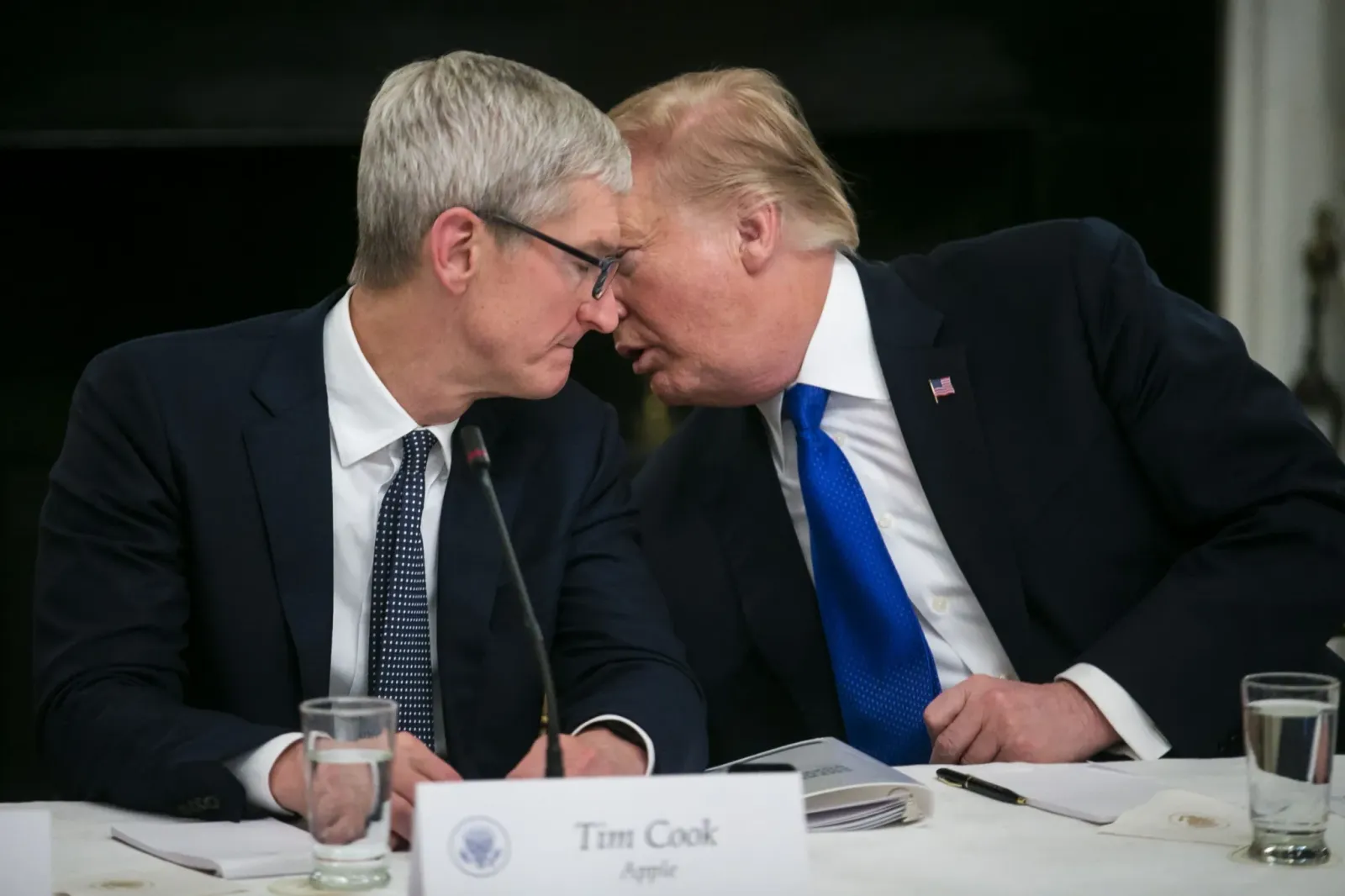
Tim Cook steps down as Apple CEO, stays on as chair with $45M equity
The 'Trump whisperer' keeps his White House and Beijing access as Apple navigates tariffs and a $4.6 trillion market cap.

Snowflake shares surge as AI data demand crushes estimates, lifting full-year forecast
Stocks jumped on stronger-than-expected guidance, signaling enterprise AI workloads are accelerating faster than Wall Street priced in.
Tim Cook's 15-year Apple CEO run ends: 3 lessons for any successor
After 15 years, Tim Cook hands Apple to John Ternus - here's how he turned a $350B company into a $4.6T juggernaut.