

True Anomaly’s Jackal satellite “Panther” and Puma rehearsed satellite cat-and-mouse in orbit
A first unclassified demo shows how satellites may both evade and pursue each other in future conflict.
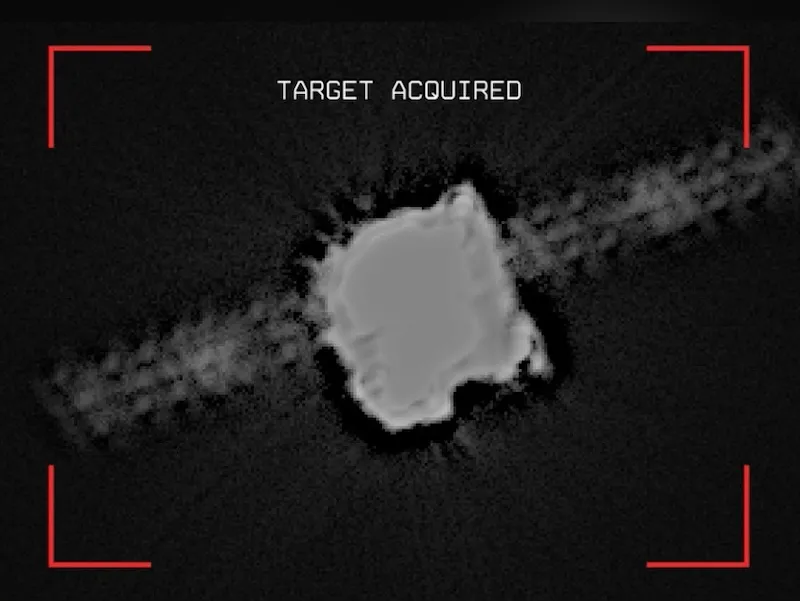
True Anomaly, via its Jackal satellite also known as Panther, ran a cat-and-mouse maneuver against a Puma spacecraft based on Rocket Lab's Pioneer platform during an unclassified military exercise announced Wednesday. The demonstration signals to decision-makers how close future satellite tactics are to real-world application.
Hundreds of miles above Earth, a military exercise just put an unclassified spotlight on a future problem that does not sound glamorous until you understand the stakes: how satellites evade and pursue each other in orbit.
True Anomaly announced Wednesday that its Jackal satellite, also known as Panther, played the cat-and-mouse game with another spacecraft named Puma. The setup matters because this was the first time the exercise was demonstrated in an unclassified setting, meaning the information is available to more than just cleared communities. That shift changes how quickly outside companies, customers, and investors can benchmark what is coming.
If you are picturing space as calm, passive infrastructure, the exercise is a reminder that orbit is a battlespace too. Ars Technica notes the blunt reality: “Dogfighting in space doesn’t quite have the drama of an aerial dogfight.” There are no banking turns and no engines roaring over a runway. Instead, the drama is in relative movement, timing, maneuver capability, and the ability to sense, predict, and respond while both vehicles are operating in the same environment.
In this case, Panther is the hunter. Puma is the one being pursued. Both are real spacecraft, and Puma is based on Rocket Lab's Pioneer satellite platform. That platform lineage matters for business readers because it ties the exercise to an ecosystem of build-and-fly hardware rather than to a one-off lab experiment. When you can point to a platform, you can start thinking about scaling, repeatability, and how quickly similar hardware could be deployed or adapted.
True Anomaly frames the work as a long ramp, not a sudden invention. Even Rogers, True Anomaly’s co-founder and CEO, said, “This is what we've really been building towards for the past four years.” That is not just branding. For boards and investors, it signals that the company has been investing in the core capabilities needed for an interaction like this, and that the orbit demonstration is meant to validate a roadmap that has been forming for years.
The “unclassified” element is where the second-order implications start to get interesting. Military exercises can be informative but are often inaccessible. When something happens in a classified box, the industry learns slowly and through indirect signals. By moving the demonstration into an unclassified setting, the exercise reduces friction for commercial stakeholders to study what is feasible, what kinds of maneuvers can be shown openly, and how quickly the gap between military experimentation and commercial capability might close.
There is also a practical regulatory angle, even when regulators are not named in the source. Space is governed by a patchwork of national and international rules that touch licensing, operations, and interference. Demonstrations of pursuit and evasion raise questions about how operators interpret “safe” operations when two spacecraft intentionally interact at relative distances. Even without new policy language in the report, the fact that the exercise can be shown unclassified suggests the planners found a way to share enough to matter without exposing everything that would complicate international scrutiny.
For decision-makers in companies that build satellites, provide launch and platform services, or invest in space defense adjacent capabilities, the strategic stake is simple. If satellite interactions can be rehearsed and demonstrated openly enough for mainstream reporting, then the competition is not waiting on vague “someday” requirements. It is starting from a known baseline of demonstrated tactics and working backward to product roadmaps, procurement expectations, and partnerships.
And for executives watching the broader market, the exercise is a signal that space deterrence and space operations are becoming less theoretical. Today it is an unclassified demo of cat-and-mouse. Tomorrow it becomes a procurement question: who can field spacecraft with the sensing, maneuvering, and operational discipline to participate in these interactions. Panther and Puma are the headline. The real story is that this kind of maneuver capability is now part of the conversation.
This story's Key Insights and Take-aways are locked.
Create a free account to unlock Executive Actions for one credit.
Register to UnlockAlways free for Executives Club members. Join the Club
More in Business

Anthropic’s Levant Alpöge cracks the Jacobian conjecture after 87 years
A Harvard valedictorian used Claude to hit a 1939 breakthrough, but the missing “why” is the real problem.

Uber buys Delivery Hero for nearly $15B, vaulting to top food delivery outside China
The deal doubles Uber's dual-services footprint and pushes a ride-and-eats bundling play into 50 more markets.

Epic and Google drop settlement bid, forcing rival Android app stores by July 22
Google told the court it is ready to carry third-party app stores starting Wednesday, July 22.