
Trump AI insiders tear into OpenAI, Anthropic, over Kimi and open-source models
A weekend feud over Moonshot’s free Kimi exposes a White House split on how to police frontier AI.
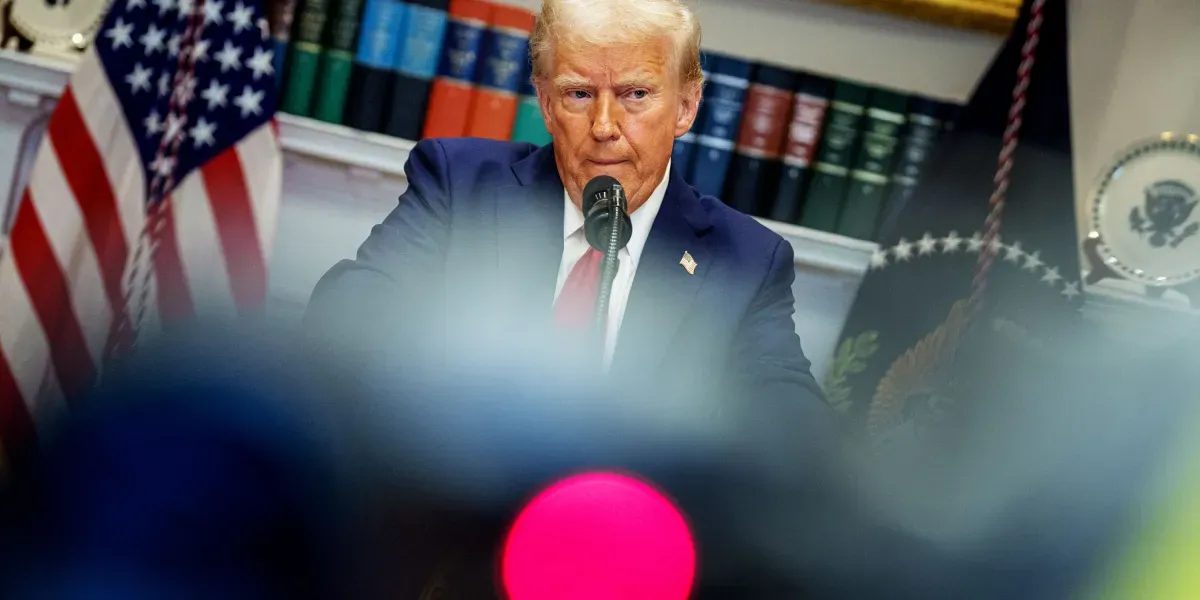
Several current and former Trump AI advisors publicly insulted top US AI companies over Chinese startup Moonshot’s free, open-source model Kimi. The fallout raises urgent questions for decision-makers about regulation, competition, and security vetting in the US AI market.
Over the weekend, several current and former advisors to President Donald Trump on AI publicly lobbed insults at the country’s leading AI companies. David Sacks, the president’s AI and crypto “czar” until March, branded Anthropic’s models as “lobotomized” and “woke.” Emil Michael, a top Pentagon official, called OpenAI’s new head of strategic futures a “supreme village idiot.”
The spark for that feud is not just office politics. It started with a dispute over Kimi, a free, open source model that Chinese AI company Moonshot launched last week, and whether the US should respond by suppressing, licensing, or strategically outmaneuvering it. Kimi appears to rival the intelligence of models from OpenAI and Anthropic, which are very much not free. For a White House trying to manage economic and political pressures at the same time, this is a dangerous kind of competition: cheaper models that potentially reduce the incentive to pay for the US frontier.
Zoom out one step and the stakes get bigger fast. The story describes how every time a new smart, free model from China like Kimi gets released, US companies see less reason to fork out money to access models from Anthropic or OpenAI. Since enthusiasm for these companies is driving an outsized share of economic growth, China’s AI models create both economic and political problems for Trump. Anton Leicht, a fellow at the Carnegie Endowment, wrote on X that these models are “a threat for an administration that really doesn’t want more economic bad news.” The story also notes that they’ve already rattled US stocks.
But the weekend sparring also happens in a specific regulatory and political moment. It is happening just a week after New York imposed the country’s first state ban on new data centers. That matters because even outside the content of AI models, AI businesses are tightly constrained by hardware, power, and infrastructure, and there is growing distrust of AI companies. The underlying problem for US policymakers is that the public may not sympathize with OpenAI or Anthropic as they fend off cheaper competitors, seeing it as not the government’s job to protect their interests. In that sense, the dispute in Trump’s orbit is not only about national security. It is also about legitimacy, incentives, and who gets blamed when the market gets more competitive.
Sacks’s views highlight one side of the split. On July 19, he criticized top AI companies that “want the government to eliminate their open source competition.” He argued that Chinese AI models have become popular because they come with fewer restrictions on how people can use them, aside from the built-in state censorship. The problem for Sacks is that he is out of a job: he no longer has a formal role advising Trump. The story says his position that more open AI is better has been largely replaced by one that favors a larger role for government intervention.
So what is the intervention? The story points to a White House review process designed to vet AI models’ security before they’re released. Dean Ball, a former Trump AI advisor who now works for OpenAI, criticized the approach over the weekend, calling it a “de facto licensing regime for frontier AI.” Ball’s framing is important because it suggests the review process might not just block the riskiest models. It could also reshape access and pricing, effectively turning openness into a regulated privilege.
Then comes the counterattack from within Trump’s administration. Michael, who with Secretary of Defense Pete Hegseth has been a main liaison with AI companies, called Ball the AI industry’s “supreme village idiot.” Michael bristled at the suggestion that the government would quietly strong-arm companies rather than go through what he described as the “democratic process not some Deep State scheme.” Under the surface, this is a conflict between two styles of state action: visible procedural vetting versus behind-the-scenes pressure. Either way, the result is the same kind of outcome executives should watch for: changing rules of the market for frontier model access.
One thing the story emphasizes is that the conversation about Kimi does not fully account for how the model got good in the first place. For much of the Biden administration and even early in Trump’s second administration, keeping China from getting top chips was a priority. Those export controls have loosened. Trump made a controversial decision to allow Nvidia to sell more chips to China, in exchange for the US government taking a cut, and the government has alleged that some chip smuggling has taken place. But despite that change, China nonetheless has limited computing power, and it is not clear what chips the company behind Kimi used to train the model.
The story offers a possible mechanism that could be central to policy and competitive strategy: distillation. Distillation is described as a practice in which AI models are trained on the outputs of existing AI models. OpenAI and Anthropic have long complained that Chinese AI companies do this, and they have requested government help to stop it. In April, the Trump administration announced a series of efforts to curb the practice. Still, Kimi is out there and free, and it is nearly as good as the Anthropic model the US government deemed so powerful that it was briefly shut down because it threatened national security. The weekend insults, then, may be less random than they look. They are a public signal that factions in Trump’s orbit see Kimi as a wake-up call, but cannot agree on what to do next.
Strategically, executives in this space should treat the feud as a proxy for the real question: will the US respond to free, high-performing Chinese models primarily through openness, through licensing-like gatekeeping, or through softer competitive pressure aimed at changing corporate behavior? The answer will shape how quickly US firms can monetize frontier work, how much regulatory uncertainty they have to price into product timelines, and how aggressively they will need to defend their competitive moats against both technical and political attacks. In other words, the fight is about models, but it will be decided through policy, incentives, and access.
This story's Key Insights and Take-aways are locked.
Create a free account to unlock Executive Actions for one credit.
Register to UnlockAlways free for Executives Club members. Join the Club
More in Technology

EU slaps AliExpress with record $625M DSA fine for counterfeit and safety failures
The European Commission says AliExpress did not mitigate illegal, unsafe, or counterfeit risks, and that delay is now expensive.
China weighs export controls on its AI models and chips, FT says
If Beijing expands beyond raw materials and equipment, global AI supply chains and compliance programs could get a lot harder.
Chris Fall resigns after three months as US AI oversight chief
His exit leaves the renamed Center for AI Standards and Innovation without permanent leadership during frontier-model oversight.