

Trump declassifies 2020-election China claims, critics call the alarm-miss narrative disputed
A primetime declassification pitch about voter-roll insecurity collides with rapid pushback from Democrats over what the intelligence community should have done.
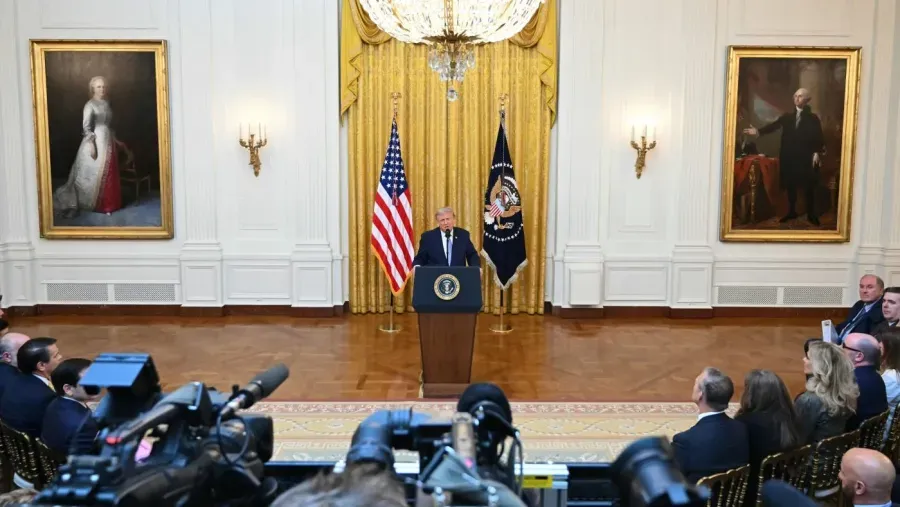
President Donald Trump declassified documents and argued that U.S. elections remain insecure, claiming the intelligence community did not sound the alarm as China penetrated U.S. voter rolls. The episode matters for leaders watching election-integrity policy, because disputed national-security narratives can quickly reshape regulation, funding, and public trust.
President Donald Trump used a primetime address to refresh his 2020 election accusations, pairing a new declassification move with a specific storyline: that U.S. elections remain insecure because China penetrated U.S. voter rolls, and that the intelligence community failed to sound the alarm. Critics, including Democrats, quickly disputed the claims.
The core of the fight is not just whether people believe the conclusion. It is the framing and attribution. Trump’s argument assigns responsibility to the intelligence community for not warning loudly enough, while his decision to declassify “a handful of documents” signals he wants the dispute to move from rhetoric to evidence. That matters because once intelligence claims are declassified and circulated in a campaign context, the burden shifts. Platforms, election officials, vendors, and policymakers are suddenly forced to respond, even when they would rather wait for settled findings.
Election security is the kind of policy area where narratives turn into budgets fast. The infrastructure is complex, and there are multiple layers: voter registration systems, authentication mechanisms, data access, and the broader cyber environment that connects federal agencies, states, vendors, and contractors. When a head of state claims a foreign power “penetrated” voter rolls and says intelligence missed the alarm, it implicitly argues that current safeguards and warning systems were inadequate. Even if later scrutiny narrows or challenges parts of that claim, the immediate second-order effect is that lawmakers and regulators will feel political pressure to tighten processes, harden systems, and demonstrate action.
This is also why the “declassify documents” step is strategically potent. Declassification is not the same as a courtroom verdict, and it is not automatically the end of controversy. But it gives the claims a new packaging: they are no longer only accusations; they are now documents that can be analyzed, cited, and debated by officials who typically operate through formal channels. For decision-makers, that changes the workflow. Legal teams and compliance functions get pulled in. Cyber risk managers get asked whether their assumptions about threat models still hold. Board members get asked how they are thinking about government procurement, election-adjacent contracts, and the optics of being associated with election-integrity efforts.
The political collision described in the source matters here. Trump launched the accusations, then Democrats swiftly disputed them. That pattern is a familiar one: when intelligence and elections intersect, the space for fully technical debate shrinks, and the public conversation becomes a contest over credibility and blame. The consequence is that election-integrity policy can become less about engineering tradeoffs and more about responding to contested narratives. That can lead to rushed initiatives, uneven guidance to states, and duplicated spending, especially when different political actors push for different interpretations of the same underlying events.
There is also a regulatory framing issue for companies and investors watching the sector. When a sitting president declassifies materials and ties them to foreign interference claims, it can accelerate rulemaking or guidance even before consensus emerges. Governments may treat the issue as a current risk requiring immediate mitigation. In parallel, critics may challenge the accuracy or completeness of the claims, raising the chance of retractions, contested reporting, or future revisions. For boards, that volatility is not just reputational. It can affect compliance requirements, contract renewals, and the risk profile of election-adjacent technologies.
Strategically, leaders should think about this as a lesson in how “national security + elections + declassification” can become a governance problem. It compresses timelines. It forces cross-functional coordination across legal, cyber, communications, and government affairs. And it can reshape stakeholder expectations overnight, whether the claims are fully accepted or are being disputed in real time. For executives in the election security ecosystem, cybersecurity vendors, and any company exposed to election-related public procurement, the stake is simple: your operating environment may be determined as much by political narrative as by technical findings.
In short, Trump’s new 2020 election claims about China penetrating voter rolls, his declassification of documents, and the immediate dispute from Democrats create a fast-moving policy and reputational environment. Decision-makers who plan only for technical risk, and not for narrative risk, may find themselves reacting after the window for influence has closed.
This story's Key Insights and Take-aways are locked.
Create a free account to unlock Executive Actions for one credit.
Register to UnlockAlways free for Executives Club members. Join the Club
More in Politics

LA County: DOJ's 20,000 'noncitizen' voter list is 'unreliable,' includes U.S.-born
Preliminary review by Los Angeles County election officials finds errors in the federal list, raising the stakes for voter roll integrity ahead of November.

Trump's $1.5B Pentagon chip investment lands in North Carolina
A $1.5 billion defense infusion for North Carolina chipmaking signals a new era of Pentagon-backed reshoring - here's what it means for the industry.

Nigeria confirms first Ebola case in Abuja, a woman just off a Uganda flight
Health Minister Muhammad Ali Pate says the patient flew in from Uganda, putting Africa's latest outbreak on Nigeria's doorstep.