
Trump’s 100% generic-drug tariff plan forces China to prove it’s tariff-proof by August 2028
The proposed escalation would reach 100% within a year, reshaping pricing, sourcing, and risk for everyone watching pharma trade.
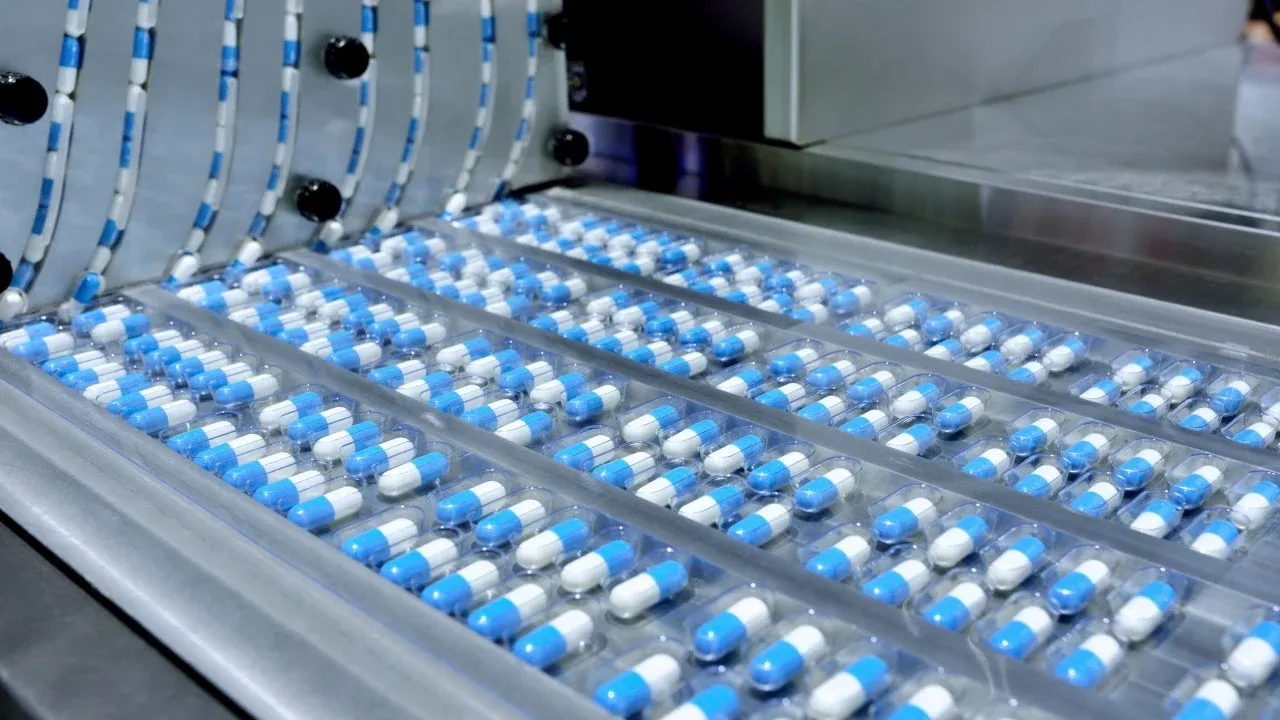
US President Donald Trump announced plans to impose escalating tariffs on generic drugs shipped to the United States, starting in August 2028, with tariffs rising to 100% within the first year. China’s pharmaceutical rise is being framed by analysts as increasingly tariff-proof, which would signal a more durable role in the global supply chain.
Washington is tightening the screws on pharmaceutical trade again, and this time the threat is loud: a plan for escalating tariffs on generic drugs shipped to the United States, starting in August 2028. Under the proposed schedule described by analysts in the coverage, the tariff rate would rise to 100% within the first year. For China’s pharmaceutical industry, the headline number is the test: can its global momentum hold up if the U.S. effectively doubles the cost of importing generics?
The answer, according to analysts quoted in the report, is increasingly “yes,” with China’s pharmaceutical rise framed as tariff-proof. That matters because generic drugs are the backbone of cost control in many healthcare systems. If tariffs spike, buyers and distributors are forced to rethink sourcing and pricing quickly, which can destabilize supply chains and scramble business models. The report’s core claim is that China’s ascent in the global supply chain now looks less reversible than it did before this policy shift.
To understand why analysts would sound confident, you have to zoom out to how generic drug trade typically works. Generics compete on price and reliability. Their economics are usually built around scale, manufacturing capacity, and the ability to supply consistent volumes. When a government introduces steep tariffs, the “textbook” expectation is that the market will flip toward alternatives, usually either domestic production or countries not hit by the tariff. But the report suggests China’s position has matured enough that the market impact is less about stopping supply and more about absorbing or rerouting costs.
Still, the tariff schedule is not a small adjustment. A move to 100% within a year is an aggressive policy lever. Even if the industry can ultimately withstand it, the transition period is where executives get stressed. Companies that rely on cross-border pricing structures, long-term contracts, and predictable margins often face hard questions: do you renegotiate contracts, change incoterms, adjust product mix, or shift which SKUs ship to the U.S. market? And because the plan begins in August 2028, executives can’t treat this as a distant headline. They have a planning horizon, but the planning has to start now because supply chain, regulatory, and commercial negotiations do not happen overnight.
There is also the investor and board angle. When analysts say a rise is “tariff-proof,” they are essentially arguing that demand will keep pulling, even under higher friction at the border. That can change how boards underwrite growth and how capital allocators model risk. If China is increasingly seen as anchored in global supply, it can support confidence in manufacturing investment and expansion plans. It also affects how management talks about resilience: instead of only promising cost competitiveness, leadership can increasingly frame the story as supply dependability under policy shocks.
For the U.S. side, the stated direction is clear: the plan aims to tighten policy on pharmaceutical trade and uses a tariff mechanism to do it. For China’s pharma industry, that means the competitive battlefield is no longer just market share and manufacturing efficiency. It becomes policy exposure. The report’s framing implies that China is still winning the global supply chain race, even as Washington signals it will try to reshape the price structure of imports.
The second-order implication for executives is that “tariff-proof” should not mean “no impact.” It likely means that the impact is distributed differently. Instead of a total collapse in export relevance, executives may see pressure show up in pricing negotiations, contract structures, working capital needs, and logistics planning, with companies still able to supply because demand for generics remains. In practice, that can favor players with scale, established regulatory pathways, and diversified customer relationships. It can also reward firms that can quickly adjust commercial terms while continuing to run factories at high utilization.
So if you’re a CEO, CFO, or board member watching this from a parallel industry seat, the stakes are straightforward: a tariff at 100% magnitude is the kind of policy that can break weak strategies. The SCMP coverage frames China’s current trajectory as increasingly resilient, suggesting that the climb in global pharma supply is not easily undone by one policy threat. But the “tariff-proof” thesis only holds if operational scale and commercial flexibility keep outpacing the policy risk. Starting in August 2028, that will be the real test, not the headline number.
This story's Key Insights and Take-aways are locked.
Create a free account to unlock Executive Actions for one credit.
Register to UnlockAlways free for Executives Club members. Join the Club
More in Business

Anthropic’s Levant Alpöge cracks the Jacobian conjecture after 87 years
A Harvard valedictorian used Claude to hit a 1939 breakthrough, but the missing “why” is the real problem.

Uber buys Delivery Hero for nearly $15B, vaulting to top food delivery outside China
The deal doubles Uber's dual-services footprint and pushes a ride-and-eats bundling play into 50 more markets.

Epic and Google drop settlement bid, forcing rival Android app stores by July 22
Google told the court it is ready to carry third-party app stores starting Wednesday, July 22.