
Trump’s first Air Force One flight on Qatar’s Boeing 747 sparks ethics and security questions
A donated presidential jet puts ethics, procurement norms, and national security scrutiny back in the spotlight for decision-makers.
President Trump took his first flight on the new Air Force One yesterday on a Boeing 747 luxury jet gifted to the U.S. by the government of Qatar. The donation raises ethics and security concerns that will pressure how officials handle foreign gifts, oversight, and risk management.
President Trump took his first flight on the new Air Force One yesterday, stepping into a moment that is more than ceremonial. The plane is a Boeing 747 luxury jet, and NPR reports that it was given to the U.S. by the government of Qatar. That combination, a high-profile presidential asset plus a foreign government donor, is exactly why the move has already raised concerns about ethics and security.
For executives and board members, the key detail is not the view from the cabin. It is the governance question that comes with anything described as a “gift” from a foreign state. When state-linked resources flow into U.S. hands, decision-makers immediately have to think about incentives and appearances, not just operational capability. Even if the aircraft meets mission requirements, the optics and the compliance burden can be real, because “who paid for it” is often treated as “who might have leverage.” NPR’s framing is straightforward: the donation from Qatar has raised concerns about ethics and security.
To understand why that matters, it helps to zoom out on how sensitive presidential aviation is treated. Air Force One is not just a vehicle. It is a moving command center, a national security platform, and a symbol of executive continuity. That means the standards for security, maintenance, and control tend to be stricter than for ordinary government aircraft. If a new platform is introduced, officials generally need to be able to explain, document, and justify how it is protected, operated, and governed end-to-end.
The “ethics” part is equally predictable, but still worth spelling out. In many industries, boards run on policies that prevent conflicts of interest and mitigate the appearance of impropriety. Foreign state gifts create the same tension. Even when the donor has no direct intent to influence, regulators and watchdogs can ask whether a benefit was conditioned, whether access is being granted indirectly, or whether the U.S. is creating future dependencies. With a presidential aircraft, the scrutiny ramps up because the beneficiary is the leader of the executive branch, and the asset is tied to foreign policy moments.
Security concerns are where second-order effects can get sharp. A donated aircraft implies a chain of custody that spans borders, vendors, and potentially different sets of information systems and maintenance ecosystems. The practical questions can include what data could be accessible, what technical features are present, how operations are monitored, and whether any components raise unique risk profiles. NPR does not provide those technical specifics in the source excerpt, but its point is clear enough: gifting a Boeing 747 luxury jet used for presidential travel triggers scrutiny that is hard to contain after the first flight.
There is also a policy signaling dimension. When the U.S. accepts high-value gifts from foreign governments, it tests existing norms and oversight practices. That can force internal review and external explanation, which is a governance cost in itself. For political leaders, the benefit of getting a new aircraft is capability and prestige. For compliance, national security teams, and ethics officers, the benefit is supposed to be less about speed and more about defensibility. Once the first flight happens, the “start the conversation” phase becomes “prove the process” mode.
This story also lands on the desks of people who do not live in politics, but do live in risk management. If you lead a company, run a fund, sit on a board, or manage government contracting, you recognize the pattern: a high-value transfer creates a heightened need for documentation, controls, and transparent governance. The second-order effect of NPR’s reporting is that the donated aircraft will not just be assessed as hardware. It will be assessed as a relationship between states, and as a question of whether safeguards match the size and visibility of what changed hands.
The stakes for decision-makers are therefore twofold. First, there is the immediate ethics and security scrutiny that comes with Qatar’s gift and the first flight of a newly used Air Force One. Second, there is the precedent risk: when a foreign government donates an asset that is instantly high-profile, future donors will take cues, and future critics will point to what happened here. In other words, the aircraft may carry the president, but the governance burden will be carried by the system around him.
This story's Key Insights and Take-aways are locked.
Create a free account to unlock Executive Actions for one credit.
Register to UnlockAlways free for Executives Club members. Join the Club
More in Politics

Glacial collapse, not rain, killed 180 in Nepal's Himalayan flood
The Himalaya's extreme geography hid the true cause of Nepal's catastrophic flood, a glacial collapse that turned a geological battleground into a mass-casualty zone.
Iran’s Esmail Baghaei says Oman talks start shipping via Hormuz, not US talks yet
Temporary route plans with Oman aim to restart commerce while Tehran says Washington dialogue is not on the table.
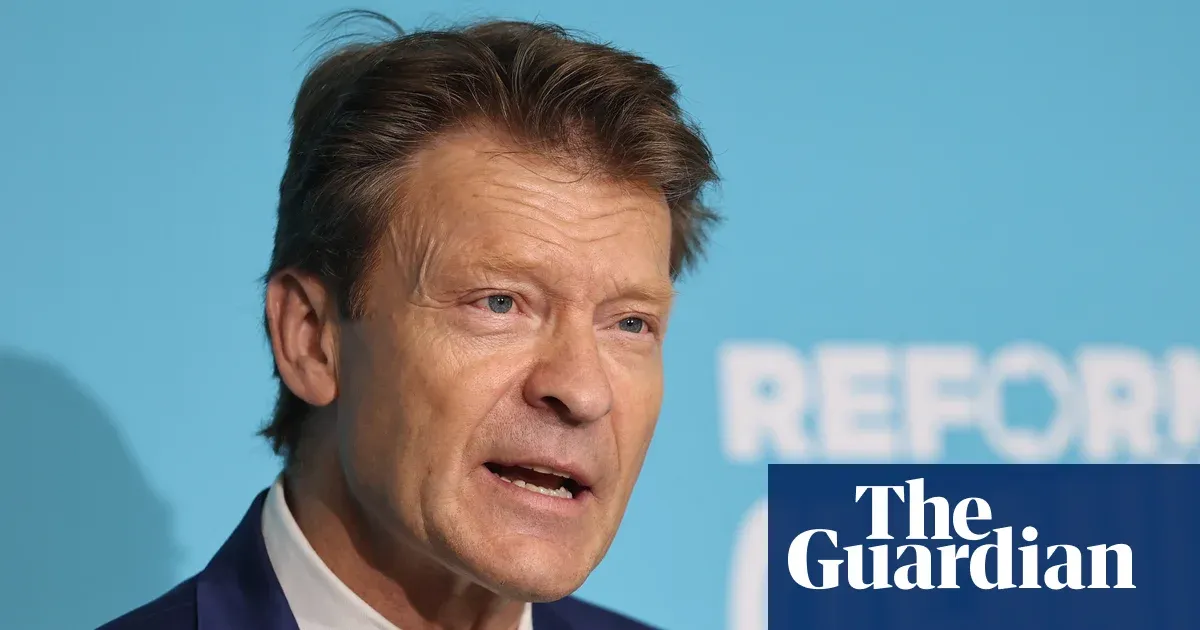
Standards watchdog opens probe into Reform UK deputy leader Richard Tice over interests
The parliamentary standards commissioner says it began an investigation on 28 July into a possible undeclared interest.