
Twitch CEO Dan Clancy says social media is “antisocial,” betting livestreaming beats feeds
At Fortune Brainstorm Tech, Clancy argues real-time connection drives retention, creator value, and AI’s limits.
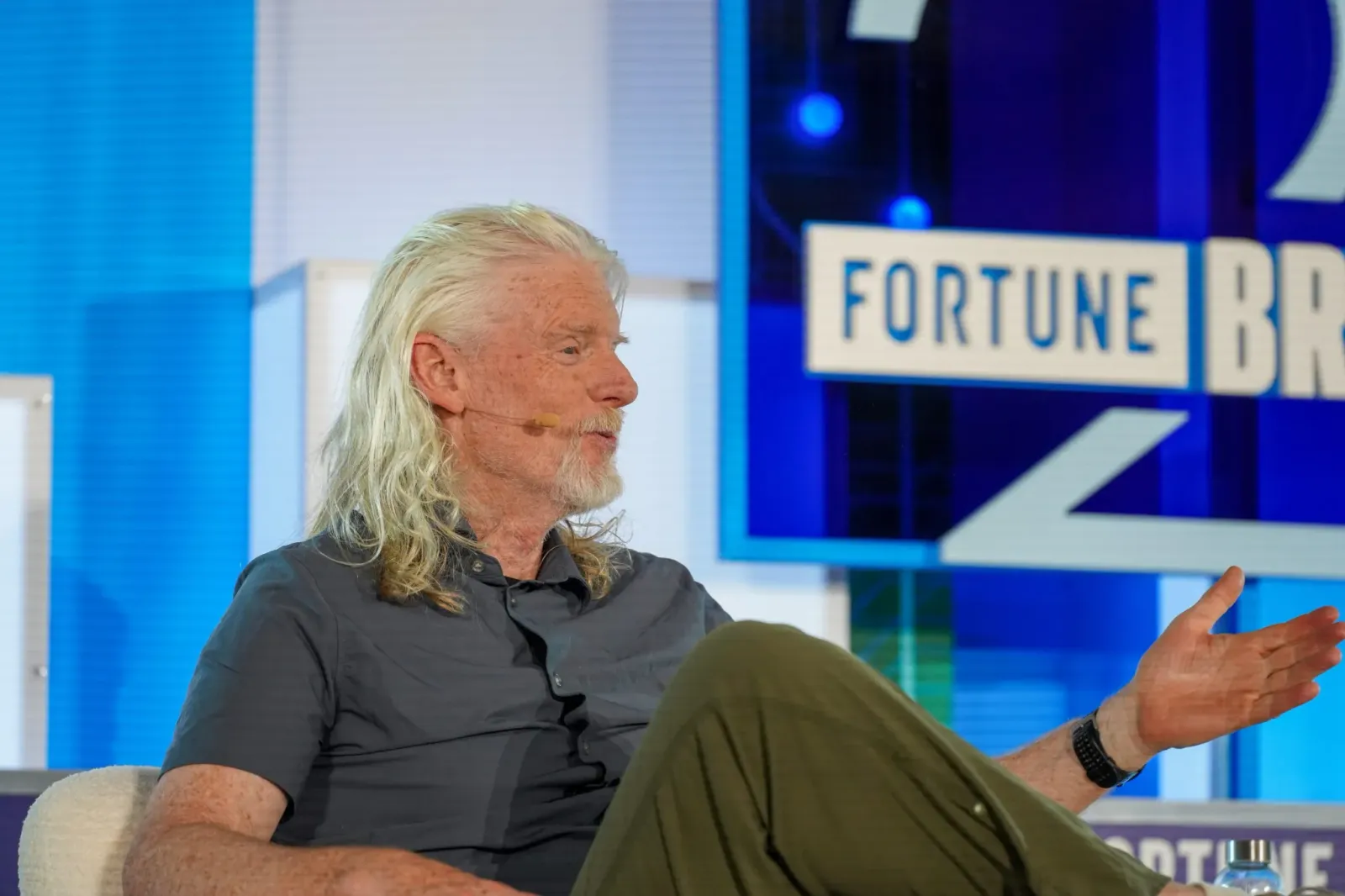
Twitch CEO Dan Clancy told Fortune Brainstorm Tech in Aspen that livestreaming creates a more human, authentic connection than traditional social media. His remarks, alongside Whatnot CEO Grant LaFontaine, frame livestreaming as the anti-feed and set up a high-stakes test for how platforms monetize long viewing sessions.
Twitch CEO Dan Clancy used a pretty blunt line at Fortune Brainstorm Tech in Aspen on Monday: “Social media has become antisocial. Sitting and swiping doesn’t make you feel connected to other people.” Then he connected that sentiment to the core business model of livestreaming, arguing that real-time shared experiences are exactly what attention markets can struggle to replicate with traditional social feeds.
Clancy’s argument is not just emotional. He positions Twitch’s format as the mechanism that produces authenticity and human connection in an attention economy, and he contrasts it with platforms optimized for quick hits. “If you think of real-world communities - churches, running clubs - it all comes from shared experiences in real time,” Clancy said. That is the thesis statement for Twitch right now: viewers do not just consume content, they stay for a sense of being with other people as events unfold.
This matters because both Twitch and Whatnot are built on the same long-viewing engine, even if they serve it differently. Clancy spoke alongside Grant LaFontaine, the CEO of Whatnot, a popular streaming marketplace. Together, they emphasized that real-time connection is central to their businesses. It is also central to why these companies have scaled to the kind of audience numbers that make advertisers and investors pay attention. Twitch is estimated to have 35 million daily active users, while Whatnot has said it attracts several million daily active users.
The catch is that long hours do not automatically translate into clean profit. The executives acknowledged, directly or indirectly, the awkward reality behind livestreaming economics: turning hours of broadcasts into consistently profitable businesses is hard. Social feeds can monetize at scale through impressions and engagement loops. Livestreams monetize around content, creator dynamics, and marketplace behavior, which are often messier, slower to stabilize, and more dependent on community health. When a platform sells something, or takes a cut, it also needs the right blend of trust, entertainment, and transaction readiness in real time.
That community and monetization challenge is also where “antisocial” becomes more than a jab. The industry has been wrestling with whether the internet is building relationships or just extracting attention. Clancy described digital neighborhoods that his platform has made, as distinct from highly addictive, quick-hit social media channels. LaFontaine echoed the idea that the long-term goal should be relationships, not short-term exploitation. He said Whatnot has aimed for long-term customer relationships over short-term exploitation, and added that Whatnot allows users to set limits, though he did not specify what those limits are.
For decision-makers, the second-order issue here is risk management, not just engagement. When platforms are built on continuous, real-time interaction, there are more opportunities for harm and more pressure to moderate. Even though the source does not describe specific regulatory actions against Twitch or Whatnot, it does highlight an industry tension that regulators and policymakers have been increasingly focused on: whether platforms push users deeper into compulsive behavior. Allowing users to set limits is one product lever, but it also acts as a signal to investors and regulators that the company understands the scrutiny around addictive design.
Both executives also touched the looming question for nearly every major consumer platform: what happens when AI can mimic, replace, or automate the human parts of content? Clancy and LaFontaine said that scraping of data on their platforms by AI labs has not been a major threat. They also addressed the idea of AI avatars replacing human creators, saying it is not a major problem they anticipate. LaFontaine said he expects AI to aid sellers in creating content or engaging with their followers during times when the sellers are not streaming. Clancy framed AI differently, saying AI will allow Twitch’s creators to “access their creativity” by providing tools that make content creation easier.
What is strategically interesting is that both companies appear to be treating AI as an augmentation layer, not a replacement layer, and they tie that stance to livestreaming’s defining feature: keeping humans at the center. Clancy’s quote makes the logic explicit: “AI is trying to take humans out of the equation, and live is one of the formats that keeps humans at the center. You connect with people. You can understand them. You can see who they are.” That is a community trust argument disguised as a product argument. If viewers believe they are interacting with real people, then identity, authenticity, and responsiveness become defensible advantages, even in an AI-saturated media future.
Finally, the conversation landed on ownership, growth, and why some platforms are harder for outsiders to value. Clancy disputed the possibility of Amazon selling Twitch and said the streaming platform likely would not have grown as big as it did if it hadn’t been for Amazon’s 2014 purchase. He also suggested Amazon may not have fully understood what it was buying at the time, because Twitch’s value is difficult to grasp for people who are not active users. That statement is less about drama and more about the investment thesis behind platform acquisitions: the biggest value in community-driven products often sits in usage and network effects that are hard to model from the outside.
If you are an operator or investor watching the livestream and creator economy, this is a clear signal of where the battlefield is shifting. Not toward “more content,” but toward the type of connection content creates. Not toward shorter attention loops, but toward real-time social presence. And not toward replacing creators with automation, but toward tooling creators to deepen the human experience. The brands that win will be the ones that can monetize long sessions without breaking trust, and it sounds like Clancy and LaFontaine believe livestreaming is the format most capable of doing that.
This story's Key Insights and Take-aways are locked.
Create a free account to unlock Executive Actions for one credit.
Register to UnlockAlways free for Executives Club members. Join the Club
More in Business

Anthropic’s Levant Alpöge cracks the Jacobian conjecture after 87 years
A Harvard valedictorian used Claude to hit a 1939 breakthrough, but the missing “why” is the real problem.

Uber buys Delivery Hero for nearly $15B, vaulting to top food delivery outside China
The deal doubles Uber's dual-services footprint and pushes a ride-and-eats bundling play into 50 more markets.

Epic and Google drop settlement bid, forcing rival Android app stores by July 22
Google told the court it is ready to carry third-party app stores starting Wednesday, July 22.