

Two 'impossible' cancer bets just paid off - one sent Moderna up 177%
Revolution Medicines and Moderna prove that high-risk bets on undruggable targets can finally work - here's what it means for biotech investors and pharma execs.

Tal Zaks, former Moderna CMO, and Greg Verdine, a chemical biologist, each placed massive financial bets on cancer treatments that most experts dismissed. The FDA approval of Revolution's pill and Moderna's vaccine results validate those bets, opening a new frontier for fighting cancer and reshaping investment strategies in biotech.
Biotech's biggest moonshots are finally paying off. On August 19, Moderna announced positive late-stage results for its personalized melanoma vaccine, sending shares surging 177% to $174. A week later, the FDA approved a pill from Revolution Medicines that targets a previously 'undruggable' cancer mutation. These are the payoffs of two enormous, high-risk bets that most investors thought were crazy - and they're forcing a rethink across the industry.
The men behind those bets: Tal Zaks, former chief medical officer at Moderna, and Greg Verdine, a chemical biologist and former Harvard professor. Zaks took what he called 'a very large financial bet' on a cancer vaccine, backed by a $450 million deal with Merck. Verdine raised $125 million to chase an idea inspired by nature - a molecular glue that could stick to the smooth surface of the RAS protein, long considered impossible to drug. Both were told it would never work.
Their wins come against a brutal backdrop. Short sellers love to profit from biotech's big fails - roughly two-thirds of publicly traded biotech companies ultimately go broke, losing money for investors. This category remains their favorite to bet against. But this summer, that strategy went bust as two of the longest-running, highest-profile moonshots finally crossed the finish line. The stock moves and regulatory approval triggered a huge surge of cash for investors and celebration at corporate offices. 'We raised our glass of champagne, but now back to work,' said Dr. Alan Sandler, chief development officer at Revolution Medicines.
Verdine's journey started in 2012, after four years of pleading for cash. He finally scrounged up $125 million from investors, including Sanofi, which covered 50% of his Series A for startup Warp Drive Bio. 'There was no IP. There was nothing. It was just an idea that we could drug RAS using molecular glue technology, and I had no idea how you might do it,' Verdine said. RAS is so smooth that it has no sticky pockets or holes for a drug to latch onto, and any attachment risks hitting healthy organs. Most chemists gave up, calling it impossible. But Verdine knew molecular glues existed in nature - compounds from bacteria and fungi that bind proteins together. The trick was engineering a new one to target RAS. 'People told me it was crazy. It'll never work,' he said. In 2018, his technology was acquired by Revolution Medicines, where the chemistry was refined. Fourteen years after his initial bet, the FDA approved the drug now called Rasonque - a daily pill that does exactly what he imagined.
The real-world proof is dramatic. Former Nebraska Republican Sen. Ben Sasse, who has stage 4 pancreatic cancer, has been taking Rasonque in a clinical trial. He calls it a 'miracle' worker, reporting 'much, much less pain' and a 'massive 76% reduction in tumor volume' since his diagnosis four months ago. The drug is chiefly recommended for advanced cancer patients after chemotherapy, costs about $40,000 a month before insurance, and carries side effects like rashes, mouth sores, and diarrhea. But it's a breakthrough in drugging mutations that drive some of the toughest cancers, including pancreatic, colon, and lung.
Zaks's bet was equally audacious. Cancer vaccines had failed for decades, but he was confident the immune system could be trained if the timing and architecture were right. Moderna's vaccine harnesses each patient's tumor genetics, teaching the body to attack its own unique mutations after initial treatment to prevent recurrence. 'I was very adamant when we started this at Moderna that we either funded to the end of a randomized phase 2 or it's not worth doing,' Zaks said. The results were a 'wow' - the vaccine nearly cut in half the risk of skin cancer recurring. 'The truth is that from a business perspective, this one was tough - it was a high risk, high reward type bet - it required a significant investment of capital,' he said.
Neither drug is a cure, and both work in concert with existing treatments. But they open a new playing field: targeting different mutations, training the immune system in new ways, and proving that 'undruggable' isn't permanent. Dr. Andrew Coveler, who directs the Fred Hutch Pancreatic Cancer Specialty Clinic, said, 'This is a whole new era. I'm almost tired of saying paradigm shift, but I haven't figured out a new phrase.' For pharma executives and boards, the message is clear: high-risk, high-reward moonshots can pay off - but they require patient capital, first-principles conviction, and a willingness to ignore the naysayers. The short sellers who bet against them just learned that lesson the hard way.
This story's Key Insights and Take-aways are locked.
Create a free account to unlock Executive Actions for one credit.
Register to UnlockAlways free for Executives Club members. Join the Club
More in Business
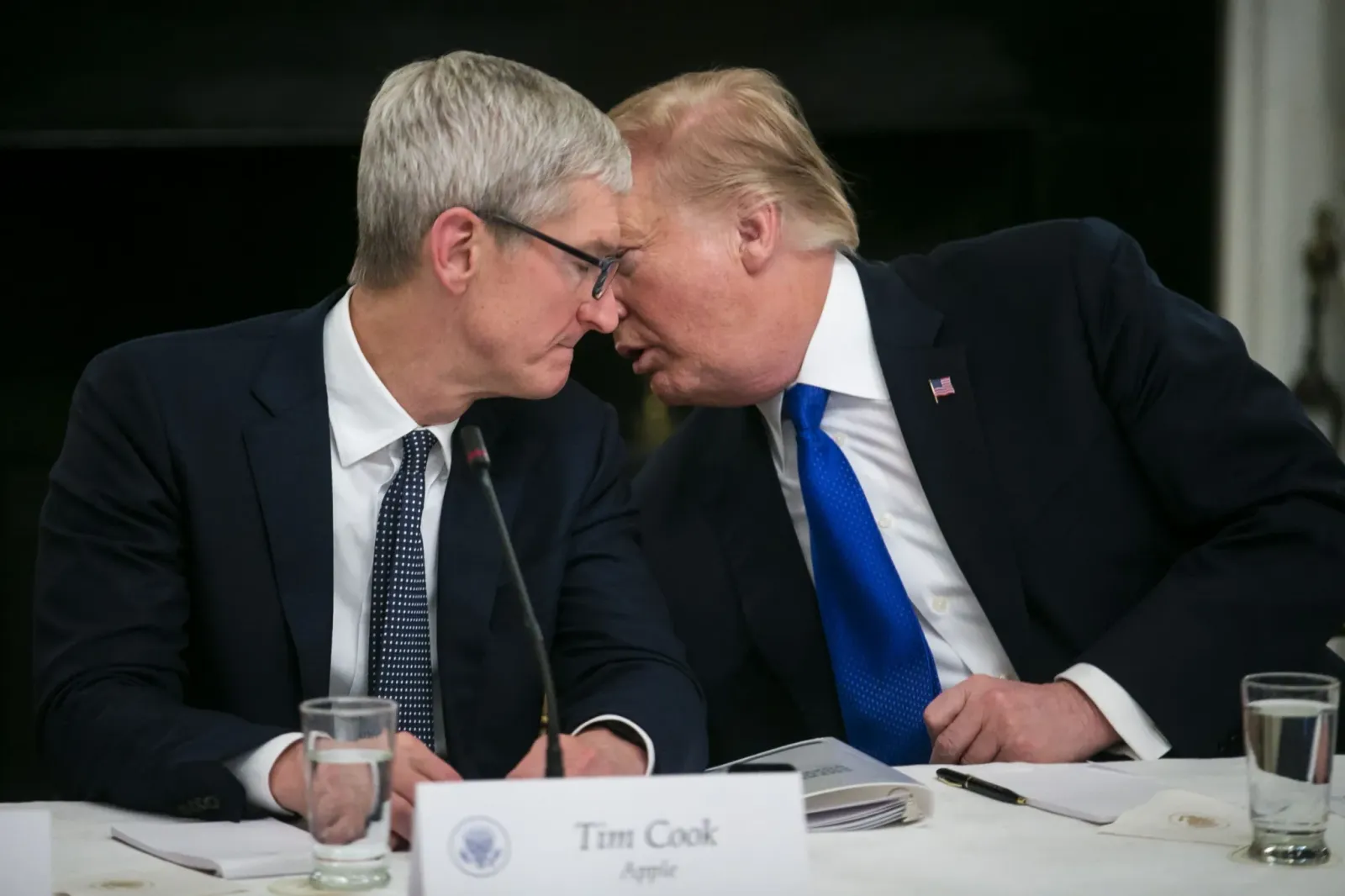
Tim Cook steps down as Apple CEO, stays on as chair with $45M equity
The 'Trump whisperer' keeps his White House and Beijing access as Apple navigates tariffs and a $4.6 trillion market cap.
Snowflake shares surge as AI data demand crushes estimates, lifting full-year forecast
Stocks jumped on stronger-than-expected guidance, signaling enterprise AI workloads are accelerating faster than Wall Street priced in.

Tim Cook's 15-year Apple CEO run ends: 3 lessons for any successor
After 15 years, Tim Cook hands Apple to John Ternus - here's how he turned a $350B company into a $4.6T juggernaut.