
Tyson Fury stops Mariusz Wach in Thailand, keeping the Anthony Joshua fight on track
Fury’s low-key stoppage is a practical box-check that protects the timeline for a potentially huge rematch with Anthony Joshua.
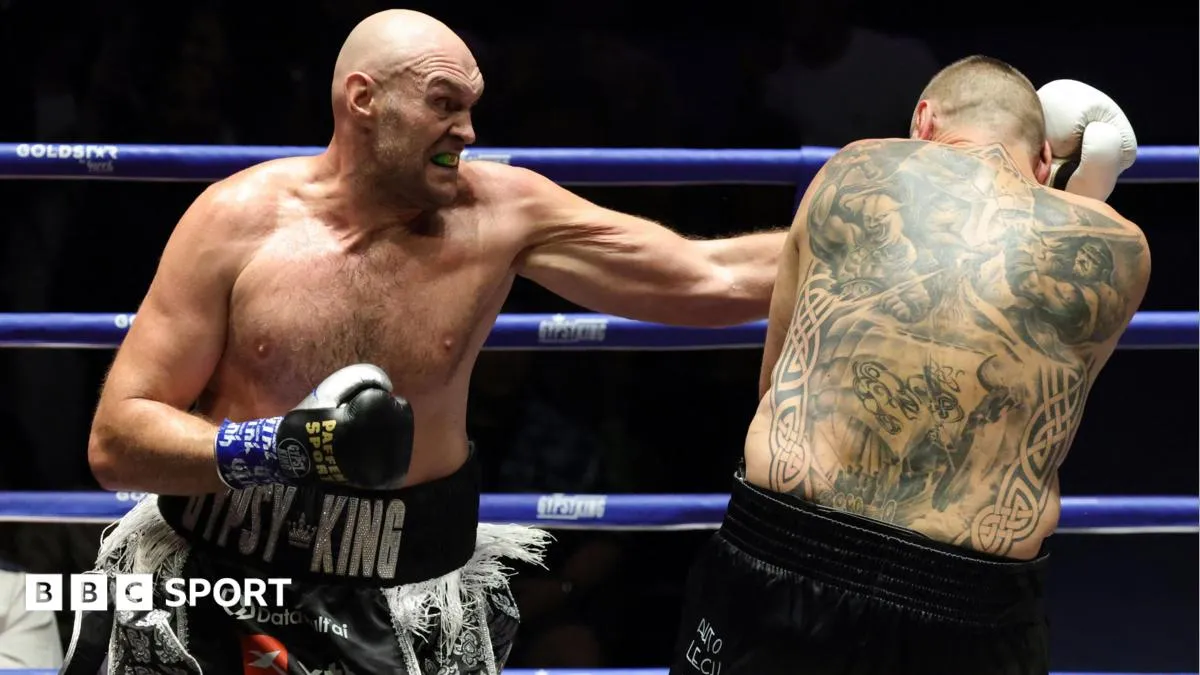
Tyson Fury stopped Mariusz Wach in a low-key bout in Thailand. For decision-makers watching boxing as an event-driven market, it keeps the potential blockbuster fight with Anthony Joshua moving forward instead of drifting into risk.
Tyson Fury’s return to the ring in Thailand had a very specific job: do enough, avoid complications, and keep the larger Anthony Joshua fight on track. In the BBC Sport report, Fury stopped Mariusz Wach in a “low-key bout” rather than a headline-grabbing war, signaling a deliberate warm-up pace. The headline fact is simple and concrete: Fury won by stoppage against Wach, and he did it in a way that preserves the schedule.
Why does this matter beyond one result? Because heavyweight boxing is basically a live entertainment market with a fragile supply chain. Main-event fights depend on timing, conditioning, and health windows. When a fighter treats a bout as preparation, the goal is not to “perform perfectly.” The goal is to return from the ring without setbacks that could force a reshuffle. Fury’s stoppage win in Thailand, framed as low-key, reads as the kind of operational success that keeps stakeholders aligned: promoters, broadcasters, sponsors, and the commercial machinery built around a future event.
To understand the second-order effect, zoom out to how big bouts get priced and planned. A potential Fury vs Joshua fight is not just two athletes negotiating. It is a calendar event that pulls in upstream partners. Media rights deals, ticketing timelines, and sponsor integrations do not pause because a fighter picks up an injury in a “tune-up.” In this context, a low-risk, controlled bout outcome is a business continuity win. Fury, Wach, and everyone orbiting the fight all have incentives to protect the main matchup, and the report’s emphasis on “low-key” suggests the bout was managed with that priority.
There is also an operational incentive embedded in the choice of opponent and location. A bout in Thailand, with a less hyped matchup like Wach, can function as a runway rather than a cliff. That does not mean the fight was meaningless. Stoppage outcomes still require execution: landing enough offense, controlling distance, and responding to what the opponent offers. But “low-key” implies it was not designed as a test of endurance under maximum pressure. For Fury’s team, that is a strategic trade. You want to keep the fight sharp while reducing the probability of a delay or a medical issue that could spill into the training cycle for the Joshua bout.
Regulatory and safety context matters here too, even when the source keeps it brief. Boxing matches involve licensing, medical checks, and oversight by governing bodies, and injuries can trigger suspension or medical requirements that change who can compete and when. The public version of “staying on track” is the schedule. The private version is health clearance and risk management. A stoppage can be the best-case scenario for continuity, because it ends sooner rather than later and can reduce the wear-and-tear that comes with longer fights. In that sense, Fury stopping Wach is not just a win. It is an operational milestone that helps preserve the fighter’s availability.
For decision-makers in adjacent industries, the lesson is how event-driven markets behave. When the main event is the product, everything else becomes a dependency. A fighter’s conditioning plan is like a critical path in project management. Any derailment upstream can ripple downstream into cancellations, renegotiations, or reputational damage. Even when an organization does not control the athlete, it still carries commercial exposure through planning commitments.
What makes this story strategically sharp is that it answers the only question people should have after hearing “keep the Joshua fight on track.” The answer is: Fury actually took care of business in the ring, and he did it decisively, stopping Mariusz Wach in Thailand. That is the kind of proof-of-function that reduces uncertainty. It does not guarantee everything will go smoothly from here, but it lowers the odds of the most disruptive failure mode: the tune-up becoming a timeline problem.
So, for executives, investors, and operators who track sports and entertainment as markets, the stake is straightforward. The closer a potential blockbuster gets to real-life execution, the more every small upstream outcome matters. Fury’s warm-up win is one of those small outcomes with big consequences. It keeps attention focused on the next chapter, instead of turning a future megafight into a waiting game.
This story's Key Insights and Take-aways are locked.
Create a free account to unlock Executive Actions for one credit.
Register to UnlockAlways free for Executives Club members. Join the Club
More in Entertainment

'It's a Magic Trick': Ballet Experts Say Rosalía's SNL Pose Is Impossible
Three ballet experts tell Rolling Stone Rosalía's gravity-defying SNL stillness shouldn't be possible - and why the debate is now part of the show.

Activision CMO: GTA 6 Will Boost Call of Duty, Not Bury It
Activision's top marketer says Rockstar's blockbuster will drive players back to consoles and into Modern Warfare 4, even as the company admits its recent strategy failed.

Justice to Score GTA 6, Share New Song with Tame Impala, SZA, King Gizzard
Rockstar taps the French duo for the GTA VI score, and the first taste is a genre-melting collab with Tame Impala, SZA, and King Gizzard & The Lizard Wizard.